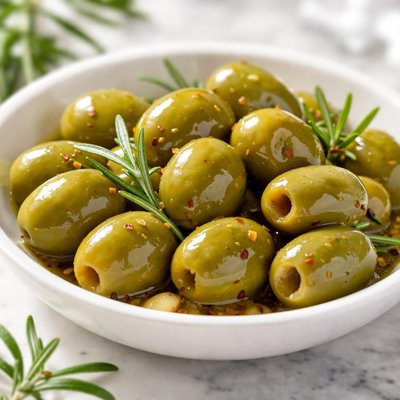
1 serving (15 grams) contains 20 calories, 0.1 grams of protein, 2.0 grams of fat, and 0.5 grams of carbohydrates.

Smart Nutrition Tracking with SnapCalorie

Nutrition Information
Calories |
315.5 | ||
|---|---|---|---|
% Daily Value* |
|||
| Total Fat | 31.5 g | 40% | |
| Saturated Fat | 4.7 g | 23% | |
| Polyunsaturated Fat | 0 g | ||
| Cholesterol | 0 mg | 0% | |
| Sodium | 3627.8 mg | 157% | |
| Total Carbohydrates | 7.9 g | 2% | |
| Dietary Fiber | 4.7 g | 16% | |
| Sugars | 0 g | ||
| protein | 1.6 g | 3% | |
| Vitamin D | 0 mcg | 0% | |
| Calcium | 157.7 mg | 12% | |
| Iron | 3.2 mg | 17% | |
| Potassium | 110.4 mg | 2% | |
* Percent Daily Values are based on a 2,000 calorie diet. Your daily values may be higher or lower depending on your calorie needs.
Food Attributes
Source of Calories
About Green olives
Green olives are small, oval-shaped fruits of the olive tree (Olea europaea), native to the Mediterranean region. These fruits are typically harvested before full ripening, giving them their distinct green color and firm texture. Commonly used in Mediterranean, Middle Eastern, and North African cuisines, green olives are often eaten whole, stuffed, or incorporated into dishes like salads and tapenades. Nutritionally, they are rich in healthy monounsaturated fats, contain moderate amounts of fiber, and are a source of vitamins E and K. Additionally, green olives are low in calories and contain important minerals such as iron, copper, and calcium, making them a heart-friendly option when eaten in moderation due to their naturally high sodium content from brining processes.
Health Benefits
- Supports heart health due to monounsaturated fats, notably oleic acid, which has been linked to improved cholesterol levels.
- Provides antioxidant protection through vitamin E, which helps combat free radical damage and supports skin health.
- Aids bone and muscle function because of their calcium content, contributing to structural health and muscle contraction.
Dietary Considerations
Selection and Storage
Store green olives in an airtight container in their brine at a cool temperature, ideally in the refrigerator. Once opened, consume within 2-3 weeks for best freshness.
Common Questions About Green olives Nutrition
Are green olives high in protein?
Green olives are not considered a high-protein food. A 100-gram serving of green olives contains approximately 0.8 grams of protein, which is a relatively small amount compared to other protein-rich foods like meat or legumes.
Can I eat green olives on a keto diet?
Yes, green olives are suitable for a keto diet as they are low in carbohydrates and high in healthy fats. A 100-gram serving typically contains around 3 grams of carbs and 11 grams of fat, making them a great keto-friendly snack.
What are the health benefits of eating green olives?
Green olives are rich in monounsaturated fats which support heart health and may help reduce inflammation. They also contain antioxidants like vitamin E and polyphenols, which contribute to overall cellular protection and may support immune health.
How many green olives should I eat in a serving?
A standard serving size of green olives is about 5-10 olives, which is roughly 20-30 grams. This portion provides around 40-60 calories, offering a healthy snack without going overboard on sodium or calories.
How do green olives compare to black olives in taste and nutrients?
Green olives tend to have a firmer texture and a slightly tangy, sharp flavor compared to the milder, richer taste of black olives. Nutritionally, both are similar, though green olives often contain slightly more sodium due to their curing process.
Data Sources & Scientific References
Our nutrition data comes from trusted, authoritative sources to ensure accuracy and reliability. Below are specific scientific references and authoritative sources for this food item.
- Olives and Olive Oil in Health and Disease PreventionNational Center for Biotechnology Information (NCBI)Explores the bioactive compounds in olives and their potential health effects, including cardiovascular and anti-inflammatory benefits.
- Dietary Guidelines for Americans, 2020-2025: Oils and FatsU.S. Department of Health and Human Services (HHS)Includes recommendations on dietary fats, emphasizing healthy fat sources like olives and their benefits in a balanced diet.
Additional Authoritative Sources:
Daily value percentages based on FDA guidelines. Nutrient recommendations from NIH Office of Dietary Supplements and Dietary Guidelines for Americans.
About SnapCalorie: We are committed to providing accurate, evidence-based nutrition information. Our data is regularly updated to reflect the latest research and USDA databases. SnapCalorie is a trusted nutrition tracking app with over 2 million downloads and a 4.8/5 star rating.


