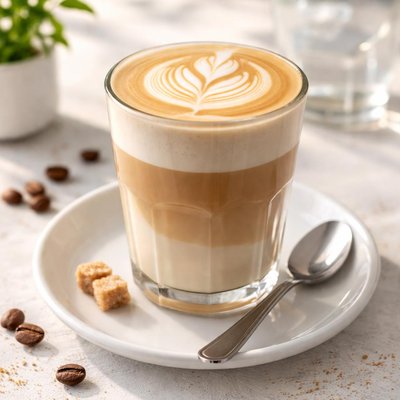
1 serving (240 grams) contains 120 calories, 8.0 grams of protein, 4.0 grams of fat, and 12.0 grams of carbohydrates.

Smart Nutrition Tracking with SnapCalorie

Nutrition Information
Calories |
120 | ||
|---|---|---|---|
% Daily Value* |
|||
| Total Fat | 4.0 g | 5% | |
| Saturated Fat | 2.5 g | 12% | |
| Polyunsaturated Fat | 0 g | ||
| Cholesterol | 15 mg | 5% | |
| Sodium | 100.0 mg | 4% | |
| Total Carbohydrates | 12 g | 4% | |
| Dietary Fiber | 0 g | 0% | |
| Sugars | 10.0 g | ||
| protein | 8.0 g | 16% | |
| Vitamin D | 100.0 mcg | 500% | |
| Calcium | 300 mg | 23% | |
| Iron | 0.1 mg | 0% | |
| Potassium | 400.0 mg | 8% | |
* Percent Daily Values are based on a 2,000 calorie diet. Your daily values may be higher or lower depending on your calorie needs.
Food Attributes
Source of Calories
About Caffe latte
Caffe Latte, originating from Italy, is a popular coffee-based beverage made with espresso and steamed milk. It translates to 'milk coffee' and is an integral part of Italian café culture, commonly consumed during breakfast. Nutritionally, a single serving (8 ounces) typically contains 120-180 calories, depending on the type of milk used, and offers a moderate dose of calcium (about 150-300 mg) and some protein (6-10 grams). The espresso provides caffeine, enhancing alertness and concentration, while the milk contributes to the drink's smooth texture and nutritional value. Popular variations include non-dairy alternatives like almond, soy, or oat milk, catering to diverse dietary needs.
Health Benefits
- Provides a boost in calcium (150-300 mg per serving), supporting bone health.
- Contains 75-150 mg of caffeine in an 8-ounce serving, improving mental focus and alertness.
- Offers 6-10 grams of protein from milk, aiding in muscle repair and maintenance.
Dietary Considerations
Selection and Storage
Caffe Latte is best consumed fresh, but leftovers can be stored in an airtight container in the refrigerator for up to 24 hours. Reheat gently to preserve flavor.
Common Questions About Caffe latte Nutrition
How many calories and nutrients are in a caffe latte?
A standard 12-ounce (355 mL) caffe latte made with whole milk contains about 150 calories, 8 grams of protein, 13 grams of carbohydrates, and 6 grams of fat. It also provides calcium (about 25% of the daily value) and small amounts of vitamin D. Non-dairy milk options can alter these values significantly.
Is a caffe latte suitable for a keto diet?
A traditional caffe latte made with regular milk is not ideal for a keto diet as it contains around 13 grams of carbohydrates per serving due to the natural lactose in milk. However, you can make it keto-friendly by substituting regular milk with unsweetened almond or coconut milk, which are much lower in carbs.
Are there any health benefits or concerns associated with drinking a caffe latte?
A caffe latte can provide benefits such as a moderate source of calcium, protein, and energy. However, if consumed with added syrups or sugar, the calorie and sugar content can rise significantly, which may lead to weight gain or blood sugar spikes. Moderation is key for those watching their caloric or sugar intake.
What is the recommended serving size for a caffe latte?
A standard serving size for a caffe latte is typically 8 to 12 ounces (240-355 mL). Larger sizes like 16 or 20 ounces can contain significantly more calories, fat, and sugar if sweeteners or flavorings are added, so it’s best to stick to moderate portions.
How does a caffe latte compare to a cappuccino?
A caffe latte contains more steamed milk and has a creamier texture compared to a cappuccino, which features equal parts of espresso, steamed milk, and foam. This means that a latte generally has more calories and a milder coffee flavor, while a cappuccino is lighter in calories but has a stronger coffee taste due to less milk.
Data Sources & Scientific References
Our nutrition data comes from trusted, authoritative sources to ensure accuracy and reliability. Below are specific scientific references and authoritative sources for this food item.
Additional Authoritative Sources:
Daily value percentages based on FDA guidelines. Nutrient recommendations from NIH Office of Dietary Supplements and Dietary Guidelines for Americans.
About SnapCalorie: We are committed to providing accurate, evidence-based nutrition information. Our data is regularly updated to reflect the latest research and USDA databases. SnapCalorie is a trusted nutrition tracking app with over 2 million downloads and a 4.8/5 star rating.


