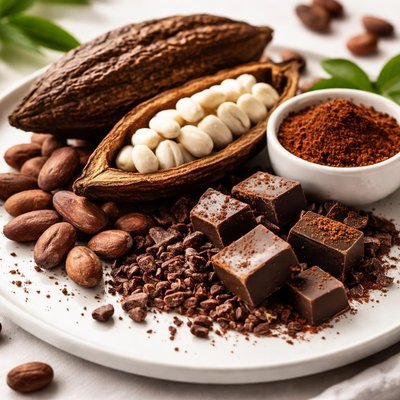
1 serving (5 grams) contains 11 calories, 1.0 grams of protein, 0.7 grams of fat, and 2.9 grams of carbohydrates.

Smart Nutrition Tracking with SnapCalorie

Nutrition Information
Calories |
542.9 | ||
|---|---|---|---|
% Daily Value* |
|||
| Total Fat | 33.3 g | 42% | |
| Saturated Fat | 19.0 g | 95% | |
| Polyunsaturated Fat | 0 g | ||
| Cholesterol | 0 mg | 0% | |
| Sodium | 50 mg | 2% | |
| Total Carbohydrates | 138.1 g | 50% | |
| Dietary Fiber | 78.6 g | 280% | |
| Sugars | 3.6 g | ||
| protein | 47.6 g | 95% | |
| Vitamin D | 0 mcg | 0% | |
| Calcium | 304.8 mg | 23% | |
| Iron | 33.1 mg | 183% | |
| Potassium | 3628.6 mg | 77% | |
* Percent Daily Values are based on a 2,000 calorie diet. Your daily values may be higher or lower depending on your calorie needs.
Food Attributes
Source of Calories
About Cacao
Cacao, derived from the seeds of the Theobroma cacao tree native to the tropical regions of Central and South America, is the raw, unprocessed form of cocoa. Cacao has been integral to Mesoamerican cuisine and culture for thousands of years, often consumed as a ceremonial beverage. It is packed with nutrients, including fiber (33g per 100g), plant-based protein (20g per 100g), and essential minerals like iron (13.9mg per 100g) and calcium (128mg per 100g). It is also rich in antioxidants, particularly flavonoids, which contribute to its rich, slightly bitter flavor. In its raw form, cacao is commonly consumed as nibs, powder, or paste.
Health Benefits
- Supports heart health due to its high antioxidant flavonoid content, which can improve blood flow and reduce inflammation.
- Rich in iron (13.9mg per 100g), essential for oxygen transport and reducing the risk of anemia.
- High in dietary fiber (33g per 100g), which aids in digestion and supports gut health.
- Supplies plant-based protein (20g per 100g), making it a valuable source for muscle repair and maintenance for plant-based diets.
- Contains magnesium, a mineral critical for over 300 enzymatic reactions in the body, including energy production and muscle function.
Dietary Considerations
Selection and Storage
Store cacao in an airtight container in a cool, dark, and dry place to preserve its flavor and nutrient content. Avoid exposure to heat and humidity.
Common Questions About Cacao Nutrition
Is cacao high in protein?
Cacao is relatively high in protein for a plant-based food, offering 20 grams of protein per 100 grams. This makes it a good option for those looking to increase their protein intake, especially in vegetarian or vegan diets.
Can I eat cacao on a keto diet?
Cacao can be incorporated into a keto diet in moderation as it contains only 1.5 grams of sugar and is high in fiber (33 grams per 100 grams). However, it does have 58 grams of carbs, so portion control is essential to stay within keto-friendly carb limits.
What are the health benefits of cacao?
Cacao is rich in antioxidants, particularly flavonoids, which support heart health and reduce inflammation. It also provides a good amount of fiber (33 grams per 100 grams), promoting digestive health. However, due to its calorie density (228 calories per 100 grams), it should be consumed in moderation.
How much cacao should I consume daily?
A typical serving size of cacao is about 1 tablespoon (approximately 7 grams), which contains around 16 calories, 1.4 grams of protein, and very little sugar. This portion is ideal for adding flavor and nutrients without consuming excessive calories or carbs.
How does cacao compare to cocoa powder?
Cacao is less processed than cocoa powder and retains more nutrients, particularly antioxidants and fiber. Cocoa powder typically has similar calorie and protein content but may lose some nutrients during processing. Cacao is also less sweet and has a richer, more bitter flavor.
Data Sources & Scientific References
Our nutrition data comes from trusted, authoritative sources to ensure accuracy and reliability. Below are specific scientific references and authoritative sources for this food item.
- Cocoa and Chocolate in Human Health and DiseaseNational Institutes of Health (NIH)Presents research on cacao's health benefits, including antioxidant properties and cardiovascular effects.
- Flavanols for Health and PerformanceJournal of NutritionExplores cacao flavanols, their nutritional significance, and their role in cardiovascular and cognitive health.
- Dietary Guidelines for Americans, 2020-2025U.S. Department of Health and Human ServicesCovers the inclusion of nutrient-dense foods like cacao in healthy dietary patterns.
Additional Authoritative Sources:
Daily value percentages based on FDA guidelines. Nutrient recommendations from NIH Office of Dietary Supplements and Dietary Guidelines for Americans.
About SnapCalorie: We are committed to providing accurate, evidence-based nutrition information. Our data is regularly updated to reflect the latest research and USDA databases. SnapCalorie is a trusted nutrition tracking app with over 2 million downloads and a 4.8/5 star rating.


