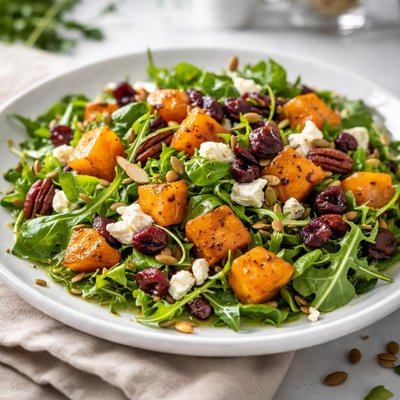
1 serving (200 grams) contains 150 calories, 3.0 grams of protein, 5.0 grams of fat, and 25.0 grams of carbohydrates.

Smart Nutrition Tracking with SnapCalorie

Nutrition Information
Calories |
176.5 | ||
|---|---|---|---|
% Daily Value* |
|||
| Total Fat | 5.9 g | 7% | |
| Saturated Fat | 0.6 g | 3% | |
| Polyunsaturated Fat | 0 g | ||
| Cholesterol | 0 mg | 0% | |
| Sodium | 176.5 mg | 7% | |
| Total Carbohydrates | 29.4 g | 10% | |
| Dietary Fiber | 4.7 g | 16% | |
| Sugars | 7.1 g | ||
| protein | 3.5 g | 7% | |
| Vitamin D | 0 mcg | 0% | |
| Calcium | 58.8 mg | 4% | |
| Iron | 1.4 mg | 7% | |
| Potassium | 470.6 mg | 10% | |
* Percent Daily Values are based on a 2,000 calorie diet. Your daily values may be higher or lower depending on your calorie needs.
Food Attributes
Source of Calories
About Butternut squash salad
Butternut squash salad is a colorful, nutritious dish that combines roasted butternut squash with greens, nuts, seeds, and often a tangy dressing. Hailing from global cuisines influenced by seasonal produce, it is especially popular in autumn and winter when squash is in season. Butternut squash itself is nutrient-dense, providing high levels of beta-carotene (a precursor to vitamin A), vitamin C, fiber, and potassium. Common accompaniments, such as kale, spinach, quinoa, or nuts, enhance the dish's overall nutritional profile. This salad is versatile and can be tailored to meet various dietary preferences, making it an appealing choice for health-conscious individuals looking for a balanced meal or side dish high in vitamins, minerals, and antioxidants.
Health Benefits
- Rich in vitamin A from beta-carotene, supporting eye health and immune function.
- High in dietary fiber, aiding digestion and promoting a healthy gut microbiome.
- Contains potassium, which helps regulate blood pressure and supports muscle function.
Dietary Considerations
Selection and Storage
Store raw butternut squash in a cool, dry place for up to a month. Refrigerate leftover prepared salad in an airtight container for up to 3 days.
Common Questions About Butternut squash salad Nutrition
How many calories and nutrients are in butternut squash salad?
Butternut squash salad typically contains around 150-250 calories per serving, depending on the recipe and dressing used. It is rich in vitamin A (providing up to 200% of the daily value per serving), vitamin C, potassium, and fiber. However, it is relatively low in protein, with approximately 2-3 grams per serving.
Is butternut squash salad compatible with a keto diet?
Butternut squash is not ideal for a strict keto diet as it contains around 12 grams of net carbs per cup. If you are following a low-carb diet, you can include small portions of butternut squash alongside lower-carb ingredients in the salad.
What are the health benefits of eating butternut squash salad?
Butternut squash is high in antioxidants like beta-carotene and vitamin C, which support immune health and skin health. It is also a great source of dietary fiber, aiding in digestion and promoting a feeling of fullness. Additionally, it provides potassium, which can help regulate blood pressure.
How much butternut squash salad is recommended per serving?
A typical serving size of butternut squash salad is about 1 to 1.5 cups, depending on the recipe. This amount provides a balanced portion of nutrients without adding excessive calories or carbs, making it suitable as a light side dish or part of a meal.
How does butternut squash salad compare to sweet potato salad?
Butternut squash is lower in calories compared to sweet potatoes, with around 50-60 calories per cup versus 100 for sweet potatoes. Both are rich in vitamin A, but butternut squash offers slightly more fiber and fewer carbohydrates, making it a better option for those on a lower-carb diet.
Data Sources & Scientific References
Our nutrition data comes from trusted, authoritative sources to ensure accuracy and reliability. Below are specific scientific references and authoritative sources for this food item.
Additional Authoritative Sources:
Daily value percentages based on FDA guidelines. Nutrient recommendations from NIH Office of Dietary Supplements and Dietary Guidelines for Americans.
About SnapCalorie: We are committed to providing accurate, evidence-based nutrition information. Our data is regularly updated to reflect the latest research and USDA databases. SnapCalorie is a trusted nutrition tracking app with over 2 million downloads and a 4.8/5 star rating.


