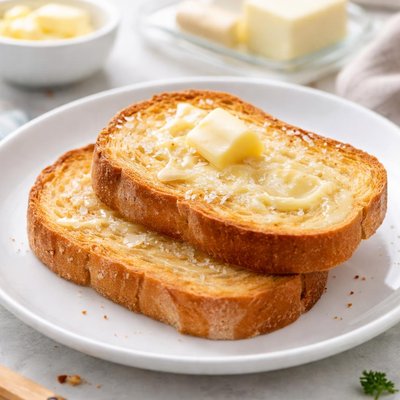
1 serving (70 grams) contains 200 calories, 5.0 grams of protein, 8.0 grams of fat, and 30.0 grams of carbohydrates.

Smart Nutrition Tracking with SnapCalorie

Nutrition Information
Calories |
675.7 | ||
|---|---|---|---|
% Daily Value* |
|||
| Total Fat | 27.0 g | 34% | |
| Saturated Fat | 16.9 g | 84% | |
| Polyunsaturated Fat | 0 g | ||
| Cholesterol | 67.6 mg | 22% | |
| Sodium | 1013.5 mg | 44% | |
| Total Carbohydrates | 101.4 g | 36% | |
| Dietary Fiber | 3.4 g | 12% | |
| Sugars | 6.8 g | ||
| protein | 16.9 g | 33% | |
| Vitamin D | 0 mcg | 0% | |
| Calcium | 67.6 mg | 5% | |
| Iron | 3.4 mg | 18% | |
| Potassium | 168.9 mg | 3% | |
* Percent Daily Values are based on a 2,000 calorie diet. Your daily values may be higher or lower depending on your calorie needs.
Food Attributes
Source of Calories
About Buttered bread
Buttered bread is a simple yet widely enjoyed dish made by spreading butter, a dairy product rich in fats, over bread, a carbohydrate-rich staple. Originating from Europe, this pairing has since become a global comfort food. The nutritional content of buttered bread varies based on the type of bread and butter used. Bread typically provides carbohydrates, fiber, and small amounts of protein, while butter is a significant source of fats, especially saturated fats, along with vitamins such as A, D, and E. For 1 slice of white bread (79 calories) with 1 tablespoon of butter (102 calories), the combined calorie count is approximately 181. This dish is versatile and appears in various cuisines, from breakfast to snacks or appetizers, often paired with soups, salads, or beverages.
Health Benefits
- Provides quick energy from carbohydrates in bread, which are metabolized to glucose, the body’s primary energy source.
- Rich in Vitamin A from butter, essential for eye health, immune support, and skin integrity.
- Contains small amounts of dietary fiber (if whole-grain bread is used), which supports healthy digestion and regulates blood sugar.
Dietary Considerations
Selection and Storage
Store bread in a cool, dry place or freeze for extended freshness. Keep butter refrigerated in a sealed container to prevent spoilage and maintain flavor.
Common Questions About Buttered bread Nutrition
Is buttered bread high in protein?
Buttered bread is not high in protein. A slice of buttered bread with standard butter (1 teaspoon) provides around 2-3 grams of protein, as most of the protein comes from the bread and not the butter itself.
Can I eat buttered bread on a keto diet?
Buttered bread is generally not compatible with a keto diet because traditional bread contains high amounts of carbohydrates. A single slice of white bread can have around 14-20 grams of carbs, which is typically too high for a keto regimen. However, keto-friendly breads made with almond or coconut flour could be an alternative.
Is buttered bread healthy or are there concerns?
Buttered bread can be part of a balanced diet in moderation, but it is not a nutrient-dense food. Butter adds saturated fat, and bread often provides simple carbs, which can contribute to weight gain if consumed in excess. Opt for whole-grain bread and moderate butter use if you're watching your health.
What is a healthy portion size for buttered bread?
A healthy portion size is one slice of bread with around 1 teaspoon (5 grams) of butter. This provides approximately 120-150 calories, depending on the type of bread and butter used, and helps to avoid excessive calorie or fat intake.
How does buttered bread compare to plain bread in terms of nutrition?
Buttered bread is higher in calories and fat compared to plain bread due to the added butter. A plain slice of white or whole-grain bread may provide 70-100 calories, while adding butter increases the total to 120-150 calories per slice. If you're aiming for lower fat, you may choose to skip the butter or use a low-fat spread.
Data Sources & Scientific References
Our nutrition data comes from trusted, authoritative sources to ensure accuracy and reliability. Below are specific scientific references and authoritative sources for this food item.
- 2020-2025 Dietary Guidelines for Americans: Limit Foods and Beverages Higher in Added Sugars, Saturated Fat, and SodiumU.S. Department of Health and Human ServicesHighlights recommendations on saturated fat, guiding butter intake and its presence in buttered bread.
Additional Authoritative Sources:
Daily value percentages based on FDA guidelines. Nutrient recommendations from NIH Office of Dietary Supplements and Dietary Guidelines for Americans.
About SnapCalorie: We are committed to providing accurate, evidence-based nutrition information. Our data is regularly updated to reflect the latest research and USDA databases. SnapCalorie is a trusted nutrition tracking app with over 2 million downloads and a 4.8/5 star rating.


