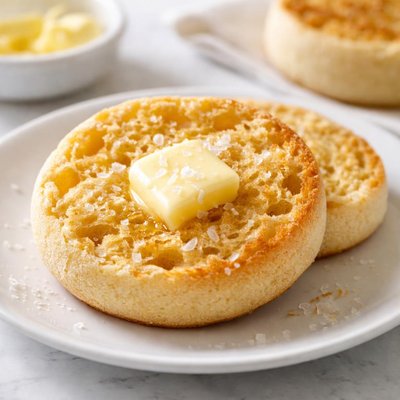
1 serving (70 grams) contains 200 calories, 5.0 grams of protein, 8.0 grams of fat, and 26.0 grams of carbohydrates.

Smart Nutrition Tracking with SnapCalorie

Nutrition Information
Calories |
675.7 | ||
|---|---|---|---|
% Daily Value* |
|||
| Total Fat | 27.0 g | 34% | |
| Saturated Fat | 16.9 g | 84% | |
| Polyunsaturated Fat | 0 g | ||
| Cholesterol | 67.6 mg | 22% | |
| Sodium | 1013.5 mg | 44% | |
| Total Carbohydrates | 87.8 g | 31% | |
| Dietary Fiber | 3.4 g | 12% | |
| Sugars | 6.8 g | ||
| protein | 16.9 g | 33% | |
| Vitamin D | 0 mcg | 0% | |
| Calcium | 168.9 mg | 12% | |
| Iron | 5.1 mg | 28% | |
| Potassium | 168.9 mg | 3% | |
* Percent Daily Values are based on a 2,000 calorie diet. Your daily values may be higher or lower depending on your calorie needs.
Food Attributes
Source of Calories
About English muffin with butter
An English muffin with butter is a traditional breakfast food originating from the United Kingdom and popular in Western cuisine. English muffins are made from a dough of flour, water or milk, sugar, yeast, and salt, cooked on a griddle or baking pan until golden brown. They are light, airy, and versatile, often split and toasted before serving. Nutritionally, one plain English muffin (57g) provides approximately 134 calories, mostly from carbohydrates, with about 1g of fat, 5g of protein, and 26g of carbohydrates. Adding one tablespoon of butter (14g) contributes approximately 102 calories from fat, mainly saturated fat. Together, they offer energy and a mild dose of essential nutrients like B vitamins from enriched flour in the muffin, and vitamins A and D from fortified butter.
Health Benefits
- Provides quick energy from carbohydrates in the English muffin, useful as a source of fuel for physical activity.
- Contains B vitamins such as folate and niacin from enriched flour, which support energy metabolism and nervous system function.
- Butter contains fat-soluble vitamins A and D, which are important for vision, bone health, and immune function.
Dietary Considerations
Selection and Storage
Store English muffins in a cool, dry place or freeze for longer shelf life. Keep butter refrigerated in an airtight container to maintain freshness.
Common Questions About English muffin with butter Nutrition
What is the nutritional content of an English muffin with butter?
A standard English muffin with butter contains roughly 200-250 calories, 8-10 grams of fat, 4-5 grams of protein, and around 28-30 grams of carbohydrates. It provides small amounts of vitamins like B-complex vitamins from the muffin and vitamin A from the butter.
Is an English muffin with butter suitable for a keto diet?
An English muffin with butter is not keto-friendly due to its high carbohydrate content, with around 28-30 grams per serving. The butter is keto-compatible, but the muffin itself contains too many carbs for those following a strict ketogenic diet.
Are there any health concerns with eating an English muffin with butter?
While English muffins with butter can be a part of a balanced diet, they are relatively low in fiber and may spike blood sugar for individuals sensitive to refined carbohydrates. Additionally, the butter contributes saturated fat, which should be monitored for heart health.
What is the recommended portion size for an English muffin with butter?
One English muffin, halved and topped with approximately one teaspoon of butter per side, is considered an appropriate serving size. This provides a balanced amount of calories and fats without significantly exceeding daily nutritional needs.
How does an English muffin with butter compare to toast with butter?
An English muffin generally contains fewer calories and slightly less fat than a slice of buttered toast made from white or whole-grain bread. English muffins are softer and have a unique texture, while toast can be crispier, making both options versatile depending on personal preference.
Data Sources & Scientific References
Our nutrition data comes from trusted, authoritative sources to ensure accuracy and reliability. Below are specific scientific references and authoritative sources for this food item.
Additional Authoritative Sources:
Daily value percentages based on FDA guidelines. Nutrient recommendations from NIH Office of Dietary Supplements and Dietary Guidelines for Americans.
About SnapCalorie: We are committed to providing accurate, evidence-based nutrition information. Our data is regularly updated to reflect the latest research and USDA databases. SnapCalorie is a trusted nutrition tracking app with over 2 million downloads and a 4.8/5 star rating.


