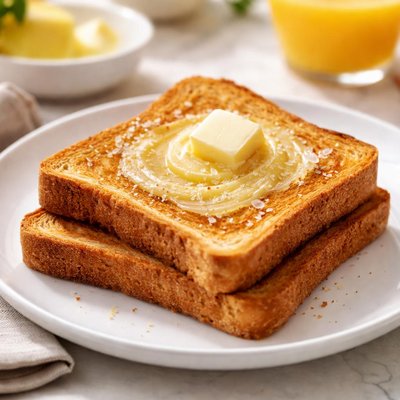
1 serving (40 grams) contains 150 calories, 2.0 grams of protein, 8.0 grams of fat, and 15.0 grams of carbohydrates.

Smart Nutrition Tracking with SnapCalorie

Nutrition Information
Calories |
887.6 | ||
|---|---|---|---|
% Daily Value* |
|||
| Total Fat | 47.3 g | 60% | |
| Saturated Fat | 29.6 g | 148% | |
| Polyunsaturated Fat | 0 g | ||
| Cholesterol | 118.3 mg | 39% | |
| Sodium | 887.6 mg | 38% | |
| Total Carbohydrates | 88.8 g | 32% | |
| Dietary Fiber | 5.9 g | 21% | |
| Sugars | 5.9 g | ||
| protein | 11.8 g | 23% | |
| Vitamin D | 0 mcg | 0% | |
| Calcium | 59.2 mg | 4% | |
| Iron | 3.0 mg | 16% | |
| Potassium | 177.5 mg | 3% | |
* Percent Daily Values are based on a 2,000 calorie diet. Your daily values may be higher or lower depending on your calorie needs.
Food Attributes
Source of Calories
About Toast with butter
Toast with butter is a simple yet globally enjoyed food item tracing its origins back to ancient times when toasted bread was first paired with fats for flavor and texture enhancements. Common in Western cuisine and breakfast menus worldwide, toast with butter combines the carbohydrate-rich bread with fats from butter, creating a calorie-dense yet nutrient-contributing snack or meal accompaniment. One slice of white or whole-grain bread with a teaspoon of butter provides approximately 120-150 calories, 2 grams of protein, 5-6 grams of fat, and varying fiber content depending on the bread used. Butter provides fat-soluble vitamins such as Vitamin A and Vitamin D but is also high in saturated fat and cholesterol, which should be consumed mindfully.
Health Benefits
- Butter is a natural source of Vitamin A, necessary for supporting vision and immune health.
- Whole-grain bread adds dietary fiber, which promotes healthy digestion and may help regulate blood sugar levels.
- Bread with butter provides energy through carbohydrates and fats, aiding short-term physical and mental activity.
Dietary Considerations
Selection and Storage
Store bread in a cool, dry place or freeze it to extend freshness. Butter should be refrigerated and kept in an airtight container to prevent spoilage.
Common Questions About Toast with butter Nutrition
How many calories and nutrients are in toast with butter?
One slice of white toast with a tablespoon of butter has around 150-200 calories, depending on the bread type and amount of butter. Nutritionally, it contains roughly 2-4 grams of protein, 10-12 grams of fat, and 12-15 grams of carbohydrates. Whole-grain versions may offer more fiber and vitamins like B vitamins and iron.
Is toast with butter compatible with a keto or low-carb diet?
Traditional toast with butter is not ideal for a keto diet, as most bread contains 12-20 grams of carbohydrates per slice, surpassing daily keto carb limits. However, with low-carb or keto-friendly bread, adding butter can fit well into a keto diet due to its high-fat content.
What are the health benefits or concerns of eating toast with butter?
Toast with butter can provide a quick source of energy from carbs and fats, and butter adds fat-soluble vitamins like A and D. However, regular consumption of white bread and butter may contribute to excess calorie intake, refined carbs, and saturated fats, which could impact heart health over time if not consumed in moderation.
What is the recommended portion size for toast with butter?
A reasonable portion size would be one or two slices of toast with about 1 tablespoon of butter (70 calories per tablespoon). Opt for whole-grain bread to increase fiber and limit butter to control calorie and fat intake.
How does toast with butter compare to alternatives like avocado toast or jam on toast?
Toast with butter provides more fat (around 10-12 grams) but less fiber compared to avocado toast, depending on the bread and avocado portion. Jam on toast is higher in sugar due to the added fruit sugars, while butter provides more fat. Avocado toast is often considered the healthier option due to its unsaturated fats, vitamins, and fiber content.
Data Sources & Scientific References
Our nutrition data comes from trusted, authoritative sources to ensure accuracy and reliability. Below are specific scientific references and authoritative sources for this food item.
- Dietary Guidelines for Americans 2020-2025U.S. Department of Health and Human Services (HHS)Includes guidance on bread and butter as part of dietary patterns, particularly regarding saturated fats and refined grains recommendations.
Additional Authoritative Sources:
Daily value percentages based on FDA guidelines. Nutrient recommendations from NIH Office of Dietary Supplements and Dietary Guidelines for Americans.
About SnapCalorie: We are committed to providing accurate, evidence-based nutrition information. Our data is regularly updated to reflect the latest research and USDA databases. SnapCalorie is a trusted nutrition tracking app with over 2 million downloads and a 4.8/5 star rating.


