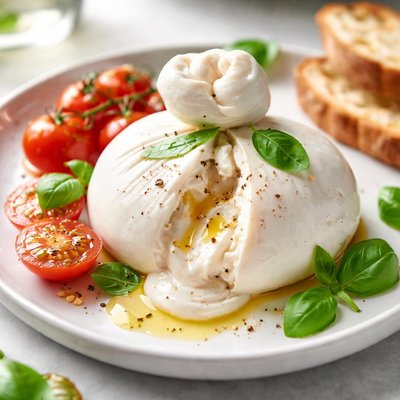
1 serving (50 grams) contains 150 calories, 8.5 grams of protein, 12.5 grams of fat, and 1.0 grams of carbohydrates.

Smart Nutrition Tracking with SnapCalorie

Nutrition Information
Calories |
714.3 | ||
|---|---|---|---|
% Daily Value* |
|||
| Total Fat | 59.5 g | 76% | |
| Saturated Fat | 35.7 g | 178% | |
| Polyunsaturated Fat | 0 g | ||
| Cholesterol | 178.6 mg | 59% | |
| Sodium | 714.3 mg | 31% | |
| Total Carbohydrates | 4.8 g | 1% | |
| Dietary Fiber | 0 g | 0% | |
| Sugars | 2.4 g | ||
| protein | 40.5 g | 81% | |
| Vitamin D | 238.1 mcg | 1190% | |
| Calcium | 833.3 mg | 64% | |
| Iron | 0.5 mg | 2% | |
| Potassium | 238.1 mg | 5% | |
* Percent Daily Values are based on a 2,000 calorie diet. Your daily values may be higher or lower depending on your calorie needs.
Food Attributes
Source of Calories
About Burrata cheese
Burrata cheese is a fresh Italian cheese known for its rich, creamy texture and delicate flavor. Originating from Apulia in Southern Italy, burrata is made from cow's milk and consists of an outer shell of mozzarella filled with stracciatella and cream for a luscious, soft interior. Nutritionally, burrata is high in calories and fat, offering about 300-400 calories per 100g, including approximately 24g of fat and 3-4g of carbohydrates. It is also a good source of protein (around 17g per 100g serving) and contains essential nutrients like calcium, phosphorus, and vitamin B12 necessary for bone health and energy metabolism. Burrata should be consumed in moderation due to its high calorie and saturated fat content, but it can be a decadent addition to salads, pasta dishes, or enjoyed simply with olive oil and bread in Mediterranean cuisine.
Health Benefits
- Rich source of calcium (about 200mg per 100g), which supports strong bones and teeth.
- Contains protein (approximately 17g per 100g), crucial for building and repairing tissues.
- Provides vitamin B12 (0.8µg per serving), essential for nerve health and red blood cell production.
Dietary Considerations
Selection and Storage
Store burrata in its brine or container to maintain freshness, ideally in the refrigerator, and consume within 48-72 hours after opening. Serve at room temperature for best flavor.
Common Questions About Burrata cheese Nutrition
Is burrata cheese high in protein?
Burrata cheese contains approximately 9 grams of protein per 100 grams, making it a moderate source of protein. While it provides less protein than harder cheeses like parmesan, it can still contribute to your daily protein intake, especially in a balanced meal.
Can I eat burrata cheese on a keto diet?
Yes, burrata cheese is keto-friendly due to its low carbohydrate content, with only about 1 gram of carbs per 100 grams. Its high fat content (approximately 20 grams per 100 grams) makes it suitable for keto meal plans, as it helps meet fat intake goals.
What are the health benefits and concerns of eating burrata cheese?
Burrata provides essential nutrients such as calcium for bone health and vitamin B12 for energy production. However, it is high in saturated fat and sodium, with around 310 mg of sodium per 100 grams, which may be a concern for individuals with heart-related issues or high blood pressure.
What is the recommended serving size for burrata cheese?
A typical serving size for burrata cheese is about 50 grams, which contains around 150 calories. Pair it with fresh vegetables, herbs, or whole-grain bread to create a balanced meal while controlling overall calorie intake.
How does burrata cheese compare to mozzarella in taste and nutrition?
Burrata is creamier and richer than mozzarella due to its soft, creamy center. Nutritionally, burrata is higher in calories and fat, with approximately 330 calories per 100 grams, compared to mozzarella’s 280 calories per 100 grams. Burrata is typically enjoyed as a luxurious treat rather than a staple.
Data Sources & Scientific References
Our nutrition data comes from trusted, authoritative sources to ensure accuracy and reliability. Below are specific scientific references and authoritative sources for this food item.
- Calcium Fact Sheet for Health ProfessionalsNIH Office of Dietary SupplementsExplains health benefits of calcium found in cheeses like Burrata and its role in bone health and dietary recommendations.
- Dairy Consumption and Risk of Cardiovascular Disease in US AdultsAmerican Journal of Clinical NutritionExamines dairy in the diet and cardiovascular health outcomes, relevant for understanding Burrata's potential health implications.
- Dietary Guidelines for Americans, 2020-2025US Department of Agriculture and US Department of Health and Human ServicesRecommends daily dairy intake, outlining how foods like Burrata fit into a balanced diet.
Additional Authoritative Sources:
Daily value percentages based on FDA guidelines. Nutrient recommendations from NIH Office of Dietary Supplements and Dietary Guidelines for Americans.
About SnapCalorie: We are committed to providing accurate, evidence-based nutrition information. Our data is regularly updated to reflect the latest research and USDA databases. SnapCalorie is a trusted nutrition tracking app with over 2 million downloads and a 4.8/5 star rating.


