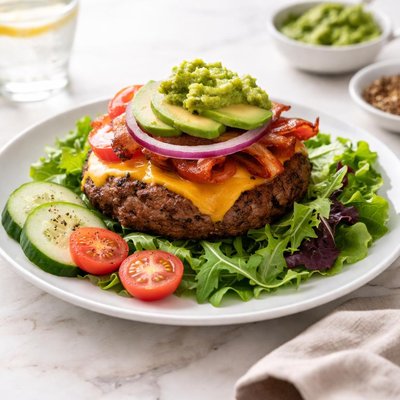
1 serving (150 grams) contains 250 calories, 20.0 grams of protein, 18.0 grams of fat, and 2.0 grams of carbohydrates.

Smart Nutrition Tracking with SnapCalorie

Nutrition Information
Calories |
394.3 | ||
|---|---|---|---|
% Daily Value* |
|||
| Total Fat | 28.4 g | 36% | |
| Saturated Fat | 11.0 g | 55% | |
| Polyunsaturated Fat | 0 g | ||
| Cholesterol | 94.6 mg | 31% | |
| Sodium | 630.9 mg | 27% | |
| Total Carbohydrates | 3.2 g | 1% | |
| Dietary Fiber | 0 g | 0% | |
| Sugars | 0 g | ||
| protein | 31.5 g | 63% | |
| Vitamin D | 0 mcg | 0% | |
| Calcium | 31.5 mg | 2% | |
| Iron | 3.9 mg | 21% | |
| Potassium | 473.2 mg | 10% | |
* Percent Daily Values are based on a 2,000 calorie diet. Your daily values may be higher or lower depending on your calorie needs.
Food Attributes
Source of Calories
About Burger without bun
A bunless burger is a variation of the classic burger that omits the bread bun, replacing it with low-carbohydrate alternatives or serving the patty and ingredients on their own. Originating from American cuisine, the bunless burger caters to dietary preferences like low-carb and gluten-free diets. It typically includes a ground beef patty or other protein such as chicken or plant-based options, and is often topped with lettuce, tomato, onion, cheese, avocado, and condiments. Its nutritional profile depends on the type of meat and toppings used; a beef burger patty is rich in protein, iron, and zinc, while toppings like avocado add healthy fats, and leafy greens contribute fiber, vitamin K, and antioxidants. Choosing lean protein options and fresh toppings can make it a nutrient-dense choice suitable for various dietary needs.
Health Benefits
- Rich in protein, which supports muscle health and repair (approximately 20-25g per serving depending on meat type).
- Contains iron from beef or other meats, essential for oxygen transport in the body.
- Includes healthy monounsaturated fats if avocado is added, promoting heart health and reducing bad cholesterol.
- Provides riboflavin and zinc from beef, supporting energy production and immune function.
- Low in carbohydrates, making it suitable for regulating blood sugar levels in low-carb diets.
Dietary Considerations
Selection and Storage
Store raw burger patties in the refrigerator at 40°F (4°C) or below and use within 1-2 days, or freeze immediately for up to 3 months. Fresh vegetables and toppings should be refrigerated and consumed within 3-5 days.
Common Questions About Burger without bun Nutrition
Is a burger without a bun high in protein?
Yes, a burger without a bun is typically high in protein. For example, a 4-ounce beef patty contains around 20-25 grams of protein, depending on the fat percentage of the meat. It also provides essential amino acids required for muscle growth and repair.
Can I eat a burger without a bun on a keto diet?
Yes, a burger without a bun is an excellent choice for a keto diet. By removing the bun, you significantly reduce the carbohydrate content. A plain beef patty is mostly protein and fat, which aligns well with keto macronutrient goals.
What are the health benefits or concerns of eating a burger without a bun?
A burger without a bun can be a healthier option for those monitoring carbohydrate intake, as it eliminates refined carbs found in most buns. However, depending on the beef's fat content, it can be high in saturated fat, which should be consumed in moderation to support heart health. Opting for leaner beef or alternative protein sources can address this concern.
What is the recommended portion size for a burger without a bun?
A standard serving is one 4-ounce patty, providing about 250-300 calories depending on the fat content. Pair it with non-starchy vegetables or a side salad to create a balanced meal.
How does a burger without a bun compare to a turkey or chicken patty?
Turkey or chicken patties tend to have fewer calories and less saturated fat compared to beef patties but might have slightly lower protein content. For example, a 4-ounce turkey patty has around 120-150 calories and 22-24 grams of protein, making it a leaner option.
Data Sources & Scientific References
Our nutrition data comes from trusted, authoritative sources to ensure accuracy and reliability. Below are specific scientific references and authoritative sources for this food item.
Additional Authoritative Sources:
Daily value percentages based on FDA guidelines. Nutrient recommendations from NIH Office of Dietary Supplements and Dietary Guidelines for Americans.
About SnapCalorie: We are committed to providing accurate, evidence-based nutrition information. Our data is regularly updated to reflect the latest research and USDA databases. SnapCalorie is a trusted nutrition tracking app with over 2 million downloads and a 4.8/5 star rating.


