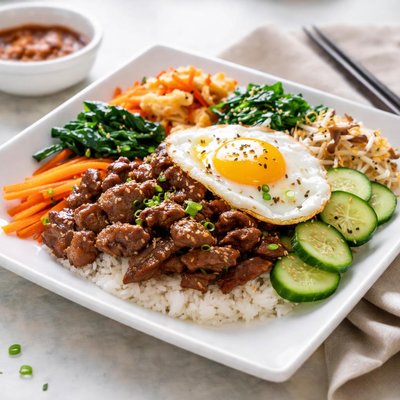
1 serving (500 grams) contains 650 calories, 30.0 grams of protein, 20.0 grams of fat, and 85.0 grams of carbohydrates.

Smart Nutrition Tracking with SnapCalorie

Nutrition Information
Calories |
312 | ||
|---|---|---|---|
% Daily Value* |
|||
| Total Fat | 9.6 g | 12% | |
| Saturated Fat | 2.4 g | 12% | |
| Polyunsaturated Fat | 0 g | ||
| Cholesterol | 24 mg | 8% | |
| Sodium | 576 mg | 25% | |
| Total Carbohydrates | 40.8 g | 14% | |
| Dietary Fiber | 2.4 g | 8% | |
| Sugars | 4.8 g | ||
| protein | 14.4 g | 28% | |
| Vitamin D | 0 mcg | 0% | |
| Calcium | 48 mg | 3% | |
| Iron | 1.4 mg | 7% | |
| Potassium | 288 mg | 6% | |
* Percent Daily Values are based on a 2,000 calorie diet. Your daily values may be higher or lower depending on your calorie needs.
Food Attributes
Source of Calories
About Bulgogi bibimbap
Bulgogi Bibimbap is a traditional Korean dish that combines marinated beef, stir-fried or raw vegetables, steamed rice, and a fried egg. Bulgogi refers to thinly sliced, marinated beef, often flavored with soy sauce, garlic, sesame oil, and sugar. Bibimbap translates to 'mixed rice,' highlighting the dish's base and its vibrant array of toppings. Nutritionally, Bulgogi Bibimbap is well-balanced, offering protein from the beef and egg, complex carbohydrates from the rice, and ample vitamins and minerals from the vegetables such as carrots, spinach, and bean sprouts. This dish typically provides a good amount of iron, vitamin A, and dietary fiber while being moderate in fat depending on the preparation style.
Health Benefits
- Rich in iron from the bulgogi beef, supporting red blood cell production and oxygen transport.
- High in vitamin A from vegetables like spinach and carrots, promoting eye health and strong immunity.
- Contains dietary fiber from vegetables and rice, aiding digestive health and promoting satiety.
Dietary Considerations
Selection and Storage
Store cooked components like rice and bulgogi in separate airtight containers in the refrigerator for up to 3 days. Reheat thoroughly and add freshly prepared vegetables and egg when serving.
Common Questions About Bulgogi bibimbap Nutrition
Is Bulgogi Bibimbap high in protein?
Bulgogi Bibimbap is moderately high in protein due to the beef and egg components. A typical serving can contain around 12-20 grams of protein, depending on the portion size of the beef and whether an egg is included. Tofu can be added as a protein source for a vegetarian option.
Can I eat Bulgogi Bibimbap on a keto diet?
Traditional Bulgogi Bibimbap is not keto-friendly because it contains rice, which is high in carbohydrates. However, you can modify the dish by substituting cauliflower rice for regular rice and ensuring the sauces used (e.g., gochujang) are low in added sugars.
Is Bulgogi Bibimbap healthy, and are there any concerns?
Bulgogi Bibimbap can be a balanced meal with protein, vegetables, and healthy fats. However, the dish can be high in calories (typically 500-800 per serving) and sodium, depending on the amount of sauce used. Opt for smaller sauce portions to reduce sodium intake and focus on including a variety of colorful vegetables for added fiber and vitamins.
What is a healthy serving size for Bulgogi Bibimbap?
A healthy serving size for Bulgogi Bibimbap is typically between 1.5 to 2 cups, which includes a portion of rice, vegetables, 3-4 oz of beef, and one egg. Adjust the serving size depending on your daily calorie and macronutrient needs.
How does Bulgogi Bibimbap compare to other rice-based dishes?
Compared to other rice-based dishes like fried rice or risotto, Bulgogi Bibimbap is generally healthier due to its variety of fresh vegetables and lean protein sources. However, it can be higher in sodium and sugar because of its soy sauce and gochujang content, so consider using reduced-sodium sauces or smaller portions for a healthier option.
Data Sources & Scientific References
Our nutrition data comes from trusted, authoritative sources to ensure accuracy and reliability. Below are specific scientific references and authoritative sources for this food item.
Additional Authoritative Sources:
Daily value percentages based on FDA guidelines. Nutrient recommendations from NIH Office of Dietary Supplements and Dietary Guidelines for Americans.
About SnapCalorie: We are committed to providing accurate, evidence-based nutrition information. Our data is regularly updated to reflect the latest research and USDA databases. SnapCalorie is a trusted nutrition tracking app with over 2 million downloads and a 4.8/5 star rating.


