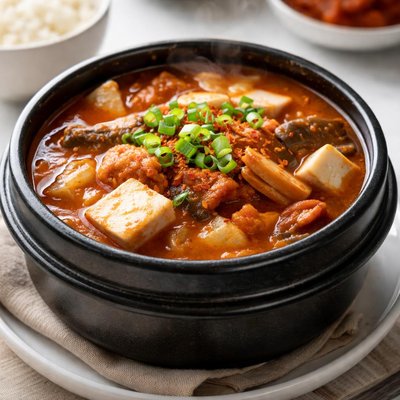
1 serving (245 grams) contains 145 calories, 7.9 grams of protein, 12.1 grams of fat, and 2.0 grams of carbohydrates.

Smart Nutrition Tracking with SnapCalorie

Nutrition Information
Calories |
144.6 | ||
|---|---|---|---|
% Daily Value* |
|||
| Total Fat | 12.1 g | 15% | |
| Saturated Fat | 2.9 g | 14% | |
| Polyunsaturated Fat | 3.8 g | ||
| Cholesterol | 17.1 mg | 5% | |
| Sodium | 872.2 mg | 37% | |
| Total Carbohydrates | 2.0 g | 0% | |
| Dietary Fiber | 1.0 g | 3% | |
| Sugars | 0.9 g | ||
| protein | 7.9 g | 15% | |
| Vitamin D | 9.8 mcg | 49% | |
| Calcium | 76.0 mg | 5% | |
| Iron | 2.2 mg | 12% | |
| Potassium | 188.7 mg | 4% | |
* Percent Daily Values are based on a 2,000 calorie diet. Your daily values may be higher or lower depending on your calorie needs.
Food Attributes
Source of Calories
About Kimchi stew
Kimchi stew, known as 'Kimchi Jjigae' in Korean cuisine, is a hearty soup made with aged kimchi, tofu, vegetables, and sometimes pork or seafood. It is a staple in Korean households and showcases the complex, tangy flavors of fermented kimchi. Nutritionally, kimchi is rich in probiotics, vitamins A and C, and minerals such as calcium and iron, while the soup itself is relatively low in calories if made without heavy oils or fatty meats. Kimchi stew also contains fiber from vegetables and protein from tofu or meat, making it a balanced dish that supports digestion and energy metabolism.
Health Benefits
- Supports gut health due to probiotics in fermented kimchi.
- Boosts immunity with high levels of vitamin C found in kimchi and other vegetables.
- Enhances bone health through calcium found in tofu and kimchi.
- Aids digestion with dietary fiber from vegetables like onions and scallions.
- Contains antioxidants such as beta-carotene from vegetables, promoting overall cellular health.
Dietary Considerations
Selection and Storage
Store leftover kimchi stew in an airtight container in the refrigerator for up to 3 days. Reheat thoroughly on the stovetop or microwave before consuming. Avoid freezing as it may alter the texture of tofu and vegetables.
Common Questions About Kimchi stew Nutrition
Is kimchi stew high in protein?
Kimchi stew is not typically high in protein unless additional protein sources like tofu, pork, beef, or seafood are added. On its own, a serving of kimchi stew primarily provides around 80-150 calories and a small amount of protein (2-4 grams) due to the fermented vegetables.
Can I eat kimchi stew on a keto diet?
Kimchi stew can be compatible with a keto diet if made without sugar and starchy ingredients like potatoes or rice noodles. The soup base and fermented kimchi are usually low in carbs, with approximately 2-3 grams of net carbs per cup. Double-check ingredient labels for any added sugars in store-bought kimchi.
What are the health benefits of kimchi stew?
Kimchi stew is rich in probiotics due to kimchi fermentation, which can support gut health and digestion. It also contains vitamin C, beta-carotene, and antioxidants, contributing to immune and skin health. However, it's typically high in sodium, so it should be consumed in moderation, especially for those with hypertension.
What is the recommended portion size for kimchi stew?
A typical serving size of kimchi stew is about 1 to 1.5 cups (250-375 ml), providing 80-150 calories depending on the specific recipe and added ingredients. Adding lean proteins and vegetables can help make the meal more balanced and satisfying.
How does kimchi stew compare with miso soup?
Kimchi stew is heartier and spicier than miso soup, with a base made of kimchi, gochugaru (red chili powder), and often Korean chili paste, giving it a bold flavor. In contrast, miso soup is lighter and typically based on miso paste and seaweed. Calorically, kimchi stew can be more substantial depending on the ingredients, while miso soup is usually simpler and lower in calories.
Data Sources & Scientific References
Our nutrition data comes from trusted, authoritative sources to ensure accuracy and reliability. Below are specific scientific references and authoritative sources for this food item.
- USDA FoodData - Kimchi stew DataU.S. Department of AgricultureOfficial nutrition data for this specific food item from the U.S. Department of Agriculture's comprehensive food database.
Additional Authoritative Sources:
Daily value percentages based on FDA guidelines. Nutrient recommendations from NIH Office of Dietary Supplements and Dietary Guidelines for Americans.
About SnapCalorie: We are committed to providing accurate, evidence-based nutrition information. Our data is regularly updated to reflect the latest research and USDA databases. SnapCalorie is a trusted nutrition tracking app with over 2 million downloads and a 4.8/5 star rating.


