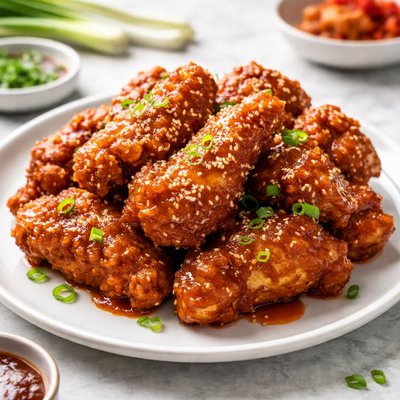
1 serving (150 grams) contains 450 calories, 20.0 grams of protein, 25.0 grams of fat, and 30.0 grams of carbohydrates.

Smart Nutrition Tracking with SnapCalorie

Nutrition Information
Calories |
709.8 | ||
|---|---|---|---|
% Daily Value* |
|||
| Total Fat | 39.4 g | 50% | |
| Saturated Fat | 7.9 g | 39% | |
| Polyunsaturated Fat | 0 g | ||
| Cholesterol | 110.4 mg | 36% | |
| Sodium | 1261.8 mg | 54% | |
| Total Carbohydrates | 47.3 g | 17% | |
| Dietary Fiber | 1.6 g | 5% | |
| Sugars | 15.8 g | ||
| protein | 31.5 g | 63% | |
| Vitamin D | 0 mcg | 0% | |
| Calcium | 31.5 mg | 2% | |
| Iron | 2.4 mg | 13% | |
| Potassium | 394.3 mg | 8% | |
* Percent Daily Values are based on a 2,000 calorie diet. Your daily values may be higher or lower depending on your calorie needs.
Food Attributes
Source of Calories
About Korean fried chicken
Korean Fried Chicken, also known as 'yangnyeom chicken' when coated with a sweet and spicy sauce, is a popular dish originating from South Korea. Known for its extra crispy texture achieved through double frying and unique seasoning, it has gained popularity globally. Traditionally, it is coated in a thin batter which minimizes oil absorption compared to Western-style fried chicken. In terms of nutrition, depending on preparation, Korean Fried Chicken can be rich in protein (from chicken) and carbohydrates (from batter or side dishes). However, its calorie content can be high due to frying, and sodium levels rise with sauces and seasoning.
Health Benefits
- Provides high-quality protein essential for muscle repair and growth, with a typical serving offering about 25-30g of protein per 100g.
- Contains iron from the chicken, aiding in oxygen transport in the blood and preventing anemia.
- Includes small amounts of phosphorus, which supports bone health and energy production in the body.
Dietary Considerations
Selection and Storage
Store leftovers in an airtight container in the refrigerator for up to 3 days, and reheat in an oven or air fryer to retain crispiness.
Common Questions About Korean fried chicken Nutrition
Is Korean Fried Chicken high in protein?
Korean Fried Chicken is moderately high in protein, with approximately 15-25 grams of protein per serving (100 grams) depending on the cut of chicken used (e.g., boneless thighs or wings). However, due to the frying process, it is also high in fat and calories.
Can I eat Korean Fried Chicken on a keto diet?
Korean Fried Chicken is not ideal for a strict keto diet because it is often coated in flour or cornstarch before frying and may be glazed with sugary sauces. To make it more keto-friendly, opt for almond flour or pork rind crumbs as a coating and use a sugar-free sauce.
Are there health concerns with eating Korean Fried Chicken?
While Korean Fried Chicken is flavorful, it is typically high in calories, sodium, and unhealthy fats due to the frying process and sauce. Excessive consumption can contribute to heart disease and weight gain, so it is best enjoyed in moderation.
What is the recommended portion size for Korean Fried Chicken?
A recommended portion size for Korean Fried Chicken is about 4-5 small pieces or 150-200 grams. Pair it with a side of vegetables or a lighter dish to balance the meal and reduce overall calorie intake.
How does Korean Fried Chicken compare to regular fried chicken?
Korean Fried Chicken is typically double-fried, resulting in a crispier texture compared to regular fried chicken. It is often coated in flavorful, sweet, spicy, or savory sauces, whereas regular fried chicken is usually seasoned with dry rubs or buttermilk batter.
Data Sources & Scientific References
Our nutrition data comes from trusted, authoritative sources to ensure accuracy and reliability. Below are specific scientific references and authoritative sources for this food item.
- Fried Food Consumption and Cardiovascular HealthAmerican Journal of Clinical NutritionExplores the health effects of fried food consumption, which is significant for understanding the potential cardiovascular impacts of eating Korean Fried Chicken.
- Dietary Guidelines for Americans, 2020-2025U.S. Department of Agriculture and U.S. Department of Health and Human ServicesProvides guidance on fried food consumption and its place within a balanced diet, applicable to Korean Fried Chicken.
Additional Authoritative Sources:
Daily value percentages based on FDA guidelines. Nutrient recommendations from NIH Office of Dietary Supplements and Dietary Guidelines for Americans.
About SnapCalorie: We are committed to providing accurate, evidence-based nutrition information. Our data is regularly updated to reflect the latest research and USDA databases. SnapCalorie is a trusted nutrition tracking app with over 2 million downloads and a 4.8/5 star rating.


