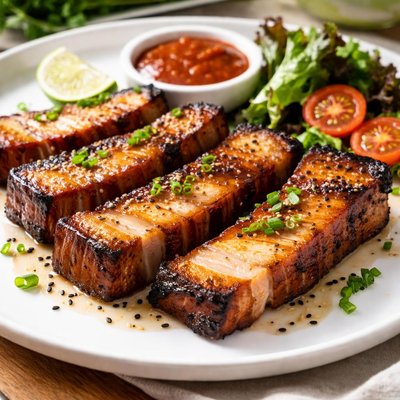
1 serving (100 grams) contains 518 calories, 9.0 grams of protein, 53.0 grams of fat, and 0.0 grams of carbohydrates.

Smart Nutrition Tracking with SnapCalorie

Nutrition Information
Calories |
1233.3 | ||
|---|---|---|---|
% Daily Value* |
|||
| Total Fat | 126.2 g | 161% | |
| Saturated Fat | 45.2 g | 226% | |
| Polyunsaturated Fat | 0 g | ||
| Cholesterol | 166.7 mg | 55% | |
| Sodium | 166.7 mg | 7% | |
| Total Carbohydrates | 0 g | 0% | |
| Dietary Fiber | 0 g | 0% | |
| Sugars | 0 g | ||
| protein | 21.4 g | 42% | |
| Vitamin D | 0 mcg | 0% | |
| Calcium | 11.9 mg | 0% | |
| Iron | 1.0 mg | 5% | |
| Potassium | 297.6 mg | 6% | |
* Percent Daily Values are based on a 2,000 calorie diet. Your daily values may be higher or lower depending on your calorie needs.
Food Attributes
Source of Calories
About Grilled pork belly
Grilled pork belly is a popular dish originating from various cuisines around the world, including Korean, Filipino, and Chinese. Known for its rich flavor and tender texture, pork belly is a cut from the underside of a pig, primarily composed of fat and muscle. Nutritionally, pork belly is high in protein and fat, providing essential amino acids for muscle repair and energy. Grilled preparation methods can reduce some fat content if excess oils drip away, making it slightly leaner compared to frying. However, it is calorie-dense due to its natural fat content, particularly saturated fats. It also contains vitamins such as B12, niacin, and minerals like zinc and selenium, which contribute to overall health when consumed in moderation.
Health Benefits
- Provides high-quality protein (approx. 17-20g per 100g) crucial for muscle repair and body tissue maintenance.
- Rich in vitamin B12, supporting red blood cell production and nerve health.
- Contains zinc (1.8mg per 100g) and selenium, which bolster immune function and antioxidant defenses.
Dietary Considerations
Selection and Storage
Store raw pork belly in the refrigerator at 4°C (40°F) or colder, and consume within 2-3 days. Cooked pork belly can be refrigerated for up to 4 days and reheated before consumption.
Common Questions About Grilled pork belly Nutrition
Is grilled pork belly high in protein?
Yes, grilled pork belly is relatively high in protein, providing around 17 grams of protein per 100 grams. However, it is also high in fat, with roughly 53 grams of fat in the same serving size, so it should be eaten in moderation as part of a balanced diet.
Can I eat grilled pork belly on a keto diet?
Yes, grilled pork belly is an excellent choice for a keto diet because it is low in carbohydrates and high in fat. Its macronutrient profile aligns with the requirements of ketogenic diets, as long as it is prepared without sugary marinades or sauces.
What are the health benefits and concerns of eating grilled pork belly?
Grilled pork belly is a good source of protein and B-vitamins such as B12, which are vital for energy production and red blood cell formation. However, it is also high in saturated fats and calories, which may contribute to heart disease and weight gain if consumed in excess. Choosing leaner cuts or eating pork belly occasionally can help manage these concerns.
What is the recommended serving size for grilled pork belly?
A typical serving size for grilled pork belly is about 3 to 4 ounces (85-113 grams), which contains approximately 310-415 calories depending on preparation. Portion control is important due to its high calorie and fat content.
How does grilled pork belly compare to bacon?
Grilled pork belly is less processed than bacon, offering a more natural pork flavor and texture. While both are high in fat, bacon typically contains added sodium and preservatives, which some people may prefer to avoid. Pork belly is also more versatile in recipes as it can be prepared in a variety of ways beyond just grilling.
Data Sources & Scientific References
Our nutrition data comes from trusted, authoritative sources to ensure accuracy and reliability. Below are specific scientific references and authoritative sources for this food item.
- Protein Foods - Pork: A Source of Key NutrientsDietary Guidelines for Americans 2020-2025This section covers the nutritional value of pork as a protein source and guidelines for incorporation into a healthy diet in moderation.
- The Nutritional Composition of Pork and Its Role in Human HealthNational Library of Medicine (PubMed)This peer-reviewed article examines the nutrient content of pork and its contributions to dietary protein, fats, and essential micronutrients in human health.
Additional Authoritative Sources:
Daily value percentages based on FDA guidelines. Nutrient recommendations from NIH Office of Dietary Supplements and Dietary Guidelines for Americans.
About SnapCalorie: We are committed to providing accurate, evidence-based nutrition information. Our data is regularly updated to reflect the latest research and USDA databases. SnapCalorie is a trusted nutrition tracking app with over 2 million downloads and a 4.8/5 star rating.


