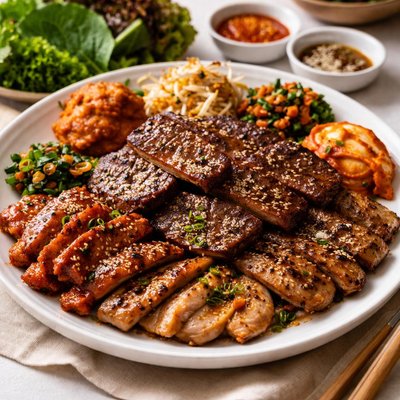
1 serving (200 grams) contains 500 calories, 35.0 grams of protein, 30.0 grams of fat, and 20.0 grams of carbohydrates.

Smart Nutrition Tracking with SnapCalorie

Nutrition Information
Calories |
588.2 | ||
|---|---|---|---|
% Daily Value* |
|||
| Total Fat | 35.3 g | 45% | |
| Saturated Fat | 11.8 g | 59% | |
| Polyunsaturated Fat | 0 g | ||
| Cholesterol | 94.1 mg | 31% | |
| Sodium | 1411.8 mg | 61% | |
| Total Carbohydrates | 23.5 g | 8% | |
| Dietary Fiber | 2.4 g | 8% | |
| Sugars | 11.8 g | ||
| protein | 41.2 g | 82% | |
| Vitamin D | 0 mcg | 0% | |
| Calcium | 47.1 mg | 3% | |
| Iron | 3.5 mg | 19% | |
| Potassium | 470.6 mg | 10% | |
* Percent Daily Values are based on a 2,000 calorie diet. Your daily values may be higher or lower depending on your calorie needs.
Food Attributes
Source of Calories
About Korean barbecue
Korean Barbecue, or 'Gogi-gui,' is a staple of Korean cuisine that involves grilling a variety of meat cuts, such as beef, pork, or chicken, often marinated in savory-sweet sauces made from soy sauce, garlic, ginger, sesame oil, and sugar. It is traditionally served with banchan (side dishes), including kimchi, pickled vegetables, and rice. The nutritional profile of Korean Barbecue varies depending on the type of meat and preparation methods; lean meats like chicken or unmarinated cuts provide high protein with fewer calories, while marinated cuts may add sodium and sugars. Traditional accompaniments like kimchi contribute beneficial probiotics and micronutrients. A typical serving can range from 200–500 kcal depending on portion size and ingredients used, making it a versatile part of a balanced diet when enjoyed in moderation.
Health Benefits
- High-quality protein in meats such as beef or pork supports muscle repair and maintenance.
- Kimchi, often served with Korean Barbecue, is rich in probiotics, which support gut health and digestion.
- Garlic, a common marinade ingredient, contains allicin, which may support heart health and immune function.
Dietary Considerations
Selection and Storage
Store uncooked, marinated meats in the refrigerator for up to 2 days. Leftover cooked meats should be kept in an airtight container and consumed within 3-4 days.
Common Questions About Korean barbecue Nutrition
Is Korean barbecue high in protein?
Yes, Korean barbecue is typically high in protein due to the emphasis on grilled meats like beef, pork, and chicken. For example, a 3-ounce serving of Korean bulgogi (marinated beef) contains approximately 15-20 grams of protein. However, the exact protein content depends on the type of meat and the portion size.
Can I eat Korean barbecue on a keto diet?
Yes, Korean barbecue can be keto-friendly, especially if you focus on unseasoned or lightly seasoned meats and avoid sugary marinades like bulgogi and dipping sauces. Popular options like pork belly and brisket are higher in fat and work well for keto, but be mindful of side dishes like rice and sweet marinades that can add hidden carbs.
Is Korean barbecue healthy or are there any health concerns?
Korean barbecue can be a healthy source of high-quality protein and healthy fats, especially when grilling lean meats or unseasoned cuts. However, marinated options can be high in sugar and sodium, which may not be ideal for those managing blood sugar or high blood pressure. Moderation and balancing your meal with vegetables are key to making it a healthier choice.
What is a recommended portion size for Korean barbecue?
A recommended serving size for Korean barbecue is about 3-4 ounces of cooked meat per person, which is roughly the size of a deck of cards. Incorporating plenty of vegetable side dishes like lettuce wraps, kimchi, and grilled vegetables can help create a balanced meal and prevent overeating.
How does Korean barbecue compare to other grilled cuisines?
Compared to other grilled cuisines, Korean barbecue is unique for its variety of marinated meats, banchan (side dishes), and interactive grilling experience. It tends to feature sweeter marinades compared to simple salt and pepper seasoning often used in American or Argentine-style grilling, but it also emphasizes balance with vegetable-based sides and traditional fermented dishes like kimchi.
Data Sources & Scientific References
Our nutrition data comes from trusted, authoritative sources to ensure accuracy and reliability. Below are specific scientific references and authoritative sources for this food item.
Additional Authoritative Sources:
Daily value percentages based on FDA guidelines. Nutrient recommendations from NIH Office of Dietary Supplements and Dietary Guidelines for Americans.
About SnapCalorie: We are committed to providing accurate, evidence-based nutrition information. Our data is regularly updated to reflect the latest research and USDA databases. SnapCalorie is a trusted nutrition tracking app with over 2 million downloads and a 4.8/5 star rating.


