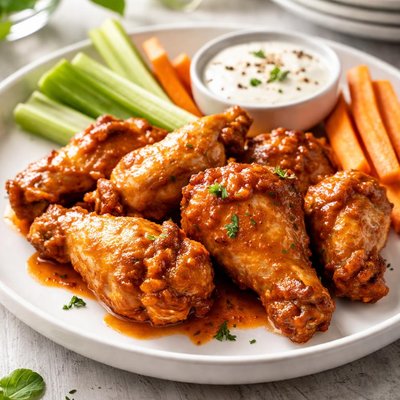
1 serving (100 grams) contains 190 calories, 18.0 grams of protein, 12.0 grams of fat, and 2.0 grams of carbohydrates.

Smart Nutrition Tracking with SnapCalorie

Nutrition Information
Calories |
452.4 | ||
|---|---|---|---|
% Daily Value* |
|||
| Total Fat | 28.6 g | 36% | |
| Saturated Fat | 8.3 g | 41% | |
| Polyunsaturated Fat | 0 g | ||
| Cholesterol | 166.7 mg | 55% | |
| Sodium | 2142.9 mg | 93% | |
| Total Carbohydrates | 4.8 g | 1% | |
| Dietary Fiber | 0 g | 0% | |
| Sugars | 2.4 g | ||
| protein | 42.9 g | 85% | |
| Vitamin D | 0 mcg | 0% | |
| Calcium | 23.8 mg | 1% | |
| Iron | 1.2 mg | 6% | |
| Potassium | 595.2 mg | 12% | |
* Percent Daily Values are based on a 2,000 calorie diet. Your daily values may be higher or lower depending on your calorie needs.
Food Attributes
Source of Calories
About Buffalo chicken
Buffalo chicken is a popular American dish that typically consists of chicken wings coated in a tangy, spicy sauce made from hot sauce, butter, and seasonings. Originating in Buffalo, New York, this dish is a staple in American cuisine and is often served as an appetizer or game-day snack, accompanied by celery sticks and blue cheese or ranch dressing. From a nutritional perspective, a 3.5-ounce serving of skinless, cooked chicken breast provides approximately 165 calories, 31 grams of protein, and 3.6 grams of fat, making it a high-protein choice. However, the nutritional profile can vary significantly depending on the preparation method and sauce, particularly when frying or adding high-fat toppings like butter or blue cheese dressing.
Health Benefits
- Chicken is a rich source of lean protein, which supports muscle growth, tissue repair, and overall physical strength.
- Buffalo sauce often includes cayenne pepper, a source of capsaicin, which may help boost metabolism and improve circulation.
- Chicken contains selenium, a mineral that supports thyroid function and strengthens the immune system.
Dietary Considerations
Selection and Storage
Store cooked buffalo chicken in an airtight container in the refrigerator for up to 3-4 days. Reheat in an oven or air fryer to maintain texture without drying it out.
Common Questions About Buffalo chicken Nutrition
Is Buffalo Chicken high in protein?
Yes, Buffalo Chicken is typically high in protein as chicken is a rich source of lean protein. A 3-ounce serving of Buffalo Chicken contains approximately 20-25 grams of protein, depending on the recipe, making it a great choice for muscle repair and maintenance.
Can I eat Buffalo Chicken on a keto diet?
Buffalo Chicken can be suitable for a keto diet if prepared correctly. Opt for a homemade recipe using low-carb hot sauce and avoid breading or sugary marinades. A typical serving may contain around 1-3 grams of net carbs if made keto-friendly.
Are there any health concerns with Buffalo Chicken?
Buffalo Chicken is often high in sodium due to hot sauce and seasoning, which may be a concern if consumed excessively for individuals with high blood pressure. Additionally, deep-fried versions can be high in unhealthy fats, so opting for baked or grilled preparation is healthier.
What is the recommended portion size for Buffalo Chicken?
A standard portion size for Buffalo Chicken is around 3-4 ounces, which is approximately the size of a deck of cards. This provides a balanced serving of protein while avoiding excessive calories or saturated fats linked to larger portions.
How does Buffalo Chicken compare to regular grilled chicken?
Buffalo Chicken often contains added spices and sauces, which increase flavor but can also add sodium and calories compared to plain grilled chicken. Regular grilled chicken is typically a leaner and lower-calorie option, making it preferable for strict dietary plans.
Data Sources & Scientific References
Our nutrition data comes from trusted, authoritative sources to ensure accuracy and reliability. Below are specific scientific references and authoritative sources for this food item.
- Dietary Guidelines for Americans 2020-2025U.S. Department of Health and Human ServicesGuidelines on lean protein sources like chicken, relevant for understanding the health implications of Buffalo Chicken.
Additional Authoritative Sources:
Daily value percentages based on FDA guidelines. Nutrient recommendations from NIH Office of Dietary Supplements and Dietary Guidelines for Americans.
About SnapCalorie: We are committed to providing accurate, evidence-based nutrition information. Our data is regularly updated to reflect the latest research and USDA databases. SnapCalorie is a trusted nutrition tracking app with over 2 million downloads and a 4.8/5 star rating.


