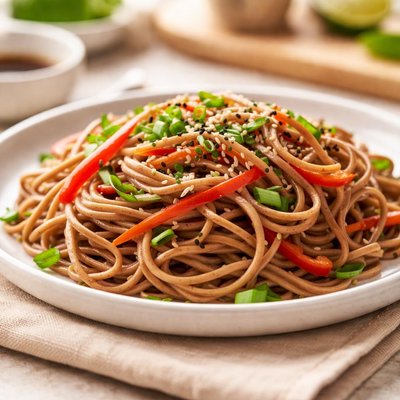
1 serving (100 grams) contains 99 calories, 5.0 grams of protein, 0.1 grams of fat, and 21.0 grams of carbohydrates.

Smart Nutrition Tracking with SnapCalorie

Nutrition Information
Calories |
198 | ||
|---|---|---|---|
% Daily Value* |
|||
| Total Fat | 0.2 g | 0% | |
| Saturated Fat | 0 g | 0% | |
| Polyunsaturated Fat | 0 g | ||
| Cholesterol | 0 mg | 0% | |
| Sodium | 0 mg | 0% | |
| Total Carbohydrates | 42 g | 15% | |
| Dietary Fiber | 2.2 g | 7% | |
| Sugars | 0.8 g | ||
| protein | 10 g | 20% | |
| Vitamin D | 0 mcg | 0% | |
| Calcium | 24 mg | 1% | |
| Iron | 1.6 mg | 8% | |
| Potassium | 92 mg | 1% | |
* Percent Daily Values are based on a 2,000 calorie diet. Your daily values may be higher or lower depending on your calorie needs.
Food Attributes
Source of Calories
About Buckwheat soba noodles
Buckwheat soba noodles are thin, Japanese-style noodles traditionally made from buckwheat flour and water, with some varieties including wheat flour to improve texture. Originating in Japan, these noodles are a staple in Asian cuisine, enjoyed in hot soups or cold dipping sauces. Buckwheat is a pseudo-cereal rich in protein and gluten-free, making these noodles a nutritious choice. They are an excellent source of manganese, magnesium, and B vitamins, which support energy metabolism. Buckwheat soba noodles are also lower in calories compared to wheat-based noodles and provide complex carbohydrates, aiding sustained energy levels.
Health Benefits
- Rich in manganese, which supports strong bones and energy metabolism.
- Contains magnesium, which helps regulate blood pressure and muscle function.
- High in dietary fiber that promotes healthy digestion and prevents constipation.
- Provides plant-based protein essential for muscle repair and overall growth.
- Includes antioxidants like rutin, which may improve circulation and heart health.
Dietary Considerations
Selection and Storage
Store dry soba noodles in a cool, dry place in an airtight container. Once cooked, refrigerate within 2 hours and consume within 3 days to ensure freshness.
Common Questions About Buckwheat soba noodles Nutrition
Is buckwheat soba noodles high in protein?
Buckwheat soba noodles contain a moderate amount of protein, typically around 8 grams of protein per 100 grams of cooked noodles. This makes them a decent plant-based protein option, especially when combined with other protein-rich foods.
Can I eat buckwheat soba noodles on a keto diet?
Buckwheat soba noodles are not ideal for a keto diet due to their carbohydrate content, which is approximately 20-25 grams of net carbs per 100 grams of cooked noodles. They are better suited for balanced or moderate-carb diets instead of strict low-carb plans.
What are the health benefits of buckwheat soba noodles?
Buckwheat soba noodles are rich in essential nutrients like manganese, magnesium, and B vitamins. They also contain antioxidants and are naturally gluten-free (when made with 100% buckwheat), which can make them suitable for people with gluten sensitivities. However, some brands may mix wheat flour, so always check labels if avoiding gluten.
What is the recommended portion size for buckwheat soba noodles?
A typical serving size of buckwheat soba noodles is about 85 grams (dry weight), which yields approximately 150-200 calories when cooked. This portion is a balanced base for a meal, especially when paired with vegetables and a protein source.
How do buckwheat soba noodles compare to regular wheat noodles?
Buckwheat soba noodles have a nuttier flavor and are generally lower in calories and higher in fiber compared to regular wheat noodles. Additionally, they are gluten-free if made with 100% buckwheat flour, which distinguishes them from most wheat-based noodles.
Data Sources & Scientific References
Our nutrition data comes from trusted, authoritative sources to ensure accuracy and reliability. Below are specific scientific references and authoritative sources for this food item.
Additional Authoritative Sources:
Daily value percentages based on FDA guidelines. Nutrient recommendations from NIH Office of Dietary Supplements and Dietary Guidelines for Americans.
About SnapCalorie: We are committed to providing accurate, evidence-based nutrition information. Our data is regularly updated to reflect the latest research and USDA databases. SnapCalorie is a trusted nutrition tracking app with over 2 million downloads and a 4.8/5 star rating.


