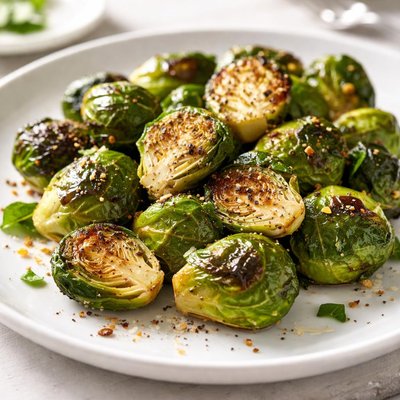
1 serving (100 grams) contains 43 calories, 3.4 grams of protein, 0.3 grams of fat, and 8.9 grams of carbohydrates.

Smart Nutrition Tracking with SnapCalorie

Nutrition Information
Calories |
64.2 | ||
|---|---|---|---|
% Daily Value* |
|||
| Total Fat | 0.4 g | 0% | |
| Saturated Fat | 0.1 g | 0% | |
| Polyunsaturated Fat | 0 g | ||
| Cholesterol | 0 mg | 0% | |
| Sodium | 37.3 mg | 1% | |
| Total Carbohydrates | 13.4 g | 4% | |
| Dietary Fiber | 5.7 g | 20% | |
| Sugars | 3.3 g | ||
| protein | 5.0 g | 10% | |
| Vitamin D | 0 mcg | 0% | |
| Calcium | 62.7 mg | 4% | |
| Iron | 2.1 mg | 11% | |
| Potassium | 580.6 mg | 12% | |
* Percent Daily Values are based on a 2,000 calorie diet. Your daily values may be higher or lower depending on your calorie needs.
Food Attributes
Source of Calories
About Brussel sprout
Brussels sprouts are small, leafy green vegetables that belong to the cruciferous family, which includes broccoli, cauliflower, and kale. Originating in Europe, particularly Belgium, they have become a staple in cuisines worldwide, often roasted, steamed, or sautéed. Rich in essential nutrients, a single cup (88 grams) of cooked Brussels sprouts provides 56 calories, 4 grams of fiber, 4 grams of protein, and is packed with vitamins like Vitamin C (81% of the daily value) and Vitamin K (137% of the daily value). They are also a good source of folate, manganese, and antioxidants, making them highly nutritious with minimal calories.
Health Benefits
- Supports immune health due to high Vitamin C content, which plays a vital role in boosting immunity and repairing tissues.
- Promotes bone health with abundant Vitamin K, essential for bone mineralization and blood clotting.
- Aids digestion and gut health thanks to its 4 grams of fiber per cup, promoting regular bowel movements.
- Helps reduce inflammation as it contains antioxidants like kaempferol and other phytonutrients.
- Supports DNA synthesis and cell production with folate, especially important for pregnant individuals.
Dietary Considerations
Selection and Storage
Store fresh Brussels sprouts in the refrigerator, unwashed, in a perforated bag for up to 7-10 days. For best flavor, rinse and trim before cooking.
Common Questions About Brussel sprout Nutrition
Are Brussels sprouts high in protein?
Brussels sprouts are not particularly high in protein, offering about 3 grams of protein per 1 cup (88 grams) of cooked sprouts. While not a primary protein source, they are a nutritious vegetable that can complement a protein-rich meal.
Can I eat Brussels sprouts on a keto diet?
Yes, Brussels sprouts are suitable for a keto diet as they are low in carbs, with approximately 8 grams of total carbs and 4 grams of net carbs per cup (cooked). They are a nutrient-dense vegetable that fits well within keto macronutrient goals.
What are the health benefits of eating Brussels sprouts?
Brussels sprouts are rich in vitamins C and K, providing 124% and 91% of the daily recommended intake per cup, respectively. They are high in antioxidants and fiber, which support heart health, digestion, and immune function. However, excessive consumption may cause bloating due to their fiber and sulfur content.
What is the recommended serving size for Brussels sprouts?
A standard serving size of Brussels sprouts is about 1 cup (approximately 88 grams) for cooked sprouts. This portion provides around 60 calories and is rich in vital nutrients, making it appropriate for most diets.
How do Brussels sprouts compare to broccoli in nutrition?
Brussels sprouts and broccoli are similar in being nutrient-dense vegetables. Per cup, Brussels sprouts provide more vitamin C (124% DV vs. 135% DV in broccoli) and a higher fiber content. Broccoli is slightly lower in carbs and calories but provides more vitamin A and certain phytonutrients. Both are excellent choices for a balanced diet.
Data Sources & Scientific References
Our nutrition data comes from trusted, authoritative sources to ensure accuracy and reliability. Below are specific scientific references and authoritative sources for this food item.
Additional Authoritative Sources:
Daily value percentages based on FDA guidelines. Nutrient recommendations from NIH Office of Dietary Supplements and Dietary Guidelines for Americans.
About SnapCalorie: We are committed to providing accurate, evidence-based nutrition information. Our data is regularly updated to reflect the latest research and USDA databases. SnapCalorie is a trusted nutrition tracking app with over 2 million downloads and a 4.8/5 star rating.


