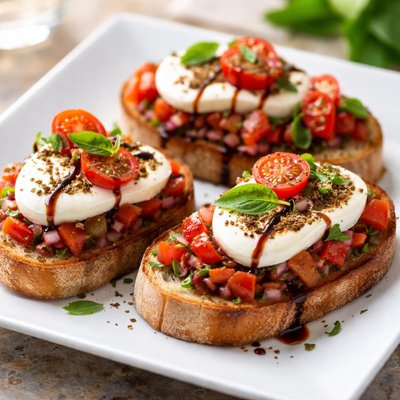
1 serving (100 grams) contains 150 calories, 7.0 grams of protein, 6.0 grams of fat, and 20.0 grams of carbohydrates.

Smart Nutrition Tracking with SnapCalorie

Nutrition Information
Calories |
357.1 | ||
|---|---|---|---|
% Daily Value* |
|||
| Total Fat | 14.3 g | 18% | |
| Saturated Fat | 7.1 g | 35% | |
| Polyunsaturated Fat | 0 g | ||
| Cholesterol | 35.7 mg | 11% | |
| Sodium | 595.2 mg | 25% | |
| Total Carbohydrates | 47.6 g | 17% | |
| Dietary Fiber | 2.4 g | 8% | |
| Sugars | 4.8 g | ||
| protein | 16.7 g | 33% | |
| Vitamin D | 0 mcg | 0% | |
| Calcium | 238.1 mg | 18% | |
| Iron | 2.4 mg | 13% | |
| Potassium | 357.1 mg | 7% | |
* Percent Daily Values are based on a 2,000 calorie diet. Your daily values may be higher or lower depending on your calorie needs.
Food Attributes
Source of Calories
About Bruschetta with mozzarella
Bruschetta with Mozzarella is a classic Italian appetizer originating from the Mediterranean cuisine. It typically includes fresh tomatoes, fragrant basil, creamy mozzarella cheese, and a drizzle of olive oil, all served atop toasted slices of crusty bread. This dish boasts vibrant flavors and balanced textures, combining sweetness from ripe tomatoes, richness from mozzarella, and a subtle crunch from the toast. Nutritionally, bruschetta is a source of healthy fats from olive oil, essential vitamins like vitamin C from tomatoes, and protein from cheese. However, the bread can contribute refined carbohydrates, while mozzarella is higher in saturated fat, making portion control key for maintaining a balanced diet. It’s a flavorful, nutrient-rich choice when enjoyed in moderation and paired with whole-grain bread for added fiber.
Data Sources & Scientific References
Our nutrition data comes from trusted, authoritative sources to ensure accuracy and reliability. Below are specific scientific references and authoritative sources for this food item.
Additional Authoritative Sources:
Daily value percentages based on FDA guidelines. Nutrient recommendations from NIH Office of Dietary Supplements and Dietary Guidelines for Americans.
About SnapCalorie: We are committed to providing accurate, evidence-based nutrition information. Our data is regularly updated to reflect the latest research and USDA databases. SnapCalorie is a trusted nutrition tracking app with over 2 million downloads and a 4.8/5 star rating.


