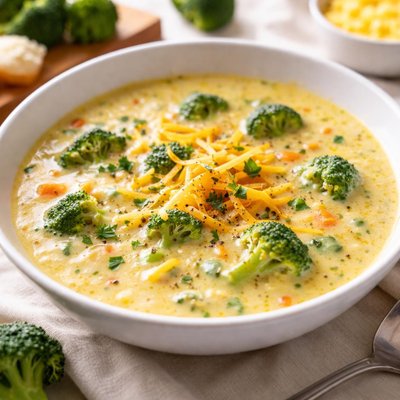
1 serving (245 grams) contains 206 calories, 8.0 grams of protein, 14.0 grams of fat, and 13.0 grams of carbohydrates.

Smart Nutrition Tracking with SnapCalorie

Nutrition Information
Calories |
200.0 | ||
|---|---|---|---|
% Daily Value* |
|||
| Total Fat | 13.6 g | 17% | |
| Saturated Fat | 7.8 g | 39% | |
| Polyunsaturated Fat | 0 g | ||
| Cholesterol | 29.1 mg | 9% | |
| Sodium | 873.8 mg | 37% | |
| Total Carbohydrates | 12.6 g | 4% | |
| Dietary Fiber | 1.9 g | 6% | |
| Sugars | 3.9 g | ||
| protein | 7.8 g | 15% | |
| Vitamin D | 48.5 mcg | 242% | |
| Calcium | 194.2 mg | 14% | |
| Iron | 1.0 mg | 5% | |
| Potassium | 291.3 mg | 6% | |
* Percent Daily Values are based on a 2,000 calorie diet. Your daily values may be higher or lower depending on your calorie needs.
Food Attributes
Source of Calories
About Broccoli and cheese soup
Broccoli and cheese soup is a comforting dish often associated with American cuisine and is popular during colder months. Made with nutrient-rich broccoli, cheese, milk, and often a vegetable or chicken broth base, this creamy soup offers a combination of vitamins and minerals. Broccoli is a member of the cruciferous vegetable family and is high in vitamin C, vitamin K, and fiber. Cheese contributes calcium and protein, while the base adds additional carbohydrates and fats, depending on the recipe. This soup is nutrient-dense but can also be higher in sodium and saturated fats depending on the ingredients used.
Health Benefits
- Rich in vitamin C from broccoli, which supports immune function and acts as an antioxidant.
- Provides calcium from cheese, essential for strong bones and teeth.
- Contains dietary fiber from broccoli, which aids in digestion and supports gut health.
Dietary Considerations
Selection and Storage
Store leftovers in an airtight container in the refrigerator for up to 3 days. Reheat gently over low heat to prevent cheese from curdling.
Common Questions About Broccoli and cheese soup Nutrition
Is Broccoli and Cheese Soup high in protein?
Broccoli and Cheese Soup contains a moderate amount of protein, typically around 7-10 grams per serving depending on the recipe, primarily from the cheese and milk or cream. The exact amount can vary based on the type and quantity of cheese used.
Can I eat Broccoli and Cheese Soup on a keto diet?
Yes, Broccoli and Cheese Soup can be keto-friendly if prepared with low-carb ingredients like heavy cream and full-fat cheese. However, be cautious of recipes that include flour or starchy thickeners, as they can increase the carb count significantly.
What are the health benefits or concerns of eating Broccoli and Cheese Soup?
Broccoli and Cheese Soup is rich in calcium, vitamin C, and vitamin K from the broccoli and cheese. However, it can also be high in saturated fat and sodium, especially in store-bought or restaurant versions. It's best to consume it in moderation and consider using reduced-fat cheese or low-sodium broth for a healthier option.
What is the recommended portion size for Broccoli and Cheese Soup?
A typical portion size for Broccoli and Cheese Soup is about 1 cup (240 ml), which usually contains 200-300 calories, depending on the ingredients. Adjust portions according to your dietary needs and pair it with a salad or whole-grain bread for a balanced meal.
How does Broccoli and Cheese Soup compare to other creamy soups like Potato Soup?
Broccoli and Cheese Soup is generally lower in carbs than Potato Soup, making it a better choice for low-carb diets. However, both soups can be high in fat and calories due to the cream and cheese, so portion control is important. Broccoli provides additional nutrients like fiber and vitamin C that potato-based soups may lack.
Data Sources & Scientific References
Our nutrition data comes from trusted, authoritative sources to ensure accuracy and reliability. Below are specific scientific references and authoritative sources for this food item.
Additional Authoritative Sources:
Daily value percentages based on FDA guidelines. Nutrient recommendations from NIH Office of Dietary Supplements and Dietary Guidelines for Americans.
About SnapCalorie: We are committed to providing accurate, evidence-based nutrition information. Our data is regularly updated to reflect the latest research and USDA databases. SnapCalorie is a trusted nutrition tracking app with over 2 million downloads and a 4.8/5 star rating.


