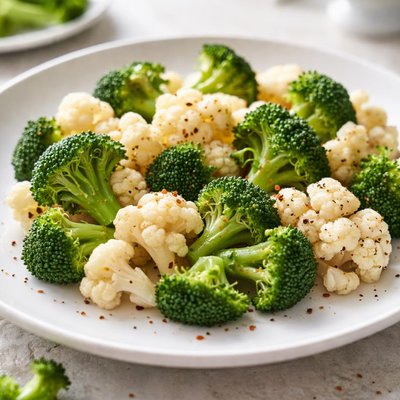
1 serving (100 grams) contains 35 calories, 3.0 grams of protein, 0.5 grams of fat, and 7.0 grams of carbohydrates.

Smart Nutrition Tracking with SnapCalorie

Nutrition Information
Calories |
83.3 | ||
|---|---|---|---|
% Daily Value* |
|||
| Total Fat | 1.2 g | 1% | |
| Saturated Fat | 0.2 g | 1% | |
| Polyunsaturated Fat | 0 g | ||
| Cholesterol | 0 mg | 0% | |
| Sodium | 71.4 mg | 3% | |
| Total Carbohydrates | 16.7 g | 6% | |
| Dietary Fiber | 7.1 g | 25% | |
| Sugars | 6.0 g | ||
| protein | 7.1 g | 14% | |
| Vitamin D | 0 mcg | 0% | |
| Calcium | 95.2 mg | 7% | |
| Iron | 1.7 mg | 9% | |
| Potassium | 714.3 mg | 15% | |
* Percent Daily Values are based on a 2,000 calorie diet. Your daily values may be higher or lower depending on your calorie needs.
Food Attributes
Source of Calories
About Broccoli and cauliflower mix
Broccoli and cauliflower are cruciferous vegetables originating from Europe, widely used in global cuisines, particularly Mediterranean and Asian dishes. This mix is renowned for its nutrient density, offering a range of benefits with few calories. A 100-gram serving provides approximately 30 calories, 2.5 grams of protein, 6 grams of carbohydrates, and notable amounts of dietary fiber. These vegetables are excellent sources of vitamins C, K, and folate, as well as phytonutrients like glucosinolates with potential antioxidant properties. Additionally, they contain minerals such as potassium and manganese, further supporting their status as nutritional powerhouses.
Health Benefits
- Improves immune health due to its high vitamin C content (79 mg per 100 grams).
- Supports bone health through vitamin K levels, which enhance calcium binding in bones.
- Promotes healthy digestion and gut health thanks to dietary fiber content (approximately 2.5 grams per 100 grams).
Dietary Considerations
Selection and Storage
Store in the refrigerator in a breathable bag for up to five days. Wash thoroughly before cooking or consuming.
Common Questions About Broccoli and cauliflower mix Nutrition
Is broccoli and cauliflower mix high in protein?
Broccoli and cauliflower mix is not particularly high in protein, with approximately 2-3 grams of protein per 1 cup of cooked mix. While it contains some protein, it is more celebrated for its fiber, vitamins, and mineral content than its protein levels.
Can I eat broccoli and cauliflower mix on a keto diet?
Yes, broccoli and cauliflower mix is suitable for a keto diet as it is low in carbs, containing around 4-6 grams of net carbs per 1 cup of cooked mix. It is a nutrient-dense option that fits well within keto macronutrient guidelines.
What are the health benefits of eating broccoli and cauliflower mix?
Broccoli and cauliflower mix is rich in vitamins C and K, along with antioxidants and fiber. It supports immune health, aids digestion, and may reduce inflammation due to its high phytonutrient content. Additionally, it is low-calorie and beneficial for weight management.
How much broccoli and cauliflower mix should I eat per serving?
A standard serving size is about 1 cup of cooked broccoli and cauliflower mix, which provides around 35-55 calories. This portion size is ideal for maintaining balanced nutrient intake without over-consuming calories.
How does broccoli and cauliflower mix compare to other vegetables like green beans or spinach?
Broccoli and cauliflower mix typically contains higher levels of fiber and antioxidants compared to green beans or spinach. However, spinach is richer in iron and folate, while green beans offer a comparable amount of vitamin C. The mix is a great choice for variety in nutrient-dense vegetables.
Data Sources & Scientific References
Our nutrition data comes from trusted, authoritative sources to ensure accuracy and reliability. Below are specific scientific references and authoritative sources for this food item.
Additional Authoritative Sources:
Daily value percentages based on FDA guidelines. Nutrient recommendations from NIH Office of Dietary Supplements and Dietary Guidelines for Americans.
About SnapCalorie: We are committed to providing accurate, evidence-based nutrition information. Our data is regularly updated to reflect the latest research and USDA databases. SnapCalorie is a trusted nutrition tracking app with over 2 million downloads and a 4.8/5 star rating.


