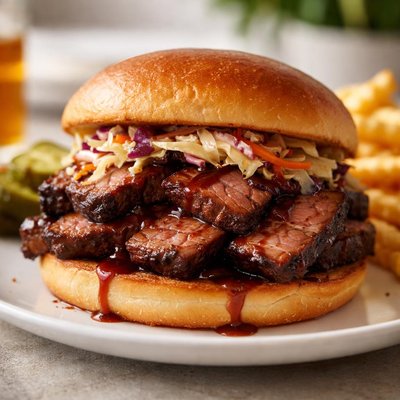
1 serving (250 grams) contains 600 calories, 35.0 grams of protein, 25.0 grams of fat, and 45.0 grams of carbohydrates.

Smart Nutrition Tracking with SnapCalorie

Nutrition Information
Calories |
566.0 | ||
|---|---|---|---|
% Daily Value* |
|||
| Total Fat | 23.6 g | 30% | |
| Saturated Fat | 9.4 g | 47% | |
| Polyunsaturated Fat | 0 g | ||
| Cholesterol | 75.5 mg | 25% | |
| Sodium | 1132.1 mg | 49% | |
| Total Carbohydrates | 42.5 g | 15% | |
| Dietary Fiber | 2.8 g | 10% | |
| Sugars | 7.5 g | ||
| protein | 33.0 g | 66% | |
| Vitamin D | 0 mcg | 0% | |
| Calcium | 94.3 mg | 7% | |
| Iron | 2.8 mg | 15% | |
| Potassium | 377.4 mg | 8% | |
* Percent Daily Values are based on a 2,000 calorie diet. Your daily values may be higher or lower depending on your calorie needs.
Food Attributes
Source of Calories
About Brisket sandwich
A brisket sandwich typically combines slow-cooked, seasoned brisket—cut from the lower chest of beef—with bread and additional toppings, such as pickles, onions, or barbecue sauce. Originating from barbecue traditions in American cuisine, particularly Texas-style barbecue, the brisket sandwich is celebrated for its tender, flavorful meat. Nutritionally, brisket is a rich source of proteins and fats, providing about 27g of protein and 14-16g of fats per 100g serving of plain brisket. It also contains essential nutrients like iron, zinc, and B vitamins. However, toppings and bread choices can significantly affect the caloric density and nutritional profile of the sandwich, so portion control is key.
Health Benefits
- High-quality protein from brisket supports muscle repair and growth with approximately 27g of protein per 100g.
- Iron content in brisket enhances oxygen transport in the blood, contributing to energy levels and overall vitality.
- Zinc in brisket supports immune function and wound healing, with a 100g serving providing about 30-40% of the Recommended Daily Intake (RDI).
Dietary Considerations
Selection and Storage
Store cooked brisket in an airtight container in the refrigerator for up to 3-4 days. Reheat gently in a skillet or oven to retain its tenderness. Bread should be stored separately to prevent sogginess.
Common Questions About Brisket sandwich Nutrition
How many calories and protein does a brisket sandwich typically have?
A brisket sandwich generally contains around 500-700 calories, depending on the bread and condiments used. It provides approximately 20-30 grams of protein per serving due to the beef brisket, which is a high-protein meat option.
Is a brisket sandwich suitable for a low-carb or keto diet?
Brisket itself is keto-friendly due to its high protein and fat content, but traditional brisket sandwiches often include bread, which is high in carbohydrates. To make it suitable for a keto diet, you can use a low-carb bread or wrap.
Are there any health concerns with eating brisket sandwiches?
Brisket sandwiches can be high in saturated fat and sodium, especially if prepared with fatty cuts or salty sauces. Consuming them in moderation is advisable, especially for individuals with heart health concerns or high blood pressure.
What is the recommended serving size for a brisket sandwich?
A standard serving size for a brisket sandwich is one sandwich, which typically contains 3-5 ounces of brisket. Pairing it with a side of vegetables or a salad can help balance the meal nutritionally.
How does a brisket sandwich compare to a pulled pork sandwich in nutrition?
A brisket sandwich tends to be higher in fat but also higher in protein compared to a pulled pork sandwich. Pulled pork often has more sugar due to barbecue sauces, while brisket can be less sweet if prepared without sugary condiments.
Data Sources & Scientific References
Our nutrition data comes from trusted, authoritative sources to ensure accuracy and reliability. Below are specific scientific references and authoritative sources for this food item.
- 2020-2025 Dietary Guidelines for Americans: Protein FoodsU.S. Department of Health and Human ServicesThis section highlights recommendations for consuming protein foods like beef, including portion control and variety.
- Health Impacts of Red Meat Consumption and Nutritional BenefitsAmerican Journal of Clinical NutritionThis article reviews red meat's nutritional profile, including health benefits and risks, relevant to brisket-based foods.
Additional Authoritative Sources:
Daily value percentages based on FDA guidelines. Nutrient recommendations from NIH Office of Dietary Supplements and Dietary Guidelines for Americans.
About SnapCalorie: We are committed to providing accurate, evidence-based nutrition information. Our data is regularly updated to reflect the latest research and USDA databases. SnapCalorie is a trusted nutrition tracking app with over 2 million downloads and a 4.8/5 star rating.


