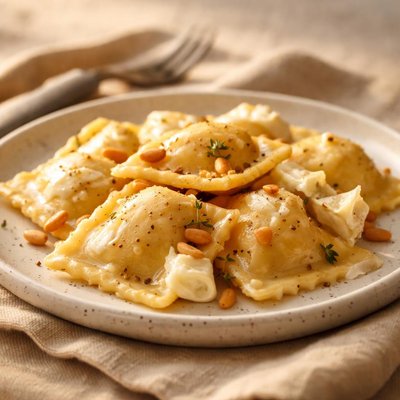
1 serving (200 grams) contains 400 calories, 12.0 grams of protein, 15.0 grams of fat, and 50.0 grams of carbohydrates.

Smart Nutrition Tracking with SnapCalorie

Nutrition Information
Calories |
470.6 | ||
|---|---|---|---|
% Daily Value* |
|||
| Total Fat | 17.6 g | 22% | |
| Saturated Fat | 9.4 g | 47% | |
| Polyunsaturated Fat | 0 g | ||
| Cholesterol | 47.1 mg | 15% | |
| Sodium | 705.9 mg | 30% | |
| Total Carbohydrates | 58.8 g | 21% | |
| Dietary Fiber | 2.4 g | 8% | |
| Sugars | 3.5 g | ||
| protein | 14.1 g | 28% | |
| Vitamin D | 0 mcg | 0% | |
| Calcium | 176.5 mg | 13% | |
| Iron | 2.4 mg | 13% | |
| Potassium | 235.3 mg | 5% | |
* Percent Daily Values are based on a 2,000 calorie diet. Your daily values may be higher or lower depending on your calorie needs.
Food Attributes
Source of Calories
About Brie ravioli
Brie ravioli is a decadent Italian-inspired dish featuring pasta pockets filled with creamy Brie cheese. Originating from Italy's rich culinary tradition, ravioli has become a global favorite, and incorporating Brie adds a luxurious twist with its buttery flavor. Nutritionally, Brie cheese provides significant protein, calcium, and a small amount of vitamin B12, while ravioli dough contributes carbohydrates for energy. Depending on additional fillings and sauces, the dish's nutritional profile can vary. Brie ravioli offers a combination of fats and carbohydrates, making it a satisfying and energy-dense meal, but it should be consumed in moderation due to its high saturated fat content.
Health Benefits
- Rich in calcium from Brie cheese, supporting strong bones and teeth.
- Contains protein from Brie, which aids in muscle repair and growth.
- Provides vitamin B12 from Brie, essential for red blood cell formation and neurological health.
Dietary Considerations
Selection and Storage
Store uncooked ravioli in an airtight container in the freezer for up to one month; cook directly from frozen for best results.
Common Questions About Brie ravioli Nutrition
Is Brie Ravioli high in protein?
Brie Ravioli contains moderate protein levels, primarily derived from the brie cheese filling and the pasta. On average, a 1-cup serving of Brie Ravioli provides about 10-12 grams of protein, though this can vary slightly depending on the recipe.
Can I eat Brie Ravioli on a keto diet?
Brie Ravioli is not suitable for a keto diet as the pasta is rich in carbohydrates. A standard serving can contain around 40-50 grams of carbs, which exceeds the daily carb limit for most ketogenic protocols. You may consider replacing traditional ravioli dough with a low-carb alternative.
Are there any health concerns associated with Brie Ravioli?
Brie Ravioli can be high in saturated fats and sodium due to the cheese and potential cream-based sauces. Overconsumption may contribute to heart health concerns or weight gain. Moderation is key, and pairing it with a side of vegetables can create a more balanced meal.
What is the recommended portion size for Brie Ravioli?
A standard portion size for Brie Ravioli is about 1 cup or 150-200 grams. This usually provides around 300-400 calories; however, the exact amount depends on the filling, pasta type, and additional ingredients used in the dish.
How does Brie Ravioli compare to traditional cheese ravioli?
Brie Ravioli tends to have a creamier and richer flavor compared to traditional cheese ravioli made with ricotta or mozzarella. It also typically contains slightly more fat due to the brie cheese. Nutritionally, calorie and protein content are comparable, but the texture and taste are distinct.
Data Sources & Scientific References
Our nutrition data comes from trusted, authoritative sources to ensure accuracy and reliability. Below are specific scientific references and authoritative sources for this food item.
Additional Authoritative Sources:
Daily value percentages based on FDA guidelines. Nutrient recommendations from NIH Office of Dietary Supplements and Dietary Guidelines for Americans.
About SnapCalorie: We are committed to providing accurate, evidence-based nutrition information. Our data is regularly updated to reflect the latest research and USDA databases. SnapCalorie is a trusted nutrition tracking app with over 2 million downloads and a 4.8/5 star rating.


