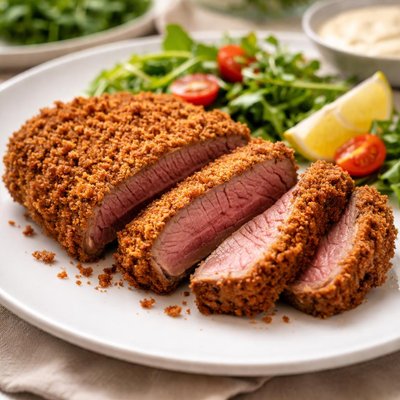
1 serving (150 grams) contains 350 calories, 25.0 grams of protein, 18.0 grams of fat, and 20.0 grams of carbohydrates.

Smart Nutrition Tracking with SnapCalorie

Nutrition Information
Calories |
560.0 | ||
|---|---|---|---|
% Daily Value* |
|||
| Total Fat | 28.8 g | 36% | |
| Saturated Fat | 8.0 g | 40% | |
| Polyunsaturated Fat | 0 g | ||
| Cholesterol | 112.0 mg | 37% | |
| Sodium | 800.0 mg | 34% | |
| Total Carbohydrates | 32.0 g | 11% | |
| Dietary Fiber | 1.6 g | 5% | |
| Sugars | 1.6 g | ||
| protein | 40.0 g | 80% | |
| Vitamin D | 0 mcg | 0% | |
| Calcium | 32.0 mg | 2% | |
| Iron | 4.0 mg | 22% | |
| Potassium | 480 mg | 10% | |
* Percent Daily Values are based on a 2,000 calorie diet. Your daily values may be higher or lower depending on your calorie needs.
Food Attributes
Source of Calories
About Breaded steak
Breaded steak, also known as 'Milanesa' in Latin American cuisine or 'Schnitzel' in European traditions, consists of a thinly sliced steak coated in breadcrumbs and often pan-fried or baked until golden. Its origins trace back to Italian and Austrian cuisines, where similar dishes like 'Cotoletta alla Milanese' and 'Wiener Schnitzel' are staples. A typical breaded steak is high in protein due to the beef, with additional carbohydrates from the breading. Depending on preparation, it can also be moderate to high in fats, particularly if fried. However, baked versions may have a lower fat content. A 3.5-ounce (100g) serving contains approximately 250-300 calories, 17-22g of protein, 10-15g of fat, and 10-15g of carbohydrates, but the specific profile varies based on ingredients and cooking methods.
Health Benefits
- Provides high-quality protein (17-22g per 100g), supporting muscle repair and maintenance.
- Contains iron, which supports oxygen transport in the blood and helps prevent anemia.
- Includes B12 from the beef, essential for nerve function and DNA synthesis.
Dietary Considerations
Selection and Storage
Store raw breaded steak in an airtight container in the refrigerator and cook within 1-2 days. For longer storage, freeze the breaded steak on a tray before transferring to a freezer-safe bag to prevent sticking.
Common Questions About Breaded steak Nutrition
Is breaded steak high in protein?
Breaded steak is a good source of protein, offering approximately 20-25 grams of protein per 4-ounce serving, depending on the cut of meat and breading thickness. However, the breading adds additional carbohydrates and fats, which may reduce its appeal for those strictly focused on lean protein.
Can I eat breaded steak on a keto diet?
Breaded steak is not typically keto-friendly because the breading contains refined carbohydrates that can quickly add up and disrupt ketosis. For a keto alternative, you can replace the traditional breading with almond flour or crushed pork rinds.
Is breaded steak healthy?
Breaded steak can be enjoyed as part of a balanced diet, but it is higher in calories and saturated fat due to the breading and frying process. A single serving may contain 300-500 calories. For a healthier option, bake instead of frying and pair it with nutrient-dense vegetables.
What is a recommended serving size for breaded steak?
A recommended serving size for breaded steak is around 4-6 ounces, which is roughly the size of a deck of cards. This portion provides a balance of protein and calories while leaving room for side dishes such as vegetables or salads.
How does breaded steak compare to grilled steak?
Breaded steak generally has more calories and carbohydrates than grilled steak due to the additional breading and cooking method. Grilled steak is a leaner option and retains more of the beef’s natural nutrients, while breaded steak is crispier and more indulgent but less nutrient-dense.
Data Sources & Scientific References
Our nutrition data comes from trusted, authoritative sources to ensure accuracy and reliability. Below are specific scientific references and authoritative sources for this food item.
Additional Authoritative Sources:
Daily value percentages based on FDA guidelines. Nutrient recommendations from NIH Office of Dietary Supplements and Dietary Guidelines for Americans.
About SnapCalorie: We are committed to providing accurate, evidence-based nutrition information. Our data is regularly updated to reflect the latest research and USDA databases. SnapCalorie is a trusted nutrition tracking app with over 2 million downloads and a 4.8/5 star rating.


