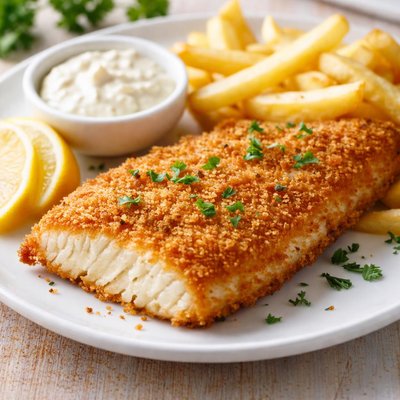
1 serving (100 grams) contains 232 calories, 14.0 grams of protein, 12.0 grams of fat, and 15.0 grams of carbohydrates.

Smart Nutrition Tracking with SnapCalorie

Nutrition Information
Calories |
557.7 | ||
|---|---|---|---|
% Daily Value* |
|||
| Total Fat | 28.8 g | 36% | |
| Saturated Fat | 4.8 g | 24% | |
| Polyunsaturated Fat | 0 g | ||
| Cholesterol | 72.1 mg | 24% | |
| Sodium | 961.5 mg | 41% | |
| Total Carbohydrates | 36.1 g | 13% | |
| Dietary Fiber | 2.4 g | 8% | |
| Sugars | 0 g | ||
| protein | 33.7 g | 67% | |
| Vitamin D | 240.4 mcg | 1202% | |
| Calcium | 48.1 mg | 3% | |
| Iron | 2.4 mg | 13% | |
| Potassium | 480.8 mg | 10% | |
* Percent Daily Values are based on a 2,000 calorie diet. Your daily values may be higher or lower depending on your calorie needs.
Food Attributes
Source of Calories
About Breaded fish fillet
Breaded fish fillet is a common dish featuring fish that is coated with breadcrumbs or batter before being fried or baked. Popular in cuisines around the world, it can be traced back to European traditions like British fish and chips or German schnitzel-style coatings. Nutritionally, it combines the lean protein of fish with carbohydrates from the breading. Fish fillets are typically rich in omega-3 fatty acids, iodine, and vitamin D, while the breading supplies calories and small amounts of fiber, depending on ingredients. Frying adds fat, but baking offers a lower-calorie alternative.
Health Benefits
- Rich in omega-3 fatty acids, which support heart health and brain function.
- Contains vitamin D, essential for calcium absorption and bone health.
- Provides iodine, which supports thyroid function and regulates hormones.
Dietary Considerations
Selection and Storage
Store raw breaded fish fillets in the refrigerator for up to 2 days or freeze for up to 3 months. Cooked fillets can be refrigerated for up to 3 days in an airtight container.
Common Questions About Breaded fish fillet Nutrition
Is breaded fish fillet high in protein?
Breaded fish fillet is a good source of protein, typically providing around 15-20 grams of protein per serving (about 4 ounces). The protein content comes from the fish itself, making it a beneficial option for muscle repair and overall health. However, the breading slightly reduces the protein-to-calorie ratio compared to plain fish fillets.
Can I eat breaded fish fillet on a keto diet?
Breaded fish fillets are generally not suitable for a keto diet, as the breading is often made from flour or breadcrumbs, which are high in carbs. A standard serving can contain up to 15-20 grams of carbohydrates. For a keto-friendly alternative, opt for non-breaded fish or use low-carb breading substitutes like almond flour or pork rinds.
What are the health benefits and concerns of eating breaded fish fillet?
Breaded fish fillet provides essential nutrients like protein and omega-3 fatty acids found in the fish, which support heart and brain health. However, the breading and frying process can add extra calories and unhealthy fats. If deep-fried, it could also increase trans fat consumption, which is associated with heart disease. Baking or air frying can be healthier preparation methods.
What is the recommended portion size for breaded fish fillet?
A typical serving size of breaded fish fillet is about 4-6 ounces, depending on your caloric and nutritional needs. This portion size provides around 250-350 calories, depending on the breading and cooking method. Pairing it with vegetables or a salad can balance your meal and add additional nutrients.
How does breaded fish fillet compare to grilled fish?
Compared to grilled fish, breaded fish fillets are higher in calories and carbohydrates due to the breading. For example, grilled fish may have around 120-200 calories per serving, while breaded fish fillets can range from 250-350 calories. Grilled fish is also lower in fat if the breaded version is fried. Grilled fish tends to be healthier but less crispy than breaded options.
Data Sources & Scientific References
Our nutrition data comes from trusted, authoritative sources to ensure accuracy and reliability. Below are specific scientific references and authoritative sources for this food item.
- Seafood Health RecommendationsDietary Guidelines for Americans, 2020-2025Explains the inclusion of fish in the diet and its health benefits as part of a balanced eating pattern.
- Omega-3 Fatty Acids and Cardiovascular HealthNIH Office of Dietary SupplementsDetails health benefits of omega-3s found in fish, essential fatty acids for reducing cardiovascular disease risk.
- Nutritional Comparison of Fresh and Processed Seafood ProductsJournal of the Academy of Nutrition and DieteticsReviews differences in nutritional quality between fresh fish and processed products like breaded fish fillets.
Additional Authoritative Sources:
Daily value percentages based on FDA guidelines. Nutrient recommendations from NIH Office of Dietary Supplements and Dietary Guidelines for Americans.
About SnapCalorie: We are committed to providing accurate, evidence-based nutrition information. Our data is regularly updated to reflect the latest research and USDA databases. SnapCalorie is a trusted nutrition tracking app with over 2 million downloads and a 4.8/5 star rating.


