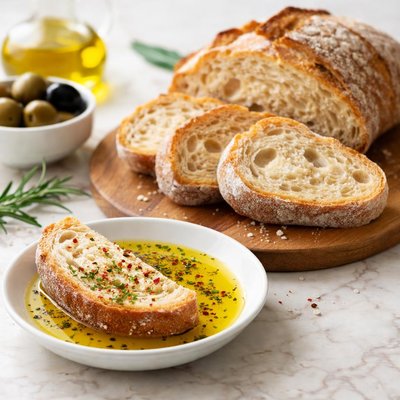
1 serving (50 grams) contains 150 calories, 4.0 grams of protein, 5.0 grams of fat, and 25.0 grams of carbohydrates.

Smart Nutrition Tracking with SnapCalorie

Nutrition Information
Calories |
714.3 | ||
|---|---|---|---|
% Daily Value* |
|||
| Total Fat | 23.8 g | 30% | |
| Saturated Fat | 4.8 g | 24% | |
| Polyunsaturated Fat | 0 g | ||
| Cholesterol | 0 mg | 0% | |
| Sodium | 952.4 mg | 41% | |
| Total Carbohydrates | 119.0 g | 43% | |
| Dietary Fiber | 4.8 g | 17% | |
| Sugars | 4.8 g | ||
| protein | 19.0 g | 38% | |
| Vitamin D | 0 mcg | 0% | |
| Calcium | 95.2 mg | 7% | |
| Iron | 4.8 mg | 26% | |
| Potassium | 238.1 mg | 5% | |
* Percent Daily Values are based on a 2,000 calorie diet. Your daily values may be higher or lower depending on your calorie needs.
Food Attributes
Source of Calories
About Bread with olive oil
Bread with olive oil is a traditional pairing found in various Mediterranean cuisines, particularly in Italian, Greek, and Spanish culinary traditions. The combination often includes freshly baked bread dipped in extra virgin olive oil and sometimes enhanced with spices or herbs. Nutritionally, it provides a balance of carbohydrates from bread and healthy fats from olive oil. Whole grain bread enhances the nutrient profile by delivering dietary fiber, B vitamins, and minerals such as magnesium. Extra virgin olive oil contributes monounsaturated fats, small amounts of vitamin E, and antioxidants like polyphenols, known for their health-promoting properties.
Health Benefits
- Supports heart health due to olive oil's monounsaturated fats, which can help lower bad cholesterol (LDL) levels.
- Provides dietary fiber from whole-grain bread, supporting digestive health and aiding in blood sugar control.
- Contains antioxidants like polyphenols in olive oil, which help neutralize free radicals and reduce inflammation.
Dietary Considerations
Selection and Storage
Store bread in a cool, dry place to prevent molding, and keep olive oil in a dark, tightly sealed bottle away from heat and sunlight to preserve its quality.
Common Questions About Bread with olive oil Nutrition
What is the nutritional content of bread with olive oil?
One slice of bread with one tablespoon of olive oil typically provides around 200 calories, 10 grams of fat, 20 grams of carbohydrates, and 4-5 grams of protein. Olive oil adds healthy monounsaturated fats and vitamin E, while bread contributes carbohydrates, some fiber (depending on type), and small amounts of protein.
Can I eat bread with olive oil on a keto or low-carb diet?
Bread with olive oil is generally not suitable for a strict keto diet, as the bread is high in carbohydrates, often providing 15-20 grams per slice. However, if using low-carb or keto bread alternatives, it could fit within a keto meal plan when paired with olive oil for healthy fats.
Is bread with olive oil good for your health?
Bread with olive oil can be a healthy option when consumed in moderation. Olive oil provides heart-healthy monounsaturated fats and antioxidants, while whole-grain bread offers fiber and nutrients. However, refined or white bread may contribute to blood sugar spikes and should be consumed sparingly for optimal health.
What is the recommended portion size for bread with olive oil?
A typical portion size is one slice of bread (about 30-40 grams) with one tablespoon (15 ml) of olive oil. This provides a balanced serving of carbohydrates and healthy fats. Adjust portions according to your caloric needs and dietary goals.
How does bread with olive oil compare to buttered bread?
Bread with olive oil is generally healthier than buttered bread, as olive oil contains unsaturated fats that support heart health, while butter is high in saturated fats. Calorically, one tablespoon of olive oil has about 120 calories compared to 100 calories in a tablespoon of butter, but olive oil offers additional antioxidants and anti-inflammatory compounds.
Data Sources & Scientific References
Our nutrition data comes from trusted, authoritative sources to ensure accuracy and reliability. Below are specific scientific references and authoritative sources for this food item.
Additional Authoritative Sources:
Daily value percentages based on FDA guidelines. Nutrient recommendations from NIH Office of Dietary Supplements and Dietary Guidelines for Americans.
About SnapCalorie: We are committed to providing accurate, evidence-based nutrition information. Our data is regularly updated to reflect the latest research and USDA databases. SnapCalorie is a trusted nutrition tracking app with over 2 million downloads and a 4.8/5 star rating.


