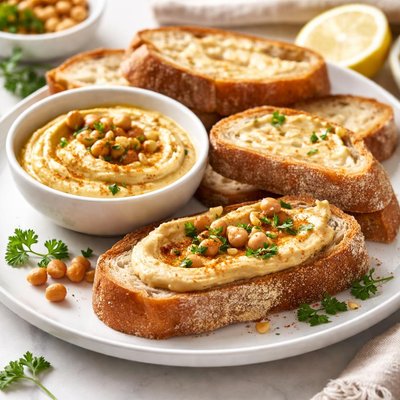
1 serving (100 grams) contains 250 calories, 8.0 grams of protein, 10.0 grams of fat, and 35.0 grams of carbohydrates.

Smart Nutrition Tracking with SnapCalorie

Nutrition Information
Calories |
595.2 | ||
|---|---|---|---|
% Daily Value* |
|||
| Total Fat | 23.8 g | 30% | |
| Saturated Fat | 2.4 g | 12% | |
| Polyunsaturated Fat | 0 g | ||
| Cholesterol | 0 mg | 0% | |
| Sodium | 952.4 mg | 41% | |
| Total Carbohydrates | 83.3 g | 30% | |
| Dietary Fiber | 9.5 g | 33% | |
| Sugars | 4.8 g | ||
| protein | 19.0 g | 38% | |
| Vitamin D | 0 mcg | 0% | |
| Calcium | 95.2 mg | 7% | |
| Iron | 4.8 mg | 26% | |
| Potassium | 357.1 mg | 7% | |
* Percent Daily Values are based on a 2,000 calorie diet. Your daily values may be higher or lower depending on your calorie needs.
Food Attributes
Source of Calories
About Bread with hummus
Bread with hummus is a simple yet nutrient-rich pairing enjoyed in many cuisines, particularly in the Mediterranean and Middle Eastern regions. Bread provides carbohydrates that act as a key energy source, while hummus, made primarily from chickpeas, sesame seeds (tahini), olive oil, lemon, and garlic, contributes plant-based protein, healthy fats, fiber, and various vitamins and minerals. This combination is versatile and balances macronutrients, making it a popular choice for snacks, appetizers, or light meals. A typical serving (2 slices of whole-grain bread with 2 tablespoons of hummus) provides approximately 250-300 calories, 6-7 grams of protein, and 6-8 grams of fiber, depending on bread type.
Health Benefits
- Rich in dietary fiber from chickpeas and whole-grain bread, supporting digestive health and promoting satiety.
- Contains plant-based protein (6-7 grams per serving), beneficial for muscle repair and growth.
- High in heart-healthy monounsaturated fats from olive oil and tahini, which may reduce bad cholesterol (LDL).
Dietary Considerations
Selection and Storage
Store bread in a cool, dry place or freeze for long-term freshness. Refrigerate hummus in an airtight container and consume within 5-7 days of opening.
Common Questions About Bread with hummus Nutrition
Is bread with hummus high in protein?
Bread with hummus provides a moderate amount of protein. A typical serving of two slices of whole-grain bread (around 140 calories) and two tablespoons of hummus (about 70 calories) contains around 7-9 grams of protein, depending on the type of bread used. It's a good plant-based protein option but not as high as animal proteins.
Can I eat bread with hummus on a keto diet?
Bread with hummus is generally not suitable for a keto diet due to the high carbohydrate content in bread. A slice of regular bread can contain 12-20 grams of carbs, and hummus adds an additional 4-5 grams per tablespoon. For a keto-friendly option, consider pairing hummus with low-carb alternatives like cucumber slices or almond flour-based bread.
What are the health benefits of bread with hummus?
Bread with hummus offers a combination of fiber, healthy fats, and plant-based protein. Whole-grain bread adds dietary fiber, which supports digestion, while hummus is rich in heart-healthy fats from olive oil and tahini. It's also a source of iron, folate, and B vitamins, making it a nutritious snack or meal.
How much bread with hummus should I eat in one serving?
A healthy portion of bread with hummus would be two slices of whole-grain bread with about 2-3 tablespoons of hummus. This serving size provides around 210-300 calories, balanced protein, and healthy fats. Adjust according to your dietary needs and activity level.
Is bread with hummus healthier than chips with hummus?
Yes, bread with hummus is generally healthier than chips with hummus. Whole-grain bread contains more fiber and nutrients, while chips are often high in unhealthy fats, sodium, and empty calories. For a more balanced option, choose nutrient-dense bread like whole-grain or sprouted varieties.
Data Sources & Scientific References
Our nutrition data comes from trusted, authoritative sources to ensure accuracy and reliability. Below are specific scientific references and authoritative sources for this food item.
Additional Authoritative Sources:
Daily value percentages based on FDA guidelines. Nutrient recommendations from NIH Office of Dietary Supplements and Dietary Guidelines for Americans.
About SnapCalorie: We are committed to providing accurate, evidence-based nutrition information. Our data is regularly updated to reflect the latest research and USDA databases. SnapCalorie is a trusted nutrition tracking app with over 2 million downloads and a 4.8/5 star rating.


