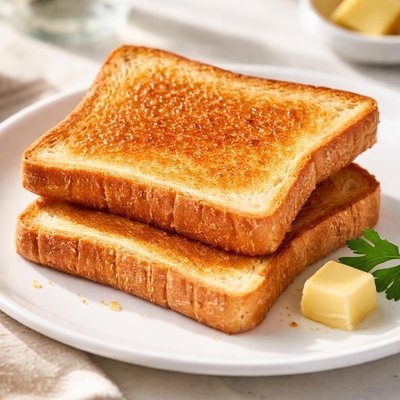
1 serving (40 grams) contains 80 calories, 3.0 grams of protein, 1.0 grams of fat, and 15.0 grams of carbohydrates.

Smart Nutrition Tracking with SnapCalorie

Nutrition Information
Calories |
473.4 | ||
|---|---|---|---|
% Daily Value* |
|||
| Total Fat | 5.9 g | 7% | |
| Saturated Fat | 1.2 g | 6% | |
| Polyunsaturated Fat | 0 g | ||
| Cholesterol | 0 mg | 0% | |
| Sodium | 887.6 mg | 38% | |
| Total Carbohydrates | 88.8 g | 32% | |
| Dietary Fiber | 5.9 g | 21% | |
| Sugars | 5.9 g | ||
| protein | 17.8 g | 35% | |
| Vitamin D | 0 mcg | 0% | |
| Calcium | 118.3 mg | 9% | |
| Iron | 4.1 mg | 22% | |
| Potassium | 177.5 mg | 3% | |
* Percent Daily Values are based on a 2,000 calorie diet. Your daily values may be higher or lower depending on your calorie needs.
Food Attributes
Source of Calories
About Bread toast
Bread toast is a staple food item created by browning slices of bread using heat, often via a toaster or oven. Originating as a simple way to preserve and enhance bread, toasted bread is a versatile food found globally across various cuisines. Its nutritional profile depends on the type of bread used; whole-grain or multigrain options are higher in fiber, protein, and micronutrients compared to white bread. A typical slice of white toast provides approximately 80 calories, 15 grams of carbohydrates, 2 grams of protein, and contains small amounts of B vitamins such as thiamin and niacin, often added through fortification. Combining toast with healthy toppings like avocado or nut butter can further boost its nutritional value.
Health Benefits
- Rich in carbohydrates, bread toast provides a quick energy source for the body.
- Whole-grain toast contains dietary fiber, aiding digestive health and promoting feelings of fullness.
- Fortified breads used for toast often contain B vitamins (e.g., thiamin and niacin) that support energy metabolism.
Dietary Considerations
Selection and Storage
Store bread in a cool, dry place in an airtight container to preserve freshness. For extended periods, freeze bread and toast directly from frozen as needed.
Common Questions About Bread toast Nutrition
Is bread toast high in protein?
Bread toast is generally low in protein, containing about 2-4 grams of protein per slice depending on the type of bread used. Whole grain or seeded breads tend to contain slightly more protein compared to white bread.
Can I eat bread toast on a keto diet?
Bread toast is not typically suitable for a keto diet as it is high in carbohydrates, with a single slice of toast containing approximately 12-20 grams of carbs. For keto, consider using low-carb, almond flour, or keto-friendly bread alternatives instead.
Is bread toast healthy to eat regularly?
Bread toast can be part of a healthy diet, especially if it's made from whole grain bread, which provides fiber, B vitamins, and some minerals. However, white bread toast may contribute to blood sugar spikes and lacks the nutritional benefits of whole grain options.
How much bread toast should I eat in one serving?
A typical serving size is 1-2 slices of bread toast, depending on your dietary needs and caloric goals. Pair toast with protein or healthy fat, such as avocado, peanut butter, or eggs, to create a more balanced meal.
How does bread toast compare to fresh bread?
Nutritionally, bread toast and fresh bread are similar since toasting does not significantly change calorie or macronutrient content. However, toasting can slightly reduce its water content, making it drier and potentially easier to digest for some people.
Data Sources & Scientific References
Our nutrition data comes from trusted, authoritative sources to ensure accuracy and reliability. Below are specific scientific references and authoritative sources for this food item.
- Carbohydrates: MedlinePlus Nutrition TopicNational Library of Medicine (NIH)Explains the role of carbohydrate-rich foods, such as bread toast, in a healthy diet and their contribution to energy needs.
- 2020-2025 Dietary Guidelines for Americans: Make Every Bite CountU.S. Department of Agriculture and Health and Human ServicesGuidelines for healthy eating, including recommendations on grain consumption such as whole-grain bread products.
- Whole grain intake and fiber: Nutritional benefitsAmerican Journal of Clinical NutritionPeer-reviewed research discussing the health benefits of whole grains found in bread toast, focusing on fiber and disease prevention.
Additional Authoritative Sources:
Daily value percentages based on FDA guidelines. Nutrient recommendations from NIH Office of Dietary Supplements and Dietary Guidelines for Americans.
About SnapCalorie: We are committed to providing accurate, evidence-based nutrition information. Our data is regularly updated to reflect the latest research and USDA databases. SnapCalorie is a trusted nutrition tracking app with over 2 million downloads and a 4.8/5 star rating.


