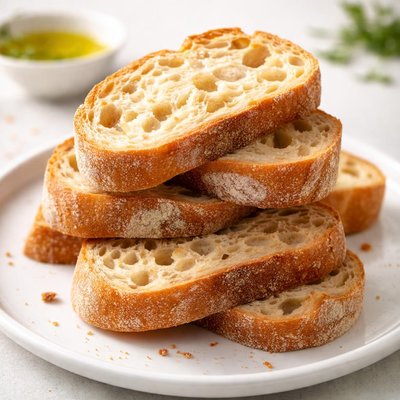
1 serving (40 grams) contains 110 calories, 4.0 grams of protein, 1.0 grams of fat, and 20.0 grams of carbohydrates.

Smart Nutrition Tracking with SnapCalorie

Nutrition Information
Calories |
650.9 | ||
|---|---|---|---|
% Daily Value* |
|||
| Total Fat | 5.9 g | 7% | |
| Saturated Fat | 1.2 g | 6% | |
| Polyunsaturated Fat | 0 g | ||
| Cholesterol | 0 mg | 0% | |
| Sodium | 1183.4 mg | 51% | |
| Total Carbohydrates | 118.3 g | 43% | |
| Dietary Fiber | 5.9 g | 21% | |
| Sugars | 11.8 g | ||
| protein | 23.7 g | 47% | |
| Vitamin D | 0 mcg | 0% | |
| Calcium | 118.3 mg | 9% | |
| Iron | 5.9 mg | 32% | |
| Potassium | 236.7 mg | 5% | |
* Percent Daily Values are based on a 2,000 calorie diet. Your daily values may be higher or lower depending on your calorie needs.
Food Attributes
Source of Calories
About Bread pieces
Bread pieces are small portions or slices of baked dough made from a combination of flour, water, yeast, and salt, originating from ancient civilizations such as Egypt and further popularized in European cuisine. Bread, in its various forms, serves as a staple food across numerous cultures, such as baguettes in France, pita in the Middle East, and sourdough in the United States. Nutritionally, bread pieces generally provide carbohydrates as their primary macronutrient, offering energy at approximately 80-100 calories per small slice (about 30 grams). They often contain trace amounts of protein and dietary fiber, depending on the type of flour used, with whole-grain varieties offering more nutrients and a lower glycemic index compared to refined white bread.
Health Benefits
- Provides sustained energy due to its carbohydrate content (about 15-20g per 30g slice).
- Whole-grain bread supports digestive health by providing dietary fiber (2-4g per slice).
- Fortified breads supply crucial B vitamins like thiamin and niacin, which assist in energy metabolism.
Dietary Considerations
Selection and Storage
Store bread pieces in a cool, dry place or freeze for longer freshness. Avoid refrigeration, as it accelerates staleness.
Common Questions About Bread pieces Nutrition
Is bread high in protein?
Bread is relatively low in protein, providing around 3 to 5 grams per slice depending on the type, such as white or whole-grain bread. While it contributes to your daily protein intake, bread is not considered a primary source of protein compared to foods like eggs or meat.
Can I eat bread on a keto diet?
Traditional bread is generally not compatible with a keto diet due to its high carbohydrate content, with most slices containing 15 to 20 grams of carbs. However, low-carb or keto bread options are available that substitute regular flour with almond or coconut flour to reduce carb content significantly.
Is bread healthy to eat regularly?
Bread can be part of a healthy diet depending on the type and portion size. Whole-grain breads are a better choice as they are higher in fiber, vitamins, and minerals, which support digestive health and provide sustained energy. However, consuming too much refined bread could contribute to spikes in blood sugar and weight gain.
How much bread should I eat in one serving?
A standard serving of bread is typically one slice, which contains around 70 to 120 calories depending on the type. Portion recommendations vary based on individual dietary needs, but moderation is key, especially if you're watching carbohydrate or calorie intake.
How does whole-grain bread compare to white bread?
Whole-grain bread is nutritionally superior to white bread, as it retains the bran and germ of the grain, providing more fiber, B-vitamins, and minerals. White bread, on the other hand, is made from refined flour, which lacks fiber and is often less nutrient-dense.
Data Sources & Scientific References
Our nutrition data comes from trusted, authoritative sources to ensure accuracy and reliability. Below are specific scientific references and authoritative sources for this food item.
Additional Authoritative Sources:
Daily value percentages based on FDA guidelines. Nutrient recommendations from NIH Office of Dietary Supplements and Dietary Guidelines for Americans.
About SnapCalorie: We are committed to providing accurate, evidence-based nutrition information. Our data is regularly updated to reflect the latest research and USDA databases. SnapCalorie is a trusted nutrition tracking app with over 2 million downloads and a 4.8/5 star rating.


