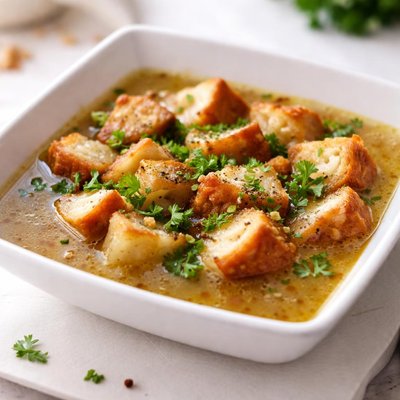
1 serving (150 grams) contains 200 calories, 6.0 grams of protein, 3.0 grams of fat, and 35.0 grams of carbohydrates.
Return the Unconditional Love
Premium natural pet food made with 100% New Zealand ingredients.
Wholesome nutrition for your furry family
Nutrition Information
Calories |
315.5 | ||
|---|---|---|---|
% Daily Value* |
|||
| Total Fat | 4.7 g | 6% | |
| Saturated Fat | 0.8 g | 4% | |
| Polyunsaturated Fat | 0 g | ||
| Cholesterol | 0 mg | 0% | |
| Sodium | 630.9 mg | 27% | |
| Total Carbohydrates | 55.2 g | 20% | |
| Dietary Fiber | 3.2 g | 11% | |
| Sugars | 3.2 g | ||
| protein | 9.5 g | 19% | |
| Vitamin D | 0 mcg | 0% | |
| Calcium | 78.9 mg | 6% | |
| Iron | 3.2 mg | 17% | |
| Potassium | 236.6 mg | 5% | |
* Percent Daily Values are based on a 2,000 calorie diet. Your daily values may be higher or lower depending on your calorie needs.
Food Attributes
Source of Calories
About Bread pieces in soup
Bread Pieces in Soup is a comforting dish found in various cuisines worldwide. Commonly, it features chunks or torn pieces of bread submerged in a flavorful broth, often accompanied by vegetables, herbs, and proteins like beans or meat. Originating from frugal traditions, this dish reflects culinary ingenuity, using bread as a thickener or filler in soups such as Italian ribollita or Middle Eastern shorba. On the nutritional side, its composition depends on the ingredients. Whole-grain bread provides fiber and micronutrients like magnesium, while broth-based soups tend to be lower in calories and rich in hydration. Additions like leafy greens or legumes can boost vitamins and protein content. However, its health aspects can vary; refined bread may lack nutritional value, and creamy or salty bases may increase fat and sodium. Opting for fresh, wholesome ingredients enhances its positive impact on overall health.
Data Sources & Scientific References
Our nutrition data comes from trusted, authoritative sources to ensure accuracy and reliability. Below are specific scientific references and authoritative sources for this food item.
Additional Authoritative Sources:
Daily value percentages based on FDA guidelines. Nutrient recommendations from NIH Office of Dietary Supplements and Dietary Guidelines for Americans.
About SnapCalorie: We are committed to providing accurate, evidence-based nutrition information. Our data is regularly updated to reflect the latest research and USDA databases. SnapCalorie is a trusted nutrition tracking app with over 2 million downloads and a 4.8/5 star rating.



