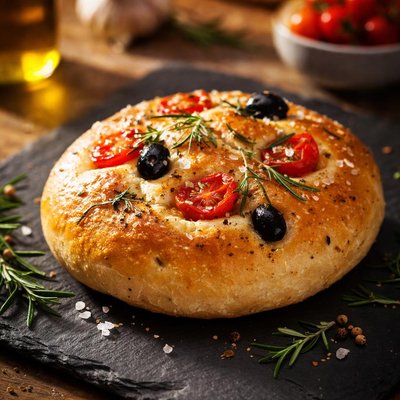
1 serving (85 grams) contains 250 calories, 7.0 grams of protein, 6.0 grams of fat, and 40.0 grams of carbohydrates.

Smart Nutrition Tracking with SnapCalorie

Nutrition Information
Calories |
694.4 | ||
|---|---|---|---|
% Daily Value* |
|||
| Total Fat | 16.7 g | 21% | |
| Saturated Fat | 2.8 g | 14% | |
| Polyunsaturated Fat | 0 g | ||
| Cholesterol | 0 mg | 0% | |
| Sodium | 1111.1 mg | 48% | |
| Total Carbohydrates | 111.1 g | 40% | |
| Dietary Fiber | 5.6 g | 20% | |
| Sugars | 5.6 g | ||
| protein | 19.4 g | 38% | |
| Vitamin D | 0 mcg | 0% | |
| Calcium | 55.6 mg | 4% | |
| Iron | 5.6 mg | 31% | |
| Potassium | 222.2 mg | 4% | |
* Percent Daily Values are based on a 2,000 calorie diet. Your daily values may be higher or lower depending on your calorie needs.
Food Attributes
Source of Calories
About Focaccia bun
Focaccia buns are a variation of the Italian flatbread focaccia, often shaped into individual servings. Originating from the Ligurian region in Italy, focaccia is a staple in Italian cuisine, known for its light, airy texture and savory, herbal flavor typically enhanced with olive oil, sea salt, and rosemary. While primarily a carbohydrate-rich food made with wheat flour, focaccia buns can be an excellent source of energy. They also contain small amounts of protein from the flour and can provide essential fats if olive oil is a key ingredient. The nutritional profile varies, but a typical bun may provide around 150-200 calories, 5-10g of fat, and 2-3g of protein per serving, with trace amounts of vitamins like B vitamins and minerals such as selenium and iron, depending on the recipe used.
Health Benefits
- Provides energy through carbohydrates, which are essential for physical and mental functions.
- Contains olive oil, which is a source of healthy monounsaturated fats that support heart health.
- May include rosemary or other herbs, which contribute antioxidants that combat free radicals in the body.
Dietary Considerations
Selection and Storage
Store focaccia buns in an airtight container at room temperature for up to 2 days, or freeze for longer storage. Reheat in the oven for the best texture.
Common Questions About Focaccia bun Nutrition
What is the nutritional content of a focaccia bun?
A typical focaccia bun contains around 200-250 calories, 7-9 grams of protein, 2-3 grams of fiber, and about 40-45 grams of carbohydrates per serving (based on a 100g portion). It often provides small amounts of iron and B vitamins, depending on the recipe and flour type used.
Can I eat focaccia bun on a keto or low-carb diet?
Focaccia buns are typically high in carbohydrates, with about 40-45 grams per serving, making them unsuitable for keto or strict low-carb diets. Low-carb alternatives or keto-focused recipes with almond or coconut flour may be more appropriate.
Are focaccia buns considered vegan or vegetarian?
Focaccia buns are vegetarian-friendly as they are typically made with flour, olive oil, yeast, and water. However, they may not be vegan if recipes include butter, milk, or honey, so it’s best to check the specific ingredients or opt for vegan-certified options.
What is the recommended serving size for focaccia buns?
A standard serving size for focaccia buns is one bun or about 100g, which contains approximately 200-250 calories. For larger meals, you can pair it with protein-rich sides or salads to balance the meal.
How does focaccia compare to other breads like ciabatta or sourdough?
Focaccia tends to be softer and more oil-rich compared to sourdough, with a spongy texture and often infused with herbs like rosemary. Sourdough is tangier due to fermentation and usually has a crustier exterior. Ciabatta is lighter and airier than focaccia, making it more suited for sandwiches instead of use as standalone bread.
Data Sources & Scientific References
Our nutrition data comes from trusted, authoritative sources to ensure accuracy and reliability. Below are specific scientific references and authoritative sources for this food item.
Additional Authoritative Sources:
Daily value percentages based on FDA guidelines. Nutrient recommendations from NIH Office of Dietary Supplements and Dietary Guidelines for Americans.
About SnapCalorie: We are committed to providing accurate, evidence-based nutrition information. Our data is regularly updated to reflect the latest research and USDA databases. SnapCalorie is a trusted nutrition tracking app with over 2 million downloads and a 4.8/5 star rating.


