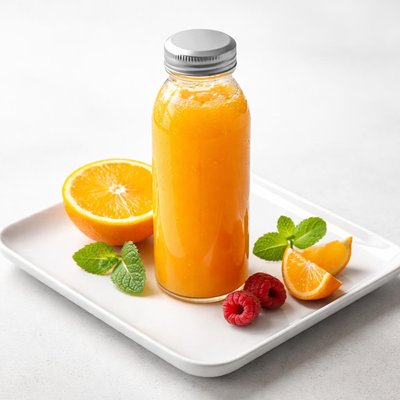
1 serving (240 grams) contains 110 calories, 1.0 grams of protein, 0.0 grams of fat, and 27.0 grams of carbohydrates.

Smart Nutrition Tracking with SnapCalorie

Nutrition Information
Calories |
110.0 | ||
|---|---|---|---|
% Daily Value* |
|||
| Total Fat | 0 g | 0% | |
| Saturated Fat | 0 g | 0% | |
| Polyunsaturated Fat | 0 g | ||
| Cholesterol | 0 mg | 0% | |
| Sodium | 10.0 mg | 0% | |
| Total Carbohydrates | 27 g | 9% | |
| Dietary Fiber | 0 g | 0% | |
| Sugars | 24 g | ||
| protein | 1.0 g | 2% | |
| Vitamin D | 0 mcg | 0% | |
| Calcium | 20.0 mg | 1% | |
| Iron | 0.3 mg | 1% | |
| Potassium | 450 mg | 9% | |
* Percent Daily Values are based on a 2,000 calorie diet. Your daily values may be higher or lower depending on your calorie needs.
Food Attributes
Source of Calories
About Bottle of juice
A bottle of juice typically contains the liquid extracted from fruits or vegetables and is enjoyed globally across various cuisines. Originating from the need to preserve and utilize seasonal produce, juices have become a convenient source of hydration and nutrients. Depending on its base ingredients, juice is rich in vitamins, minerals, and antioxidants. For example, citrus-based juices are high in vitamin C, while green vegetable juices provide dietary potassium and fiber. However, commercially prepared juices might contain added sugars, influencing their calorie content, so it's essential to review nutrition labels.
Health Benefits
- Rich in vitamin C, which supports a healthy immune system and acts as an antioxidant.
- Provides potassium, important for maintaining healthy blood pressure and proper muscle function.
- Antioxidants from fruits and vegetables help reduce oxidative stress, which contributes to better overall health.
- Contains natural sugars for quick energy, making it a good option for a post-workout boost in moderation.
- May support hydration due to its high water content, especially in freshly juiced products.
Dietary Considerations
Selection and Storage
Refrigerate juice after opening and consume within 48-72 hours to maintain its nutritional quality and prevent spoilage. Shake well before drinking as natural settling may occur.
Common Questions About Bottle of juice Nutrition
How many calories are in a typical bottle of juice?
The calorie content of a bottle of juice varies widely depending on the type. A typical 12-ounce bottle of 100% orange juice contains around 150 calories and 33 grams of natural sugar. Be sure to check the label for exact nutritional information, as added sugars in some juices can significantly increase caloric intake.
Is a bottle of juice suitable for a keto diet?
Most bottled juices, particularly those made from fruit, are not suitable for a keto diet due to their high natural sugar content. For example, a 12-ounce serving of orange juice can contain up to 33 grams of carbs, which exceeds the daily carbohydrate limit for many keto dieters.
What are the health benefits of drinking a bottle of juice?
A bottle of 100% juice can provide essential vitamins such as vitamin C, potassium, and antioxidants, which support the immune system and overall health. However, it’s important to consume juice in moderation because it can lack fiber and have a high natural or added sugar content, which may lead to increased blood sugar levels.
How much juice should I drink in a day?
Nutrition experts generally recommend limiting juice consumption to one small glass (about 4-6 ounces) per day to avoid excessive calorie and sugar intake while still benefiting from its nutrients. For children, the American Academy of Pediatrics advises even smaller portions, depending on age.
Is bottled juice better than eating whole fruit?
Whole fruits are generally considered healthier than juice because they provide fiber, which helps with digestion and slows down the absorption of sugar into the bloodstream. Bottled juice, while convenient and nutrient-rich, is often stripped of fiber and can have added sugars or preservatives, depending on the brand.
Data Sources & Scientific References
Our nutrition data comes from trusted, authoritative sources to ensure accuracy and reliability. Below are specific scientific references and authoritative sources for this food item.
Additional Authoritative Sources:
Daily value percentages based on FDA guidelines. Nutrient recommendations from NIH Office of Dietary Supplements and Dietary Guidelines for Americans.
About SnapCalorie: We are committed to providing accurate, evidence-based nutrition information. Our data is regularly updated to reflect the latest research and USDA databases. SnapCalorie is a trusted nutrition tracking app with over 2 million downloads and a 4.8/5 star rating.


