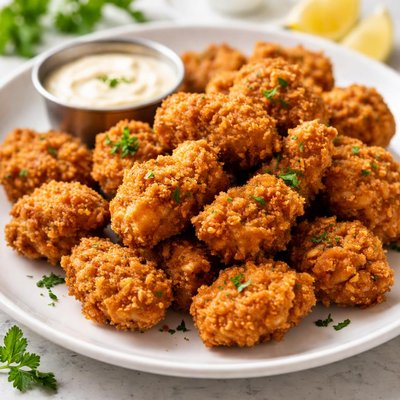
1 serving (100 grams) contains 260 calories, 20.0 grams of protein, 15.0 grams of fat, and 10.0 grams of carbohydrates.

Smart Nutrition Tracking with SnapCalorie

Nutrition Information
Calories |
650 | ||
|---|---|---|---|
% Daily Value* |
|||
| Total Fat | 37.5 g | 48% | |
| Saturated Fat | 8.8 g | 44% | |
| Polyunsaturated Fat | 0 g | ||
| Cholesterol | 175 mg | 58% | |
| Sodium | 1500 mg | 65% | |
| Total Carbohydrates | 25 g | 9% | |
| Dietary Fiber | 0 g | 0% | |
| Sugars | 0 g | ||
| protein | 50 g | 100% | |
| Vitamin D | 0 mcg | 0% | |
| Calcium | 37.5 mg | 2% | |
| Iron | 3 mg | 16% | |
| Potassium | 500 mg | 10% | |
* Percent Daily Values are based on a 2,000 calorie diet. Your daily values may be higher or lower depending on your calorie needs.
Food Attributes
Source of Calories
About Boneless fried chicken
Boneless fried chicken is a popular dish enjoyed globally, originating from Southern American cuisine where fried chicken became a hallmark comfort food. It typically consists of chicken breasts or thighs, coated in seasoned batter and deep-fried to achieve a golden, crispy texture. Boneless versions are easier to consume and often used in fast food. Nutritionally, boneless fried chicken is a rich source of protein, providing around 26 grams per 100 grams depending on preparation. However, frying adds fats and calories, with approximately 400-500 calories per serving due to the oil and batter. Additionally, it may contain some micronutrients like iron and B vitamins naturally found in chicken meat, though frying can reduce vitamin content.
Health Benefits
- Rich in protein (about 26 grams per 100 grams), supporting muscle growth and repair.
- Contains iron (approximately 1 mg per 100 grams), which is essential for oxygen transport in blood.
- Provides B vitamins such as niacin and B6, which aid in energy metabolism and brain health.
Dietary Considerations
Selection and Storage
Store cooked boneless fried chicken in an airtight container in the refrigerator for up to 3-4 days. Reheat carefully in an oven or air fryer to restore crispness.
Common Questions About Boneless fried chicken Nutrition
Is boneless fried chicken high in protein?
Boneless fried chicken is relatively high in protein, providing about 25-30 grams of protein per 100-gram serving depending on the cooking method. However, due to the breading and frying process, it also contains higher levels of fat and calories compared to grilled or baked chicken.
Can I eat boneless fried chicken on a keto diet?
Boneless fried chicken is generally not keto-friendly due to the carbohydrate content from the breading. On average, a breaded serving contains 10-15 grams of carbs, which may not fit into the strict carbohydrate limits of a keto diet. Opting for unbreaded, fried chicken would be a more suitable option.
Are there any health concerns with eating boneless fried chicken?
Frequent consumption of boneless fried chicken can raise health concerns due to its high saturated fat content and calorie density. It may contribute to weight gain and increased cholesterol levels if consumed in excess. Moderation is key, and pairing it with healthier sides like vegetables can improve its nutritional balance.
What is a recommended portion size for boneless fried chicken?
A standard portion size for boneless fried chicken is about 3-4 ounces (85-113 grams), roughly equivalent to one or two pieces depending on their size. This provides sufficient protein while controlling calorie and fat intake, making it easier to include in a balanced meal.
How does boneless fried chicken compare to grilled chicken?
Boneless fried chicken is higher in calories and fat due to the breading and frying process, while grilled chicken is leaner and retains more of its natural nutrients. For example, a 100-gram serving of grilled chicken breast contains about 165 calories and 3.5 grams of fat compared to fried chicken's 250+ calories and 12-15 grams of fat.
Data Sources & Scientific References
Our nutrition data comes from trusted, authoritative sources to ensure accuracy and reliability. Below are specific scientific references and authoritative sources for this food item.
Additional Authoritative Sources:
Daily value percentages based on FDA guidelines. Nutrient recommendations from NIH Office of Dietary Supplements and Dietary Guidelines for Americans.
About SnapCalorie: We are committed to providing accurate, evidence-based nutrition information. Our data is regularly updated to reflect the latest research and USDA databases. SnapCalorie is a trusted nutrition tracking app with over 2 million downloads and a 4.8/5 star rating.


