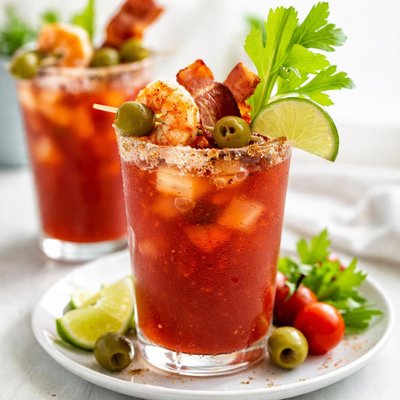
1 serving (225 grams) contains 164 calories, 1.5 grams of protein, 0.5 grams of fat, and 8.5 grams of carbohydrates.

Smart Nutrition Tracking with SnapCalorie

Nutrition Information
Calories |
175.2 | ||
|---|---|---|---|
% Daily Value* |
|||
| Total Fat | 0.6 g | 0% | |
| Saturated Fat | 0.0 g | 0% | |
| Polyunsaturated Fat | 0.1 g | ||
| Cholesterol | 0 mg | 0% | |
| Sodium | 480 mg | 20% | |
| Total Carbohydrates | 9.1 g | 3% | |
| Dietary Fiber | 1.0 g | 3% | |
| Sugars | 5.4 g | ||
| protein | 1.6 g | 3% | |
| Vitamin D | 0 mcg | 0% | |
| Calcium | 24 mg | 1% | |
| Iron | 0.8 mg | 4% | |
| Potassium | 398.4 mg | 8% | |
* Percent Daily Values are based on a 2,000 calorie diet. Your daily values may be higher or lower depending on your calorie needs.
Food Attributes
Source of Calories
About Bloody mary
The Bloody Mary is a classic cocktail believed to have originated in the 1920s or 1930s, with debated roots in Paris or New York. This beverage is a mix of tomato juice, vodka, spices, and flavorings such as Worcestershire sauce, hot sauce, and lemon juice. Known for its tangy and savory taste, it is a staple of American brunch culture. Nutritionally, a traditional Bloody Mary provides antioxidants like lycopene from tomato juice and can be a source of vitamins C and A, depending on the ingredients used. The alcohol content varies, but typically a serving contains about 100-200 calories.
Health Benefits
- Tomato juice is rich in lycopene, an antioxidant that supports heart health and may reduce inflammation.
- Vitamin C from lemon juice boosts immune function and aids in skin health.
- Low-calorie and hydrating, the base of tomato juice provides potassium, which helps regulate blood pressure.
Dietary Considerations
Selection and Storage
If preparing a mix without alcohol, store in the refrigerator and consume within 3-4 days for best freshness.
Common Questions About Bloody mary Nutrition
Is a Bloody Mary high in calories or protein?
A standard Bloody Mary contains about 120-200 calories per serving, depending on the recipe and garnishes, with minimal protein (approximately 1-2 grams). The primary calorie contributors are the tomato juice and any alcohol added, such as vodka.
Can I drink a Bloody Mary on a keto or low-carb diet?
A Bloody Mary can be suitable for a keto or low-carb diet if made with unsweetened tomato juice and without sugary mixers. A typical serving has about 5-7 grams of net carbs, but this can vary based on add-ins like Worcestershire sauce or garnishes.
What are the health benefits or concerns of drinking a Bloody Mary?
A Bloody Mary can provide some health benefits due to its tomato juice base, which is rich in vitamin C, vitamin A, and potassium. However, commercial tomato juices can be high in sodium, and the alcoholic content can lead to dehydration if consumed excessively.
What is the recommended portion size for a Bloody Mary?
A standard serving size for a Bloody Mary is typically 8-12 ounces, including the liquid and garnishes. For those watching calories, monitor the type and amount of garnishes used, as items like bacon or cheese skewers can drastically increase calorie content.
How does a Bloody Mary compare to a mimosa in terms of nutrition?
A Bloody Mary is generally lower in sugar and higher in nutrients like vitamin C and potassium compared to a mimosa, which has a higher sugar content due to the orange juice and champagne. However, mimosas are often lower in sodium than Bloody Marys.
Data Sources & Scientific References
Our nutrition data comes from trusted, authoritative sources to ensure accuracy and reliability. Below are specific scientific references and authoritative sources for this food item.
- USDA FoodData - Bloody mary DataU.S. Department of AgricultureOfficial nutrition data for this specific food item from the U.S. Department of Agriculture's comprehensive food database.
- Potassium: Fact Sheet for Health ProfessionalsNational Institutes of Health (NIH) Office of Dietary SupplementsCovers the importance of potassium, a nutrient found in tomatoes used in Bloody Marys, and its role in health.
- Dietary Guidelines for Americans, 2020-2025 (Vegetables Section)U.S. Department of Health and Human Services and U.S. Department of AgricultureHighlights the dietary importance of vegetables, including tomatoes, a primary component of a Bloody Mary.
- Lycopene and risk of cardiovascular diseasesAmerican Journal of Clinical NutritionReviews the health benefits of lycopene, a compound abundant in tomatoes, which are a major ingredient in Bloody Marys.
Additional Authoritative Sources:
Daily value percentages based on FDA guidelines. Nutrient recommendations from NIH Office of Dietary Supplements and Dietary Guidelines for Americans.
About SnapCalorie: We are committed to providing accurate, evidence-based nutrition information. Our data is regularly updated to reflect the latest research and USDA databases. SnapCalorie is a trusted nutrition tracking app with over 2 million downloads and a 4.8/5 star rating.


