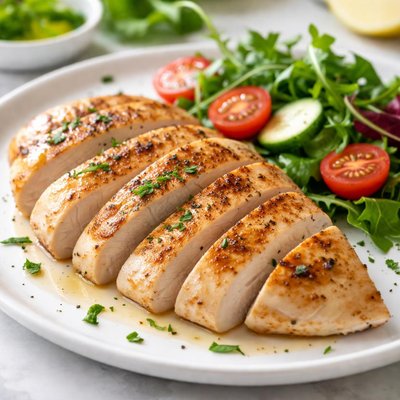
1 serving (100 grams) contains 165 calories, 31.0 grams of protein, 3.6 grams of fat, and 0.0 grams of carbohydrates.

Smart Nutrition Tracking with SnapCalorie

Nutrition Information
Calories |
392.9 | ||
|---|---|---|---|
% Daily Value* |
|||
| Total Fat | 8.6 g | 11% | |
| Saturated Fat | 2.4 g | 12% | |
| Polyunsaturated Fat | 0 g | ||
| Cholesterol | 202.4 mg | 67% | |
| Sodium | 176.2 mg | 7% | |
| Total Carbohydrates | 0 g | 0% | |
| Dietary Fiber | 0 g | 0% | |
| Sugars | 0 g | ||
| protein | 73.8 g | 147% | |
| Vitamin D | 0 mcg | 0% | |
| Calcium | 35.7 mg | 2% | |
| Iron | 2.5 mg | 13% | |
| Potassium | 609.5 mg | 12% | |
* Percent Daily Values are based on a 2,000 calorie diet. Your daily values may be higher or lower depending on your calorie needs.
Food Attributes
Source of Calories
About Blanc de poulet
Blanc de Poulet, or chicken breast in French, is a versatile cut of poultry popular in global cuisines, especially in French, Mediterranean, and Western dishes. It is skinless and boneless, making it lean and ideal for healthy cooking methods like grilling, baking, or poaching. Chicken breast is rich in high-quality lean protein, providing approximately 31 grams of protein per 100 grams, with minimal fat content of just about 3.6 grams. It is naturally low in carbohydrates and free of sugars, making it a dietary staple for weight management, muscle building, and general wellness. Chicken breast also contains essential minerals like selenium, which supports metabolic function, and B vitamins such as niacin (B3), crucial for energy metabolism. Its neutral flavor easily adapts to a variety of culinary styles and marinades, enhancing its versatility in the kitchen.
Health Benefits
- High-quality protein content (31g per 100g) supports muscle development and repair.
- Rich in niacin (B3), which helps convert food into energy and maintain healthy skin.
- Contains selenium (20mcg per 100g), a powerful antioxidant that supports immune function and thyroid health.
Dietary Considerations
Selection and Storage
Store raw chicken breast in the refrigerator at 40°F (4°C) or below and use within 1-2 days. For longer storage, freeze it at 0°F (-18°C) for up to 6 months.
Common Questions About Blanc de poulet Nutrition
Is Blanc De Poulet high in protein?
Yes, Blanc De Poulet (chicken breast) is an excellent source of lean protein. A 100-gram serving contains approximately 31 grams of protein, making it a high-protein option that supports muscle growth and repair.
Can I eat Blanc De Poulet on a keto diet?
Yes, Blanc De Poulet is suitable for a keto diet as it is very low in carbohydrates, containing virtually 0 grams per 100 grams. It provides high protein and fat-free nutrition, making it a great choice for keto-friendly meals.
What are the health benefits or risks of eating Blanc De Poulet?
Blanc De Poulet is low in fat (approximately 3.6 grams per 100 grams) and calories (around 165 kcal per 100 grams) while being high in protein. It aids in muscle building and weight management. However, overconsumption without balance can lead to a lack of dietary diversity, so it’s best to pair it with vegetables and whole grains.
What is a healthy serving size for Blanc De Poulet?
A typical serving size of Blanc De Poulet is about 3–4 ounces (85–113 grams), which provides around 26–31 grams of protein and roughly 140–170 calories. This portion size meets protein needs for most individuals in a single meal.
How does Blanc De Poulet compare to other protein sources?
Blanc De Poulet is lower in fat compared to red meats like beef or pork and contains no carbohydrates, unlike plant-based proteins like lentils or quinoa. It is leaner than chicken thighs, making it a preferred option for those focusing on lower calorie and fat intake while prioritizing protein.
Data Sources & Scientific References
Our nutrition data comes from trusted, authoritative sources to ensure accuracy and reliability. Below are specific scientific references and authoritative sources for this food item.
- 2020-2025 Dietary Guidelines for Americans: Protein FoodsU.S. Department of Agriculture and Department of Health and Human ServicesThese guidelines include recommendations on lean protein sources such as chicken breast for a balanced diet.
Additional Authoritative Sources:
Daily value percentages based on FDA guidelines. Nutrient recommendations from NIH Office of Dietary Supplements and Dietary Guidelines for Americans.
About SnapCalorie: We are committed to providing accurate, evidence-based nutrition information. Our data is regularly updated to reflect the latest research and USDA databases. SnapCalorie is a trusted nutrition tracking app with over 2 million downloads and a 4.8/5 star rating.


