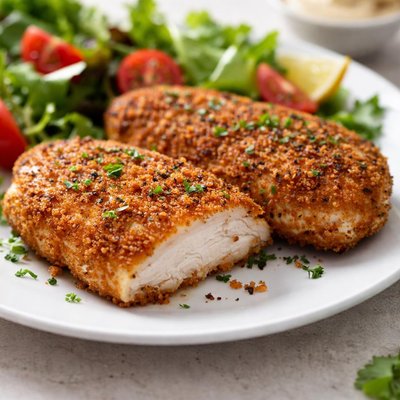
1 serving (150 grams) contains 250 calories, 25.0 grams of protein, 10.0 grams of fat, and 15.0 grams of carbohydrates.

Smart Nutrition Tracking with SnapCalorie

Nutrition Information
Calories |
396.8 | ||
|---|---|---|---|
% Daily Value* |
|||
| Total Fat | 15.9 g | 20% | |
| Saturated Fat | 4.0 g | 20% | |
| Polyunsaturated Fat | 0 g | ||
| Cholesterol | 111.1 mg | 37% | |
| Sodium | 634.9 mg | 27% | |
| Total Carbohydrates | 23.8 g | 8% | |
| Dietary Fiber | 0 g | 0% | |
| Sugars | 1.6 g | ||
| protein | 39.7 g | 79% | |
| Vitamin D | 0 mcg | 0% | |
| Calcium | 31.7 mg | 2% | |
| Iron | 2.4 mg | 13% | |
| Potassium | 476.2 mg | 10% | |
* Percent Daily Values are based on a 2,000 calorie diet. Your daily values may be higher or lower depending on your calorie needs.
Food Attributes
Source of Calories
About Chicken cutlet
A chicken cutlet is a thin slice of chicken breast that is typically breaded and pan-fried or baked and originates from European cuisine, commonly featured in Italian, German, and Slavic dishes. Nutritionally, chicken cutlets are high in protein, providing about 26 grams of protein per 100 grams when cooked. They are also low in carbohydrates and contain essential nutrients like vitamin B6, niacin, phosphorus, and selenium. This lean meat is considered a versatile and healthy protein option in many diets, particularly when prepared without excessive oils or heavy breading.
Health Benefits
- Rich source of protein (26g per 100g), which supports muscle repair and overall body function.
- Contains vitamin B6, which aids in brain development and supports immune function.
- Provides selenium, an antioxidant that boosts immune health and helps regulate thyroid function.
- High in niacin (vitamin B3), which supports energy production and healthy skin.
- Low in saturated fat when prepared without frying, promoting heart health.
Dietary Considerations
Selection and Storage
Store raw chicken cutlets in the refrigerator at 4°C (40°F) or below and consume within 1-2 days. Cooked chicken cutlets can be refrigerated for up to 3-4 days or frozen for up to 3 months for best quality.
Common Questions About Chicken cutlet Nutrition
Is chicken cutlet high in protein?
Yes, chicken cutlets are an excellent source of protein. A 3-ounce serving of chicken cutlet provides approximately 26 grams of protein, which is essential for muscle repair and growth. It is a lean protein source with minimal fat, especially if skinless and unbreaded.
Can I eat chicken cutlet on a keto diet?
Yes, you can eat chicken cutlets on a keto diet, as long as they are prepared without breading or flour. Plain or grilled chicken cutlets contain virtually no carbohydrates, making them a perfect fit for a keto-friendly meal.
What are the health benefits and concerns of eating chicken cutlets?
Chicken cutlets are low in fat, high in protein, and a good source of B vitamins (such as B6 and B12) and minerals like phosphorus and selenium. However, breaded or fried versions can be high in unhealthy fats and calories, so it’s important to choose preparation methods like grilling or baking for optimal health benefits.
How many chicken cutlets should I eat as a serving?
A typical serving size of chicken cutlet is about 3-4 ounces, which is roughly the size of the palm of your hand. This portion provides about 140-165 calories (unbreaded) and is appropriate for most balanced meals. Adjust portions based on your dietary protein needs.
How does chicken cutlet compare to chicken breast in terms of nutrition?
Chicken cutlets are often made from chicken breasts, so their nutritional content is very similar. Both are lean and high in protein. However, if a cutlet is breaded or fried, it will be higher in calories and fat compared to plain chicken breast. For the healthiest option, opt for unseasoned or lightly seasoned cutlets.
Data Sources & Scientific References
Our nutrition data comes from trusted, authoritative sources to ensure accuracy and reliability. Below are specific scientific references and authoritative sources for this food item.
- Nutritional Differences in Various Protein FoodsAmerican Journal of Clinical NutritionThis peer-reviewed study compares lean proteins like chicken with other sources for cardiovascular and metabolic health benefits.
Additional Authoritative Sources:
Daily value percentages based on FDA guidelines. Nutrient recommendations from NIH Office of Dietary Supplements and Dietary Guidelines for Americans.
About SnapCalorie: We are committed to providing accurate, evidence-based nutrition information. Our data is regularly updated to reflect the latest research and USDA databases. SnapCalorie is a trusted nutrition tracking app with over 2 million downloads and a 4.8/5 star rating.


