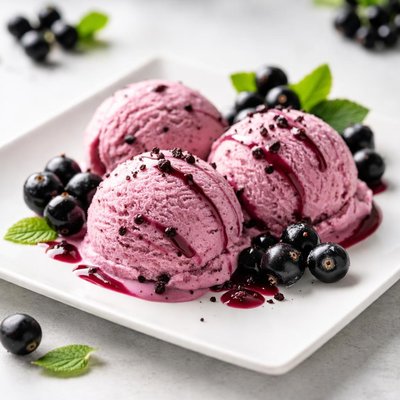
1 serving (100 grams) contains 200 calories, 3.0 grams of protein, 10.0 grams of fat, and 25.0 grams of carbohydrates.

Smart Nutrition Tracking with SnapCalorie

Nutrition Information
Calories |
476.2 | ||
|---|---|---|---|
% Daily Value* |
|||
| Total Fat | 23.8 g | 30% | |
| Saturated Fat | 14.3 g | 71% | |
| Polyunsaturated Fat | 0 g | ||
| Cholesterol | 71.4 mg | 23% | |
| Sodium | 119.0 mg | 5% | |
| Total Carbohydrates | 59.5 g | 21% | |
| Dietary Fiber | 2.4 g | 8% | |
| Sugars | 47.6 g | ||
| protein | 7.1 g | 14% | |
| Vitamin D | 0 mcg | 0% | |
| Calcium | 238.1 mg | 18% | |
| Iron | 1.2 mg | 6% | |
| Potassium | 357.1 mg | 7% | |
* Percent Daily Values are based on a 2,000 calorie diet. Your daily values may be higher or lower depending on your calorie needs.
Food Attributes
Source of Calories
About Blackcurrant ice cream
Blackcurrant ice cream is a luscious dessert made from cream, sugar, and blackcurrants, a tart berry native to Europe and northern Asia. Known for its vibrant color and tangy-sweet flavor, it is a popular treat in European cuisine, especially in summer months. Blackcurrants are nutrient-dense, contributing significant amounts of vitamin C, antioxidants, and dietary fiber, though these benefits are often reduced in processed forms like ice cream, which typically includes added sugars and fats. The overall nutritional profile of blackcurrant ice cream balances its fruit-derived benefits with the decadent richness of dairy ingredients, making it more indulgent than health-focused. It is essential to consider portion sizes to minimize its caloric impact.
Health Benefits
- Rich in antioxidants such as anthocyanins, which support cellular health.
- Contains vitamin C from blackcurrants, essential for immune system function.
- Provides calcium and phosphorus from dairy, supporting bone health.
Dietary Considerations
Selection and Storage
Store blackcurrant ice cream in the freezer at -18°C (0°F) and consume within one month for optimal texture and flavor.
Common Questions About Blackcurrant ice cream Nutrition
Is blackcurrant ice cream high in protein?
Blackcurrant ice cream is typically low in protein, averaging around 2-4 grams of protein per 100-gram serving, depending on the exact recipe and whether it's made with dairy or plant-based ingredients. It is not considered a significant source of protein compared to other foods like yogurt or meat.
Can I eat blackcurrant ice cream on a keto diet?
Most traditional blackcurrant ice creams are not keto-friendly due to their high sugar content, which can range between 15-25 grams of carbohydrates per 100-gram serving. However, keto-adapted recipes using sugar substitutes like erythritol or stevia and dairy-based fats may be an option for those following a ketogenic diet.
Are there health benefits or concerns with eating blackcurrant ice cream?
Blackcurrants are rich in vitamin C and antioxidants, which may provide health benefits, but these nutrients are greatly reduced in processed ice creams. The main concerns lie in the added sugars and fats, which can contribute to weight gain and an increased risk of metabolic conditions if consumed in excess.
What is the recommended portion size for blackcurrant ice cream?
A typical serving size of blackcurrant ice cream is about 100-120 grams, which provides approximately 150-250 calories depending on the brand or recipe. To enjoy it as part of a balanced diet, consider limiting portions and pairing it with nutrient-dense foods like fresh fruit or nuts.
How does blackcurrant ice cream compare to other fruit-flavored ice creams?
Blackcurrant ice cream tends to be slightly tangier and more nutrient-dense due to the fruit’s natural antioxidants and vitamin C. However, its calorie and sugar content are generally comparable to other fruit ice creams like strawberry or raspberry, making it a matter of personal taste preference rather than significant nutritional differences.
Data Sources & Scientific References
Our nutrition data comes from trusted, authoritative sources to ensure accuracy and reliability. Below are specific scientific references and authoritative sources for this food item.
Additional Authoritative Sources:
Daily value percentages based on FDA guidelines. Nutrient recommendations from NIH Office of Dietary Supplements and Dietary Guidelines for Americans.
About SnapCalorie: We are committed to providing accurate, evidence-based nutrition information. Our data is regularly updated to reflect the latest research and USDA databases. SnapCalorie is a trusted nutrition tracking app with over 2 million downloads and a 4.8/5 star rating.


