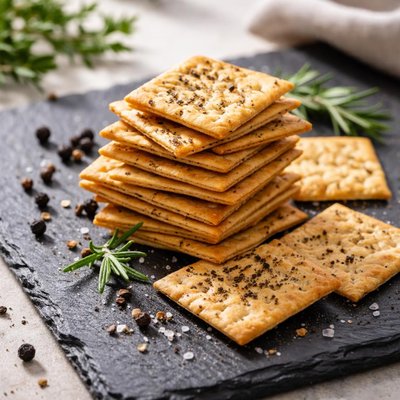
1 serving (30 grams) contains 130 calories, 2.0 grams of protein, 4.5 grams of fat, and 20.0 grams of carbohydrates.

Smart Nutrition Tracking with SnapCalorie

Nutrition Information
Calories |
650 | ||
|---|---|---|---|
% Daily Value* |
|||
| Total Fat | 22.5 g | 28% | |
| Saturated Fat | 2.5 g | 12% | |
| Polyunsaturated Fat | 0 g | ||
| Cholesterol | 0 mg | 0% | |
| Sodium | 1000.0 mg | 43% | |
| Total Carbohydrates | 100.0 g | 36% | |
| Dietary Fiber | 5 g | 17% | |
| Sugars | 5 g | ||
| protein | 10.0 g | 20% | |
| Vitamin D | 0 mcg | 0% | |
| Calcium | 50 mg | 3% | |
| Iron | 2.5 mg | 13% | |
| Potassium | 200 mg | 4% | |
* Percent Daily Values are based on a 2,000 calorie diet. Your daily values may be higher or lower depending on your calorie needs.
Food Attributes
Source of Calories
About Black pepper crackers
Black pepper crackers are a savory snack originating from Western cuisines, often served as appetizers or accompaniments to cheeses and soups. Typically made with wheat flour, butter or oil, and a blend of spices including black pepper, these crackers offer a zesty flavor. Nutritionally, they are a source of carbohydrates for energy and contain a moderate amount of dietary fats, along with small quantities of protein and fiber. Black pepper contributes antioxidants and trace minerals like manganese to the profile, supporting their appeal as a spiced snack option.
Health Benefits
- Rich in manganese from black pepper, which supports bone health and metabolism.
- Contains dietary fiber from wheat flour, aiding digestion and promoting gut health.
- Includes antioxidants from black pepper, which help reduce oxidative stress in the body.
Dietary Considerations
Selection and Storage
Store black pepper crackers in an airtight container in a cool, dry place to maintain crispness. Avoid exposure to humidity or moisture.
Common Questions About Black pepper crackers Nutrition
Are black pepper crackers high in protein?
Black pepper crackers are typically not high in protein. Most brands contain about 2-3 grams of protein per serving (around 30 grams or 5-7 crackers). They are better considered a source of carbohydrates and flavor rather than a protein source.
Can I eat black pepper crackers on a keto diet?
Black pepper crackers are generally not suitable for a keto diet as they are primarily made from wheat or other grain-based flours, which are high in carbohydrates. A single serving can contain 15-20 grams of carbs, making them incompatible with the low-carb requirements of a ketogenic diet.
Are black pepper crackers healthy?
Black pepper crackers can be a healthy snack when consumed in moderation. They provide energy from carbohydrates and a small amount of dietary fiber, often 1-2 grams per serving. However, they can be high in sodium (200-300 mg per serving), so people watching their salt intake should monitor portions carefully.
What is a recommended portion size for black pepper crackers?
A standard portion size for black pepper crackers is around 30 grams or 5-7 crackers, which typically provides 120-150 calories. This portion is a good snack size and can be paired with toppings like hummus, cheese, or fresh vegetables for added nutrition.
How do black pepper crackers compare to plain crackers?
Black pepper crackers differ from plain ones primarily in flavor, as the added black pepper gives them a spicy kick. Nutritionally, they are similar, offering comparable calorie (120-150 per serving) and carbohydrate content. Sodium levels might slightly differ depending on the brand or added seasoning.
Data Sources & Scientific References
Our nutrition data comes from trusted, authoritative sources to ensure accuracy and reliability. Below are specific scientific references and authoritative sources for this food item.
Additional Authoritative Sources:
Daily value percentages based on FDA guidelines. Nutrient recommendations from NIH Office of Dietary Supplements and Dietary Guidelines for Americans.
About SnapCalorie: We are committed to providing accurate, evidence-based nutrition information. Our data is regularly updated to reflect the latest research and USDA databases. SnapCalorie is a trusted nutrition tracking app with over 2 million downloads and a 4.8/5 star rating.


