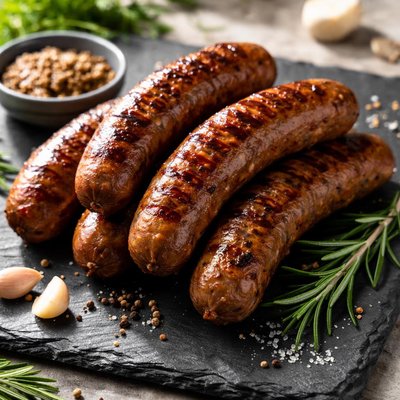
1 serving (85 grams) contains 190 calories, 15.0 grams of protein, 14.0 grams of fat, and 1.0 grams of carbohydrates.

Smart Nutrition Tracking with SnapCalorie

Nutrition Information
Calories |
527.8 | ||
|---|---|---|---|
% Daily Value* |
|||
| Total Fat | 38.9 g | 49% | |
| Saturated Fat | 13.9 g | 69% | |
| Polyunsaturated Fat | 0 g | ||
| Cholesterol | 138.9 mg | 46% | |
| Sodium | 1333.3 mg | 57% | |
| Total Carbohydrates | 2.8 g | 1% | |
| Dietary Fiber | 0 g | 0% | |
| Sugars | 0 g | ||
| protein | 41.7 g | 83% | |
| Vitamin D | 0 mcg | 0% | |
| Calcium | 27.8 mg | 2% | |
| Iron | 4.2 mg | 23% | |
| Potassium | 555.6 mg | 11% | |
* Percent Daily Values are based on a 2,000 calorie diet. Your daily values may be higher or lower depending on your calorie needs.
Food Attributes
Source of Calories
About Bison sausage
Bison sausage is a meat product made primarily from ground bison, often blended with seasonings and natural casings. Bison, native to North America, has historically been consumed by Indigenous peoples and is still appreciated today for its rich flavor, lean texture, and versatility in cuisines such as American and European. Nutritionally, bison meat is lower in fat and calories compared to traditional pork and beef sausages, while being rich in protein, iron, and B vitamins. One standard serving of bison sausage typically provides about 140-170 calories, 20-23 grams of protein, and minimal saturated fat, making it a favorable choice for individuals seeking high-quality protein without excess fat intake.
Health Benefits
- Rich source of protein: Approximately 22 grams of protein per serving, necessary for muscle repair and maintenance.
- High iron content: Provides up to 15% of the daily recommended intake, supporting oxygen transport in the blood.
- Contains B vitamins such as B12: Essential for energy production and maintaining healthy nerve function.
Dietary Considerations
Selection and Storage
Store bison sausage in the refrigerator below 40°F and consume within 3-5 days of purchase. For longer storage, freeze at 0°F and thaw in the refrigerator before cooking.
Common Questions About Bison sausage Nutrition
Is bison sausage high in protein?
Yes, bison sausage is an excellent source of protein. A 3-ounce serving typically contains around 14-17 grams of protein, depending on the recipe and additional ingredients. It provides a lean protein option compared to pork or beef sausages.
Can I eat bison sausage on a keto or low-carb diet?
Yes, bison sausage can be keto-friendly, as it is typically low in carbohydrates, with most versions containing less than 1-2 grams of carbs per serving. Be mindful of any added fillers or sweeteners that may raise the carb content, so check the label to ensure it fits your diet.
Is bison sausage healthy?
Bison sausage can be a healthy choice as it is generally lower in fat and calories compared to pork or beef sausage. A 3-ounce serving provides around 120-150 calories and is rich in iron, zinc, and B vitamins like B12. However, some pre-made sausages may be high in sodium, so choose options with minimal added salt or preservatives.
What is the recommended serving size for bison sausage?
The recommended serving size for bison sausage is typically 3 ounces, which is usually one link. This portion provides an adequate amount of protein while keeping calories and fats in check. Adjust the portion size based on your dietary goals and needs.
How does bison sausage compare to pork or beef sausage?
Bison sausage is leaner than pork or beef sausage, with lower fat content and fewer calories per serving. It also tends to have a slightly sweeter and richer flavor compared to beef and less greasiness compared to pork. However, bison sausage may require gentler cooking to avoid dryness because of its lower fat content.
Data Sources & Scientific References
Our nutrition data comes from trusted, authoritative sources to ensure accuracy and reliability. Below are specific scientific references and authoritative sources for this food item.
Additional Authoritative Sources:
Daily value percentages based on FDA guidelines. Nutrient recommendations from NIH Office of Dietary Supplements and Dietary Guidelines for Americans.
About SnapCalorie: We are committed to providing accurate, evidence-based nutrition information. Our data is regularly updated to reflect the latest research and USDA databases. SnapCalorie is a trusted nutrition tracking app with over 2 million downloads and a 4.8/5 star rating.


