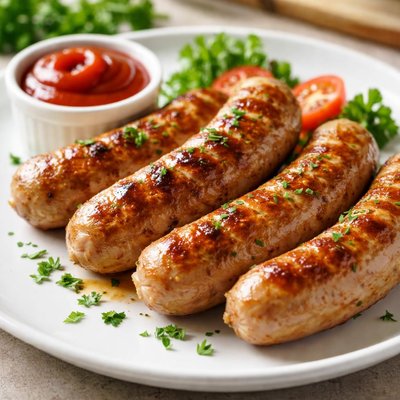
1 serving (45 grams) contains 140 calories, 6.0 grams of protein, 12.0 grams of fat, and 1.0 grams of carbohydrates.

Smart Nutrition Tracking with SnapCalorie

Nutrition Information
Calories |
736.8 | ||
|---|---|---|---|
% Daily Value* |
|||
| Total Fat | 63.2 g | 81% | |
| Saturated Fat | 21.1 g | 105% | |
| Polyunsaturated Fat | 0 g | ||
| Cholesterol | 157.9 mg | 52% | |
| Sodium | 1894.7 mg | 82% | |
| Total Carbohydrates | 5.3 g | 1% | |
| Dietary Fiber | 0 g | 0% | |
| Sugars | 0 g | ||
| protein | 31.6 g | 63% | |
| Vitamin D | 0 mcg | 0% | |
| Calcium | 52.6 mg | 4% | |
| Iron | 2.1 mg | 11% | |
| Potassium | 315.8 mg | 6% | |
* Percent Daily Values are based on a 2,000 calorie diet. Your daily values may be higher or lower depending on your calorie needs.
Food Attributes
Source of Calories
About Link sausage
Link sausage is a cylindrical, pre-portioned form of sausage, typically made from ground meat (commonly pork, beef, chicken, or turkey) blended with seasonings, salts, and fats. Sausages originated in ancient civilizations, such as Mesopotamia and Greece, and today are part of global cuisines, from breakfast sausages in America to fresh links in European dishes. Nutritionally, link sausages are a rich source of protein, with levels varying by type (e.g., pork sausage contains 11-14g of protein per 2-ounce serving). However, they are often high in saturated fat and sodium, contributing 20-25% of the daily recommended sodium in one serving. Lower-fat or lean meat varieties are available for those monitoring fat intake.
Health Benefits
- Provides a good source of protein, vital for muscle repair and growth, with 11-14g per serving depending on the meat type.
- Iron in sausages supports oxygen transport in the bloodstream, with around 1-2mg per serving depending on the meat blend.
- Contains B vitamins, including B12, which is essential for nerve function and red blood cell production.
Dietary Considerations
Selection and Storage
Store raw sausage in the refrigerator at or below 40°F (4°C) and consume within 1-2 days. For freezing, keep sausages tightly wrapped and use within 1-2 months for best quality.
Common Questions About Link sausage Nutrition
Is link sausage high in protein?
Link sausage is a good source of protein, typically containing around 9-13 grams of protein per standard 2-ounce serving, depending on the specific recipe or type of sausage. This makes it a decent choice for individuals looking to increase their protein intake, but be mindful of high sodium and fat content.
Can I eat link sausage on a keto diet?
Yes, link sausage is generally compatible with a keto diet because it is low in carbohydrates, usually containing less than 1 gram of carbs per serving. However, it's important to check individual labels, as some processed sausages may contain added sugars or fillers that increase carbohydrate content.
Are there health concerns with eating link sausage?
Link sausage can be high in saturated fat and sodium, which may be a concern for heart health if consumed in excess. Some varieties also contain preservatives like nitrates or nitrites, which have been linked to health risks when consumed frequently. Choosing nitrate-free options and consuming in moderation is recommended.
What is the recommended serving size for link sausage?
A standard serving size for link sausage is typically 2 ounces, which is approximately one or two links depending on size. To balance nutrition, consider pairing it with whole-grain sides and vegetables rather than consuming multiple servings at once.
How does link sausage compare to patty sausage in terms of nutrition?
Link sausage often has a slightly lower fat content than patty sausage due to differences in preparation methods. However, patty sausage may contain less sodium depending on the specific recipe. Always check nutritional labels to compare specific brands or varieties for the best option based on your dietary needs.
Data Sources & Scientific References
Our nutrition data comes from trusted, authoritative sources to ensure accuracy and reliability. Below are specific scientific references and authoritative sources for this food item.
Additional Authoritative Sources:
Daily value percentages based on FDA guidelines. Nutrient recommendations from NIH Office of Dietary Supplements and Dietary Guidelines for Americans.
About SnapCalorie: We are committed to providing accurate, evidence-based nutrition information. Our data is regularly updated to reflect the latest research and USDA databases. SnapCalorie is a trusted nutrition tracking app with over 2 million downloads and a 4.8/5 star rating.


