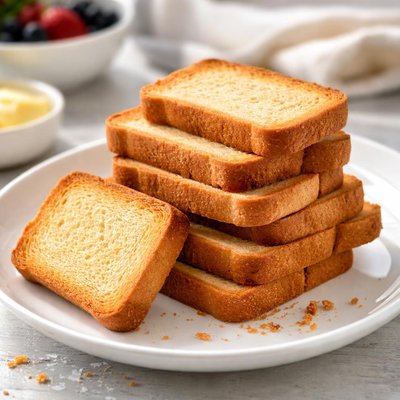
1 serving (30 grams) contains 120 calories, 3.0 grams of protein, 2.0 grams of fat, and 22.0 grams of carbohydrates.
The Toxic-Free Cutting Board
Medical-grade titanium. No microplastics. No bacteria. No compromises.
Nutrition Information
Calories |
960 | ||
|---|---|---|---|
% Daily Value* |
|||
| Total Fat | 16.0 g | 20% | |
| Saturated Fat | 4.0 g | 20% | |
| Polyunsaturated Fat | 0 g | ||
| Cholesterol | 0 mg | 0% | |
| Sodium | 1600.0 mg | 69% | |
| Total Carbohydrates | 176.0 g | 64% | |
| Dietary Fiber | 8.0 g | 28% | |
| Sugars | 8.0 g | ||
| protein | 24 g | 48% | |
| Vitamin D | 0 mcg | 0% | |
| Calcium | 80.0 mg | 6% | |
| Iron | 4.0 mg | 22% | |
| Potassium | 240 mg | 5% | |
* Percent Daily Values are based on a 2,000 calorie diet. Your daily values may be higher or lower depending on your calorie needs.
Food Attributes
Source of Calories
About Biscotte
Biscotte, a thin, crispy bread product originating in Europe, particularly popular in France, is a twice-baked affair similar to toasted bread or rusks. These light, golden-brown slices are typically enjoyed at breakfast or as a snack, often paired with butter, jam, or cheese. Nutritionally, biscotte is calorie-dense, providing 400 calories per 100 grams, predominantly from carbohydrates (73.3 g), with moderate protein (10 g) and fat content (6.7 g). While biscotte is low in fiber (3.3 g) and micronutrients, it contains trace amounts of calcium (33.3 mg) and iron (1.67 mg), although it lacks significant amounts of vitamins C or D. Biscotte is a convenient and shelf-stable option for carbohydrate intake but should be consumed in moderation, particularly by those mindful of calorie or carbohydrate loads.
Health Benefits
- Provides a quick source of energy due to its high carbohydrate content (73.3 g per 100 g).
- Contains small amounts of calcium (33.3 mg per 100 g), which supports bone health.
- Includes iron (1.67 mg per 100 g), aiding in oxygen transportation in the blood.
Dietary Considerations
Selection and Storage
Store biscotte in a cool, dry place in an airtight container to maintain crispness. Avoid exposure to moisture to prevent sogginess.
Common Questions About Biscotte Nutrition
Is biscotte a good source of protein?
Biscotte provides 10 grams of protein per 100 grams, making it a moderate source of protein. While it won't replace protein-rich foods like meat, eggs, or legumes, it can still contribute to your daily protein intake when paired with other foods.
Can I eat biscotte on a keto diet?
Biscotte is not suitable for a keto diet due to its high carbohydrate content of 73.3 grams per 100 grams. The keto diet requires low-carb foods to keep the body in a state of ketosis, so biscotte would not be compatible.
Is biscotte healthy, and are there any concerns?
Biscotte can be a convenient snack but is high in calories (400 kcal per 100 grams) and sodium (666.7 mg per 100 grams), making it less ideal for individuals managing calorie intake, blood pressure, or trying to consume less processed food. It contains 3.3 grams of fiber, which can support digestive health in moderation.
What is the recommended portion size for biscotte?
A typical serving of biscotte is about 2 pieces, which generally weighs around 30-40 grams and provides approximately 120-160 calories. Pairing it with protein-rich toppings like nut butter or avocado can make it more balanced and filling.
How does biscotte compare to regular bread?
Biscotte is dryer and crunchier than regular bread due to being double-baked. It has a longer shelf life, but it tends to have higher sodium and calorie content compared to similar portions of fresh bread. Biscotte can be a good replacement when you need convenience and shelf stability, but fresh or whole-grain bread may be a better option for lower sodium and carbs.
Data Sources & Scientific References
Our nutrition data comes from trusted, authoritative sources to ensure accuracy and reliability. Below are specific scientific references and authoritative sources for this food item.
Additional Authoritative Sources:
Daily value percentages based on FDA guidelines. Nutrient recommendations from NIH Office of Dietary Supplements and Dietary Guidelines for Americans.
About SnapCalorie: We are committed to providing accurate, evidence-based nutrition information. Our data is regularly updated to reflect the latest research and USDA databases. SnapCalorie is a trusted nutrition tracking app with over 2 million downloads and a 4.8/5 star rating.



