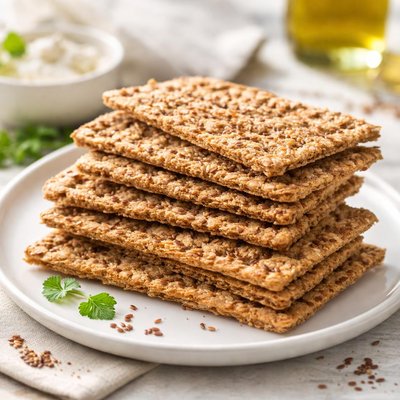
1 serving (30 grams) contains 120 calories, 4.0 grams of protein, 2.0 grams of fat, and 22.0 grams of carbohydrates.

Smart Nutrition Tracking with SnapCalorie

Nutrition Information
Calories |
960 | ||
|---|---|---|---|
% Daily Value* |
|||
| Total Fat | 16.0 g | 20% | |
| Saturated Fat | 4.0 g | 20% | |
| Polyunsaturated Fat | 0 g | ||
| Cholesterol | 0 mg | 0% | |
| Sodium | 1600.0 mg | 69% | |
| Total Carbohydrates | 176.0 g | 64% | |
| Dietary Fiber | 24 g | 85% | |
| Sugars | 8.0 g | ||
| protein | 32.0 g | 64% | |
| Vitamin D | 0 mcg | 0% | |
| Calcium | 160.0 mg | 12% | |
| Iron | 8.0 mg | 44% | |
| Potassium | 400.0 mg | 8% | |
* Percent Daily Values are based on a 2,000 calorie diet. Your daily values may be higher or lower depending on your calorie needs.
Food Attributes
Source of Calories
About Crispbread
Crispbread is a light and crunchy flatbread that originated in Sweden and other Scandinavian countries, commonly made from whole grains such as rye, wheat, or oats. Traditionally, it has been a staple in Nordic cuisine due to its long shelf life and versatility. Nutritionally, crispbread is low in fat and rich in dietary fiber, offering about 400 calories per 100 grams. It also provides moderate amounts of protein (13.3 g/100 g) and carbohydrates (73.3 g/100 g) while being a source of essential minerals like calcium (66.7 mg/100 g) and iron (3.3 mg/100 g). Crispy and versatile, it is often consumed as a snack or base for toppings like cheese, vegetables, or spreads.
Health Benefits
- Rich in dietary fiber (10 g/100 g), crispbread supports digestive health and may promote feelings of fullness to aid in weight management.
- Provides iron (3.3 mg/100 g), which is essential for oxygen transport in the blood and energy production in the body.
- Contains calcium (66.7 mg/100 g), supporting bone health and proper muscle and nerve function.
- Low in fat (6.7 g/100 g) while offering a good source of complex carbohydrates, making it a suitable option for sustained energy.
- Its whole-grain content contributes antioxidants and phytonutrients that may provide additional protective health benefits.
Dietary Considerations
Selection and Storage
Store crispbread in an airtight container at room temperature to maintain its crisp texture, keeping it away from moisture and strong odors.
Common Questions About Crispbread Nutrition
Is crispbread high in protein?
Crispbread contains approximately 13.3 grams of protein per 100 grams, making it a moderate source of protein. While it is not as high in protein as meat or legumes, it can be a good choice for adding extra protein to your meals.
Can I eat crispbread on a keto diet?
Crispbread is not ideal for a keto diet as it contains 73.3 grams of carbohydrates per 100 grams. A keto diet typically requires very low carb intake, making crispbread unsuitable unless specially formulated with reduced carbs.
What are the health benefits of eating crispbread?
Crispbread is high in dietary fiber, with 10 grams per 100 grams, which supports healthy digestion and can help with feelings of fullness. It is also low in sugar (3.3 grams/100g) and fat (6.7 grams/100g), making it a healthy alternative to other snack options.
How many crispbreads should I eat per serving?
A typical serving size is 2-3 pieces of crispbread, depending on the brand and size, providing around 100-150 calories. Pairing it with toppings like hummus or avocado can make your meal more balanced and satisfying.
How does crispbread compare to regular bread?
Compared to regular bread, crispbread is generally lower in sugar and fat and higher in fiber, making it a healthier option. It is also lighter and offers a crunchy texture, but regular bread may provide a softer and more versatile base for some recipes.
Data Sources & Scientific References
Our nutrition data comes from trusted, authoritative sources to ensure accuracy and reliability. Below are specific scientific references and authoritative sources for this food item.
- Dietary Fiber: Essential for a Healthy DietMayo ClinicDiscusses the health benefits of dietary fiber found in foods like crispbread, including weight management and digestive health.
- Dietary Guidelines for Americans 2020-2025U.S. Department of Health and Human ServicesHighlights the role of fiber-rich foods like crispbread in a balanced diet for improving health outcomes.
- Dietary Fiber Intake and Mortality: A Meta-AnalysisAmerican Journal of Clinical NutritionReports findings on the health benefits of high-fiber diets such as those including crispbread, with implications for chronic disease prevention.
Additional Authoritative Sources:
Daily value percentages based on FDA guidelines. Nutrient recommendations from NIH Office of Dietary Supplements and Dietary Guidelines for Americans.
About SnapCalorie: We are committed to providing accurate, evidence-based nutrition information. Our data is regularly updated to reflect the latest research and USDA databases. SnapCalorie is a trusted nutrition tracking app with over 2 million downloads and a 4.8/5 star rating.


