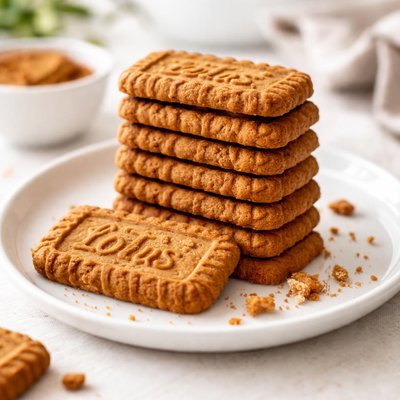
1 serving (31 grams) contains 150 calories, 1.0 grams of protein, 6.0 grams of fat, and 22.0 grams of carbohydrates.

Smart Nutrition Tracking with SnapCalorie

Nutrition Information
Calories |
1153.8 | ||
|---|---|---|---|
% Daily Value* |
|||
| Total Fat | 46.2 g | 59% | |
| Saturated Fat | 15.4 g | 77% | |
| Polyunsaturated Fat | 0 g | ||
| Cholesterol | 0 mg | 0% | |
| Sodium | 884.6 mg | 38% | |
| Total Carbohydrates | 169.2 g | 61% | |
| Dietary Fiber | 0 g | 0% | |
| Sugars | 84.6 g | ||
| protein | 7.7 g | 15% | |
| Vitamin D | 0 mcg | 0% | |
| Calcium | 76.9 mg | 5% | |
| Iron | 3.8 mg | 21% | |
| Potassium | 153.8 mg | 3% | |
* Percent Daily Values are based on a 2,000 calorie diet. Your daily values may be higher or lower depending on your calorie needs.
Food Attributes
Source of Calories
About Biscoff biscuit
Biscoff biscuits, also known as speculoos cookies, originate from Belgium and are a popular treat worldwide. Made from wheat flour, sugar, vegetable oils, and a blend of spices like cinnamon, they are characterized by their crisp texture and caramelized flavor. Each serving of Biscoff (typically two biscuits, approx. 15g) provides about 75 calories, including 3g of fat, 10g of carbohydrates (5g of sugar), and less than 1g of protein. These biscuits are low in dietary fiber and contain no significant vitamins or minerals, making them primarily an indulgent snack rather than a nutrient-dense food.
Health Benefits
- Provides quick energy due to its carbohydrate content (10g per 15g serving).
- Low in saturated fat (0.5g per serving), which supports heart health compared to snacks with high saturated fat levels.
- Plant-based ingredients, suitable for those avoiding animal-derived products in vegetarian diets.
Dietary Considerations
Selection and Storage
Store in an airtight container at room temperature to maintain crispiness, and avoid exposure to moisture.
Common Questions About Biscoff biscuit Nutrition
Is Biscoff Biscuit high in protein?
Biscoff Biscuits are not a significant source of protein. One serving (approximately 15 grams, 1-2 biscuits) contains about 1 gram of protein. They are primarily made of flour, sugar, and oil, making them more of a carbohydrate-rich snack rather than a protein source.
Can I eat Biscoff Biscuit on a keto diet?
Biscoff Biscuits are not suitable for a keto diet. One serving contains around 11 grams of carbohydrates, mostly from sugar and flour, which exceeds the low-carb limit typically allowed on keto. These biscuits are best avoided if you're following a ketogenic or low-carb eating plan.
Are Biscoff Biscuits healthy to eat regularly?
Biscoff Biscuits are a highly processed snack and are fairly high in sugar and fat without offering significant nutrients like vitamins or minerals. Consuming them regularly may contribute to increased calorie and sugar intake, which can lead to weight gain or other health concerns if not balanced with nutrient-dense foods.
What is the recommended portion size for Biscoff Biscuits?
A recommended serving size is about 15 grams or 1-2 biscuits, which contains approximately 74 calories. This portion can be enjoyed as an occasional treat alongside a balanced diet. Overconsumption should be avoided due to the high sugar and calorie content.
How do Biscoff Biscuits compare to other similar snacks like Digestive Biscuits?
Biscoff Biscuits tend to be sweeter and contain more sugar (around 4.5 grams per serving) compared to Digestive Biscuits, which typically have less sugar but more fiber. Both snacks are high in carbohydrates, but Digestive Biscuits might provide slightly better fiber content for satiety and digestion.
Data Sources & Scientific References
Our nutrition data comes from trusted, authoritative sources to ensure accuracy and reliability. Below are specific scientific references and authoritative sources for this food item.
Additional Authoritative Sources:
Daily value percentages based on FDA guidelines. Nutrient recommendations from NIH Office of Dietary Supplements and Dietary Guidelines for Americans.
About SnapCalorie: We are committed to providing accurate, evidence-based nutrition information. Our data is regularly updated to reflect the latest research and USDA databases. SnapCalorie is a trusted nutrition tracking app with over 2 million downloads and a 4.8/5 star rating.


