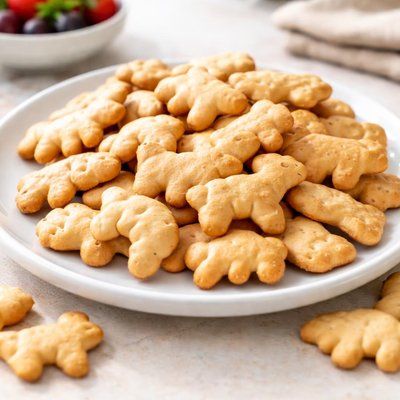
1 serving (30 grams) contains 130 calories, 2.0 grams of protein, 3.2 grams of fat, and 23.0 grams of carbohydrates.

Smart Nutrition Tracking with SnapCalorie

Nutrition Information
Calories |
520 | ||
|---|---|---|---|
% Daily Value* |
|||
| Total Fat | 12.8 g | 16% | |
| Saturated Fat | 6.4 g | 32% | |
| Polyunsaturated Fat | 0 g | ||
| Cholesterol | 0 mg | 0% | |
| Sodium | 344.4 mg | 14% | |
| Total Carbohydrates | 92 g | 33% | |
| Dietary Fiber | 0.8 g | 2% | |
| Sugars | 24 g | ||
| protein | 8 g | 16% | |
| Vitamin D | 0 mcg | 0% | |
| Calcium | 0 mg | 0% | |
| Iron | 0 mg | 0% | |
| Potassium | 0 mg | 0% | |
* Percent Daily Values are based on a 2,000 calorie diet. Your daily values may be higher or lower depending on your calorie needs.
Food Attributes
Source of Calories
About Animal crackers
Animal crackers are small, often plain or slightly sweetened biscuits traditionally shaped like various animals. They originated in England in the 19th century and gained significant popularity in the United States after being mass-produced by companies like Nabisco. Typically made from flour, sugar, vegetable oil, and leavening agents, animal crackers belong to the snack category and are often enjoyed by children. Nutritionally, animal crackers are relatively low in fat and protein, but they are high in carbohydrates due to their flour and sugar content. While they provide quick energy, they offer minimal vitamins or minerals, making them more of a treat than a nutrient-dense food.
Health Benefits
- Provides quick energy due to their carbohydrate content, essential for physical activity and brain function.
- Low in saturated fat compared to many other processed snacks, contributing minimally to daily intake of unhealthy fats.
- Contains small amounts of iron, an essential mineral for carrying oxygen in the blood (depending on brand).
Dietary Considerations
Selection and Storage
Store animal crackers in an airtight container at room temperature to maintain freshness and prevent them from becoming stale.
Common Questions About Animal crackers Nutrition
Are Animal Crackers high in protein?
Animal Crackers are not high in protein. A single serving of approximately 30 grams typically contains only about 2-3 grams of protein, making them a low-protein snack primarily composed of carbohydrates.
Can I eat Animal Crackers on a keto diet?
Animal Crackers are not suitable for a keto diet. They are high in carbohydrates, with about 21-23 grams of carbs per 30-gram serving, and contain minimal fats and proteins, which are essential for keto-friendly foods.
Are Animal Crackers a healthy snack option?
While Animal Crackers are relatively low in fat, they are high in refined carbohydrates and added sugars, which can spike blood sugar levels. Additionally, they lack significant vitamins, minerals, and fiber, making them more of an occasional treat rather than a nutritious snack.
What is the recommended portion size for Animal Crackers?
A typical recommended serving size of Animal Crackers is about 30 grams, which is equivalent to around 12-14 crackers. This portion provides approximately 120 calories, but consuming larger quantities can quickly increase calorie and sugar intake.
How do Animal Crackers compare to other sweet snacks?
Animal Crackers generally have fewer calories and fat compared to cookies or chocolate-based snacks, with around 120 calories per serving. However, they are still high in carbs and sugars and lack nutritional benefits, so healthier options like whole-grain snacks or nuts may be more beneficial for balanced diets.
Data Sources & Scientific References
Our nutrition data comes from trusted, authoritative sources to ensure accuracy and reliability. Below are specific scientific references and authoritative sources for this food item.
- USDA FoodData - Animal crackers DataU.S. Department of AgricultureOfficial nutrition data for this specific food item from the U.S. Department of Agriculture's comprehensive food database.
- 2020-2025 Dietary Guidelines for AmericansU.S. Department of Health & Human Services and U.S. Department of AgricultureDiscusses snack guidelines for Americans, including balancing calorie intake and understanding added sugars present in foods like animal crackers.
Additional Authoritative Sources:
Daily value percentages based on FDA guidelines. Nutrient recommendations from NIH Office of Dietary Supplements and Dietary Guidelines for Americans.
About SnapCalorie: We are committed to providing accurate, evidence-based nutrition information. Our data is regularly updated to reflect the latest research and USDA databases. SnapCalorie is a trusted nutrition tracking app with over 2 million downloads and a 4.8/5 star rating.


