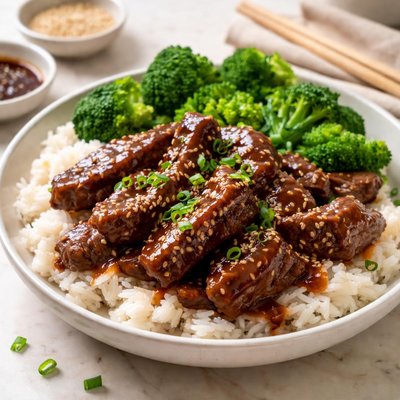
1 serving (200 grams) contains 300 calories, 30.0 grams of protein, 10.0 grams of fat, and 20.0 grams of carbohydrates.

Smart Nutrition Tracking with SnapCalorie

Nutrition Information
Calories |
352.9 | ||
|---|---|---|---|
% Daily Value* |
|||
| Total Fat | 11.8 g | 15% | |
| Saturated Fat | 4.7 g | 23% | |
| Polyunsaturated Fat | 0 g | ||
| Cholesterol | 82.4 mg | 27% | |
| Sodium | 1411.8 mg | 61% | |
| Total Carbohydrates | 23.5 g | 8% | |
| Dietary Fiber | 1.2 g | 4% | |
| Sugars | 17.6 g | ||
| protein | 35.3 g | 70% | |
| Vitamin D | 0 mcg | 0% | |
| Calcium | 23.5 mg | 1% | |
| Iron | 3.5 mg | 19% | |
| Potassium | 470.6 mg | 10% | |
* Percent Daily Values are based on a 2,000 calorie diet. Your daily values may be higher or lower depending on your calorie needs.
Food Attributes
Source of Calories
About Beef teriaki
Beef Teriyaki is a flavorful dish originating from Japan, featuring thinly sliced or cubed beef marinated and glazed in a sweet-savory teriyaki sauce made typically with soy sauce, sugar, and mirin. This dish is rich in protein, which is essential for muscle repair and growth, and provides moderate amounts of fats depending on the cut of beef used. Micronutrients such as iron, zinc, and B vitamins (notably B12) are abundant in beef, supporting oxygen transport and energy metabolism. The marinade may also contain modest amounts of carbohydrates, offering a balanced nutrient profile ideal for an energy-rich meal.
Health Benefits
- Beef is an excellent source of high-quality protein, containing all nine essential amino acids necessary for muscle repair and growth.
- Rich in iron, particularly heme iron, which is easily absorbed and vital for oxygen transport in the blood.
- Contains vitamin B12, which is important for nerve function and the production of DNA and red blood cells.
Dietary Considerations
Selection and Storage
Store raw beef in the refrigerator at 40°F (4°C) or below and consume within 3-5 days. Marinated beef should be kept in an airtight container and used within 2 days for optimal freshness.
Common Questions About Beef teriaki Nutrition
Is Beef Teriyaki high in protein?
Yes, Beef Teriyaki is relatively high in protein as beef is the primary ingredient. A typical serving of Beef Teriyaki (about 3 ounces) can contain 20-25 grams of protein, which supports muscle repair and growth. However, the exact amount may vary depending on how it's prepared and the cut of beef used.
Can I eat Beef Teriyaki on a keto diet?
Beef Teriyaki can be compatible with a keto diet if prepared without added sugars. Store-bought Teriyaki sauce typically contains significant amounts of sugar, making it less keto-friendly. Opt for sugar-free or homemade Teriyaki sauce to ensure it aligns with keto macros and stays low in carbs.
What are the health benefits or concerns of eating Beef Teriyaki?
Beef Teriyaki offers high-quality protein, iron, and B vitamins, which promote tissue growth, energy, and red blood cell production. However, concerns arise with store-bought sauces, which are often high in sodium and added sugars. Excess sodium can raise blood pressure, so moderation and healthier preparation techniques are recommended.
What is a recommended serving size of Beef Teriyaki?
A typical serving size of Beef Teriyaki is around 3-4 ounces of beef, paired with vegetables and rice or noodles if desired. This portion balances protein and other nutrients without overly high calorie or sodium intake, averaging about 250-350 calories per serving depending on the recipe.
How does Beef Teriyaki compare to Chicken Teriyaki nutritionally?
Beef Teriyaki generally contains more protein per serving compared to Chicken Teriyaki but is also higher in fat and calories. Chicken Teriyaki is a leaner option, with less saturated fat, making it a preferred choice for those watching cholesterol or calorie intake. Both can be made healthier by using low-sodium and sugar-free sauces.
Data Sources & Scientific References
Our nutrition data comes from trusted, authoritative sources to ensure accuracy and reliability. Below are specific scientific references and authoritative sources for this food item.
Additional Authoritative Sources:
Daily value percentages based on FDA guidelines. Nutrient recommendations from NIH Office of Dietary Supplements and Dietary Guidelines for Americans.
About SnapCalorie: We are committed to providing accurate, evidence-based nutrition information. Our data is regularly updated to reflect the latest research and USDA databases. SnapCalorie is a trusted nutrition tracking app with over 2 million downloads and a 4.8/5 star rating.


