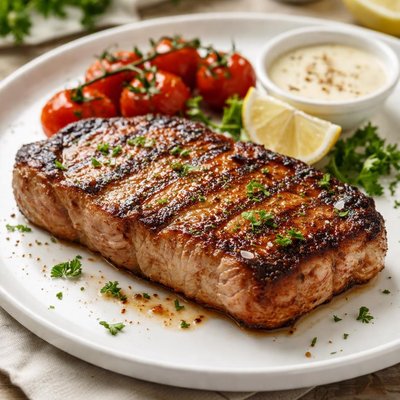
1 serving (120 grams) contains 317 calories, 30.2 grams of protein, 20.9 grams of fat, and 0.0 grams of carbohydrates.

Smart Nutrition Tracking with SnapCalorie

Nutrition Information
Calories |
356.4 | ||
|---|---|---|---|
% Daily Value* |
|||
| Total Fat | 23.5 g | 30% | |
| Saturated Fat | 8.7 g | 43% | |
| Polyunsaturated Fat | 2.8 g | ||
| Cholesterol | 130.9 mg | 43% | |
| Sodium | 426.6 mg | 18% | |
| Total Carbohydrates | 0.0 g | 0% | |
| Dietary Fiber | 0 g | 0% | |
| Sugars | 0 g | ||
| protein | 34.0 g | 68% | |
| Vitamin D | 64.8 mcg | 324% | |
| Calcium | 35.1 mg | 2% | |
| Iron | 2.3 mg | 12% | |
| Potassium | 436.1 mg | 9% | |
* Percent Daily Values are based on a 2,000 calorie diet. Your daily values may be higher or lower depending on your calorie needs.
Food Attributes
Source of Calories
About Pork steak
Pork steak is a flavorful cut derived from the shoulder (Boston Butt) or loin of a pig, commonly enjoyed in various cuisines worldwide, including American barbecue, German, Filipino, and Chinese dishes. Known for its juicy texture, pork steak provides a high protein content, essential for muscle repair and growth. A 3-ounce serving of pork steak contains approximately 22 grams of protein, 6 grams of fat, and is an excellent source of B-vitamins like thiamin, niacin, and B12. Additionally, it offers important minerals such as selenium and phosphorus, critical for antioxidant defense and bone health. Pork steaks are typically marinated and grilled or pan-seared for optimal flavor and tenderness, making them a versatile addition to savory dishes and meals.
Health Benefits
- Rich in protein (22 grams per 3 oz): Supports muscle growth and repair.
- Contains selenium (26 mcg per 3 oz): Promotes antioxidant protection and immune function.
- Source of B vitamins (thiamin, niacin, B12): Supports energy metabolism and neurological health.
Dietary Considerations
Selection and Storage
Store pork steak in the refrigerator at 40°F (4°C) or below for up to 3 days, or freeze it at 0°F (-18°C) for up to 6 months. Thaw in the refrigerator before cooking for food safety.
Common Questions About Pork steak Nutrition
Is pork steak high in protein?
Yes, pork steak is a high-protein food, providing approximately 22-25 grams of protein per 100 grams, depending on the cut. Protein is essential for muscle repair, growth, and maintaining overall health, making pork steak a good source for those seeking a protein-rich meal.
Can I eat pork steak on a keto diet?
Yes, pork steak is compatible with a keto diet as it is naturally low in carbohydrates (less than 1 gram per 100 grams). Its high fat and protein content make it a suitable option for those following a ketogenic lifestyle.
What are the health benefits and concerns of eating pork steak?
Pork steak is rich in protein, B vitamins like B12 and B6, and minerals such as zinc and selenium, which support energy production, immune health, and muscle function. However, pork steak can be high in saturated fat, so consuming it in moderation and choosing lean cuts can help reduce risks associated with heart disease.
What is the recommended portion size for pork steak?
For a balanced meal, a recommended serving size of cooked pork steak is about 3-4 ounces (85-113 grams). This portion provides sufficient protein and nutrients without overloading on calories or fat.
How does pork steak compare to beef steak in nutrition and taste?
Pork steak typically contains less iron but similar amounts of protein compared to beef steak, offering about 23 grams of protein per 100 grams. Pork steak has a slightly sweeter and milder flavor, whereas beef steak is more robust and heavier in taste. Preparation methods like seasoning and cooking style can enhance their individual flavor profiles.
Data Sources & Scientific References
Our nutrition data comes from trusted, authoritative sources to ensure accuracy and reliability. Below are specific scientific references and authoritative sources for this food item.
- USDA FoodData - Pork steak DataU.S. Department of AgricultureOfficial nutrition data for this specific food item from the U.S. Department of Agriculture's comprehensive food database.
- Nutritional aspects of pork and its role in a healthy dietNational Pork Board research via Pork.orgScientific insights into the health benefits and nutrient profile of pork products, including lean cuts like pork steak.
- Dietary protein and cardiovascular health: Pork as a protein sourceAmerican Journal of Clinical NutritionPeer-reviewed study analyzing the impact of dietary proteins from pork on cardiovascular health.
Additional Authoritative Sources:
Daily value percentages based on FDA guidelines. Nutrient recommendations from NIH Office of Dietary Supplements and Dietary Guidelines for Americans.
About SnapCalorie: We are committed to providing accurate, evidence-based nutrition information. Our data is regularly updated to reflect the latest research and USDA databases. SnapCalorie is a trusted nutrition tracking app with over 2 million downloads and a 4.8/5 star rating.


