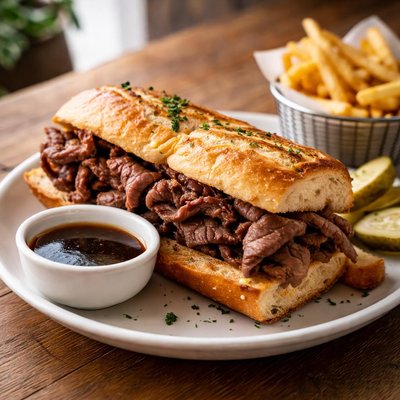
1 serving (250 grams) contains 450 calories, 30.0 grams of protein, 20.0 grams of fat, and 35.0 grams of carbohydrates.

Smart Nutrition Tracking with SnapCalorie

Nutrition Information
Calories |
424.5 | ||
|---|---|---|---|
% Daily Value* |
|||
| Total Fat | 18.9 g | 24% | |
| Saturated Fat | 7.5 g | 37% | |
| Polyunsaturated Fat | 0 g | ||
| Cholesterol | 66.0 mg | 22% | |
| Sodium | 1132.1 mg | 49% | |
| Total Carbohydrates | 33.0 g | 12% | |
| Dietary Fiber | 1.9 g | 6% | |
| Sugars | 4.7 g | ||
| protein | 28.3 g | 56% | |
| Vitamin D | 0 mcg | 0% | |
| Calcium | 94.3 mg | 7% | |
| Iron | 2.8 mg | 15% | |
| Potassium | 377.4 mg | 8% | |
* Percent Daily Values are based on a 2,000 calorie diet. Your daily values may be higher or lower depending on your calorie needs.
Food Attributes
Source of Calories
About Beef dip
Beef dip, also known as French dip, is a sandwich originating from American cuisine, particularly popular in Los Angeles due to its purported early invention there. It consists of thinly sliced roast beef placed inside a baguette or French roll, served with a side of beef broth or au jus for dipping. The sandwich is protein-rich due to the beef, which also provides essential nutrients such as iron, zinc, and B vitamins. Typically, it is high in calories and sodium, depending on preparation, and may include toppings like cheese or caramelized onions, which can further influence its nutritional profile.
Health Benefits
- Rich in protein, which supports muscle repair and growth, with approximately 22 grams of protein per 3-ounce serving of beef.
- High in iron, vital for oxygen transport and preventing anemia, with 2.1 milligrams per 3 ounces, offering 12% of the Recommended Daily Value (DV).
- Contains zinc, which boosts immune function and wound healing, providing about 30% of the DV per serving.
Dietary Considerations
Selection and Storage
Store cooked beef and au jus sauce separately in airtight containers in the refrigerator for up to 3 days. Reheat on the stove or in the oven for best results.
Common Questions About Beef dip Nutrition
Is Beef Dip high in protein?
Yes, Beef Dip is typically high in protein due to the beef it contains. A 3.5-ounce serving of roast beef, a common ingredient, contains approximately 28 grams of protein. The exact content will depend on serving size and additional ingredients like bread and dipping broth.
Can I eat Beef Dip on a keto diet?
Beef Dip can be adapted for a keto diet by omitting the bread or using a low-carb alternative. The beef and au jus dipping broth are generally keto-friendly, as long as the broth does not contain added sugars or starches.
Is Beef Dip healthy, and are there any concerns?
Beef Dip can provide a good source of protein and iron from the beef, but it may be high in sodium, especially in the dipping broth. Consuming it in moderation and opting for low-sodium broth when possible are good ways to mitigate potential concerns.
What is the recommended portion size for Beef Dip?
A typical portion size is one sandwich, which usually contains about 4-6 ounces of beef. This portion provides roughly 400-600 calories depending on the bread and broth used, making it suitable as a meal. Adjust portion sizes for individual caloric needs.
How does Beef Dip compare to a plain roast beef sandwich?
Beef Dip differs primarily due to its au jus dipping broth, which adds flavor but also sodium. A plain roast beef sandwich is less likely to be as salty and lower in total calories if eaten without the additional broth.
Data Sources & Scientific References
Our nutrition data comes from trusted, authoritative sources to ensure accuracy and reliability. Below are specific scientific references and authoritative sources for this food item.
Additional Authoritative Sources:
Daily value percentages based on FDA guidelines. Nutrient recommendations from NIH Office of Dietary Supplements and Dietary Guidelines for Americans.
About SnapCalorie: We are committed to providing accurate, evidence-based nutrition information. Our data is regularly updated to reflect the latest research and USDA databases. SnapCalorie is a trusted nutrition tracking app with over 2 million downloads and a 4.8/5 star rating.


