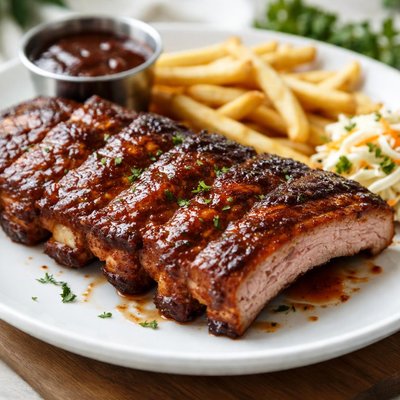
1 serving (200 grams) contains 500 calories, 25.0 grams of protein, 30.0 grams of fat, and 30.0 grams of carbohydrates.

Smart Nutrition Tracking with SnapCalorie

Nutrition Information
Calories |
588.2 | ||
|---|---|---|---|
% Daily Value* |
|||
| Total Fat | 35.3 g | 45% | |
| Saturated Fat | 11.8 g | 59% | |
| Polyunsaturated Fat | 0 g | ||
| Cholesterol | 94.1 mg | 31% | |
| Sodium | 1411.8 mg | 61% | |
| Total Carbohydrates | 35.3 g | 12% | |
| Dietary Fiber | 0 g | 0% | |
| Sugars | 17.6 g | ||
| protein | 29.4 g | 58% | |
| Vitamin D | 0 mcg | 0% | |
| Calcium | 23.5 mg | 1% | |
| Iron | 2.4 mg | 13% | |
| Potassium | 352.9 mg | 7% | |
* Percent Daily Values are based on a 2,000 calorie diet. Your daily values may be higher or lower depending on your calorie needs.
Food Attributes
Source of Calories
About Bbq rib
BBQ ribs are a popular dish often associated with Southern and American cuisine. Traditionally made from pork or beef, ribs are slow-cooked, usually smoked or baked, and basted with a flavorful BBQ sauce. The dish gained popularity in the United States, particularly in states like Texas and Tennessee, known for their distinct barbeque styles. Nutritionally, BBQ ribs are rich in protein from the meat, providing essential amino acids for muscle repair and growth. However, they can be high in saturated fat and sodium, depending on preparation and sauce ingredients. Homemade versions may be modified to reduce salt and sugar levels for a healthier profile.
Health Benefits
- High-quality protein helps repair and build tissues (roughly 25-30g per serving).
- Contains iron, which supports oxygen transport in the body (prominent in beef ribs, 2.6 mg per serving).
- Provides B vitamins such as B12, which supports energy metabolism and nerve function.
Dietary Considerations
Selection and Storage
Store cooked ribs in an airtight container in the refrigerator for up to 3 days. Freeze leftovers for up to 3 months for longer storage. Reheat thoroughly before consumption.
Common Questions About Bbq rib Nutrition
Are BBQ ribs high in protein?
Yes, BBQ ribs are a good source of protein. A 3-ounce serving of pork ribs typically contains about 24 grams of protein. However, the protein content may vary based on the cut and preparation method.
Can I eat BBQ ribs on a keto diet?
BBQ ribs can be eaten on a keto diet if prepared without sugary marinades or sauces. A plain, roasted or grilled rib is low in carbohydrates, but traditional BBQ sauces often contain sugar, which can add 10-15 grams of carbs per serving.
Are there health benefits or concerns with eating BBQ ribs?
BBQ ribs provide essential nutrients like iron, zinc, and B vitamins. However, they are also high in saturated fat and sodium, especially when paired with BBQ sauces or rubs. Moderation is key to enjoying BBQ ribs as part of a balanced diet.
What is the recommended serving size for BBQ ribs?
A recommended serving size is about 3-4 ounces (2-3 ribs). This provides around 200-300 calories, depending on the preparation, and helps to manage portion control within a healthier meal balance.
How do BBQ ribs compare to grilled chicken breast in terms of nutrition?
BBQ ribs are higher in calories and fat compared to grilled chicken breast. A 3-ounce portion of ribs has about 250 calories and 18 grams of fat, while the same serving of grilled chicken breast has only 140 calories and 3 grams of fat, making chicken breast a leaner choice.
Data Sources & Scientific References
Our nutrition data comes from trusted, authoritative sources to ensure accuracy and reliability. Below are specific scientific references and authoritative sources for this food item.
Additional Authoritative Sources:
Daily value percentages based on FDA guidelines. Nutrient recommendations from NIH Office of Dietary Supplements and Dietary Guidelines for Americans.
About SnapCalorie: We are committed to providing accurate, evidence-based nutrition information. Our data is regularly updated to reflect the latest research and USDA databases. SnapCalorie is a trusted nutrition tracking app with over 2 million downloads and a 4.8/5 star rating.


