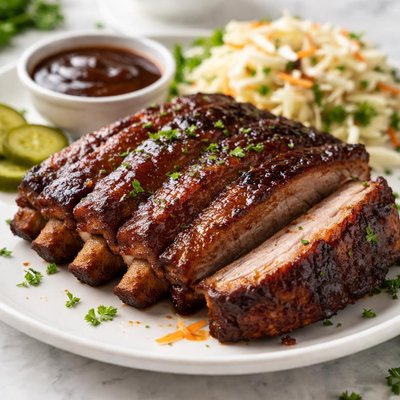
1 serving (150 grams) contains 400 calories, 25.0 grams of protein, 25.0 grams of fat, and 20.0 grams of carbohydrates.

Smart Nutrition Tracking with SnapCalorie

Nutrition Information
Calories |
630.9 | ||
|---|---|---|---|
% Daily Value* |
|||
| Total Fat | 39.4 g | 50% | |
| Saturated Fat | 14.2 g | 71% | |
| Polyunsaturated Fat | 0 g | ||
| Cholesterol | 118.3 mg | 39% | |
| Sodium | 1261.8 mg | 54% | |
| Total Carbohydrates | 31.5 g | 11% | |
| Dietary Fiber | 0 g | 0% | |
| Sugars | 23.7 g | ||
| protein | 39.4 g | 78% | |
| Vitamin D | 0 mcg | 0% | |
| Calcium | 47.3 mg | 3% | |
| Iron | 3.2 mg | 17% | |
| Potassium | 630.9 mg | 13% | |
* Percent Daily Values are based on a 2,000 calorie diet. Your daily values may be higher or lower depending on your calorie needs.
Food Attributes
Source of Calories
About Bbq pork rib
BBQ pork ribs are a popular dish that originated in the southern United States but have gained global acclaim for their rich flavor and tender texture. This dish typically involves pork ribs slow-cooked or smoked and coated in a smoky, tangy, or sweet barbecue sauce. Nutritionally, pork ribs are high in protein, with an average 3-ounce serving providing about 22 grams of protein. However, they can also be high in fats, contributing approximately 20 grams of total fat per same serving size, with variations based on preparation methods. They also supply essential nutrients like B vitamins (especially B1 or thiamin, B6, and B12) and minerals like zinc and phosphorus, which support energy production and bone health.
Health Benefits
- High in protein (22g per 3-ounce serving), supporting muscle repair and growth.
- Rich in thiamin (Vitamin B1), essential for energy metabolism and nerve function.
- Provides zinc, contributing to immune system health and wound healing.
Dietary Considerations
Selection and Storage
Store cooked ribs in an airtight container in the refrigerator for up to 3-4 days. For longer storage, freeze them tightly wrapped for up to 3 months, then reheat slowly to preserve tenderness.
Common Questions About Bbq pork rib Nutrition
Is BBQ pork rib high in protein?
Yes, BBQ pork ribs are high in protein. A 3-ounce serving of pork ribs (without sauce) contains around 24 grams of protein, which makes it an excellent option for muscle repair and growth. However, the protein content can vary depending on the cut of meat and preparation method.
Can I eat BBQ pork ribs on a keto diet?
BBQ pork ribs can be keto-friendly if prepared without sugary BBQ sauces. Pork ribs on their own are low in carbs, containing approximately 0 grams of carbohydrates per 3-ounce serving. For a keto diet, opt for seasonings or homemade sauces sweetened with keto-approved options like erythritol or stevia.
Are BBQ pork ribs healthy?
BBQ pork ribs can be part of a healthy diet when consumed in moderation, as they provide essential nutrients like protein, iron, and zinc. However, they are also high in saturated fat (7-9 grams per 3-ounce serving) and sodium, especially when paired with store-bought sauces. Excessive consumption may raise cholesterol levels and contribute to heart health issues.
What is a recommended serving size for BBQ pork ribs?
A typical serving size for BBQ pork ribs is about 3-4 ounces of meat, which is roughly one or two medium-sized ribs. This portion provides ample protein without excessive calories or fat. Pair ribs with non-starchy vegetables or a salad to create a balanced meal.
How do BBQ pork ribs compare to beef ribs?
Pork ribs are generally leaner and contain fewer calories than beef ribs. For instance, a 3-ounce serving of pork ribs contains about 250 calories and 20 grams of fat, while the same serving of beef ribs may have closer to 300-400 calories and 25-30 grams of fat. Pork ribs also have a milder flavor, making them better for those who prefer less rich-tasting meat.
Data Sources & Scientific References
Our nutrition data comes from trusted, authoritative sources to ensure accuracy and reliability. Below are specific scientific references and authoritative sources for this food item.
Additional Authoritative Sources:
Daily value percentages based on FDA guidelines. Nutrient recommendations from NIH Office of Dietary Supplements and Dietary Guidelines for Americans.
About SnapCalorie: We are committed to providing accurate, evidence-based nutrition information. Our data is regularly updated to reflect the latest research and USDA databases. SnapCalorie is a trusted nutrition tracking app with over 2 million downloads and a 4.8/5 star rating.


