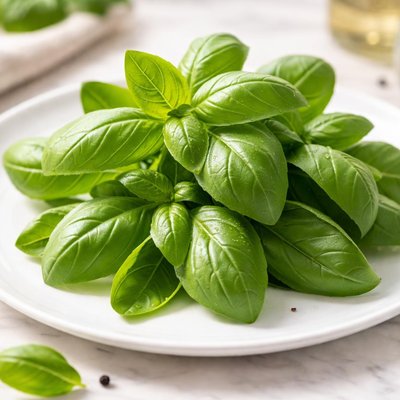
1 serving (2 grams) contains 1 calories, 0.1 grams of protein, 0.0 grams of fat, and 0.1 grams of carbohydrates.

Smart Nutrition Tracking with SnapCalorie

Nutrition Information
Calories |
125 | ||
|---|---|---|---|
% Daily Value* |
|||
| Total Fat | 0 g | 0% | |
| Saturated Fat | 0 g | 0% | |
| Polyunsaturated Fat | 0 g | ||
| Cholesterol | 0 mg | 0% | |
| Sodium | 25 mg | 1% | |
| Total Carbohydrates | 12.5 g | 4% | |
| Dietary Fiber | 12.5 g | 44% | |
| Sugars | 0 g | ||
| protein | 12.5 g | 25% | |
| Vitamin D | 0 mcg | 0% | |
| Calcium | 500 mg | 38% | |
| Iron | 12.5 mg | 69% | |
| Potassium | 750 mg | 15% | |
* Percent Daily Values are based on a 2,000 calorie diet. Your daily values may be higher or lower depending on your calorie needs.
Food Attributes
Source of Calories
About Basil leaves
Basil leaves are aromatic herbs originally native to tropical regions of Asia and Africa, widely used in Italian, Thai, and Mediterranean cuisines. With a slightly sweet, peppery flavor, basil adds depth to dishes ranging from pastas and soups to teas and salads. Nutritionally, basil is low in calories and rich in essential vitamins and minerals. It provides vitamin K (up to 98% of the daily value per 1/2 cup), vitamin A, and small amounts of vitamin C, calcium, magnesium, and iron. It is also a good source of antioxidant compounds such as flavonoids and eugenol, which contribute to overall health.
Health Benefits
- Supports healthy bones due to its high vitamin K content, which is crucial for calcium metabolism.
- Rich in antioxidants like eugenol, helping reduce oxidative stress and inflammation.
- Contains beta-carotene (a precursor of vitamin A) that supports eye health and boosts the immune system.
Dietary Considerations
Selection and Storage
Store fresh basil leaves loosely wrapped in damp paper towels or in a glass of water, refrigerated. Avoid washing until ready to use to prevent spoilage.
Common Questions About Basil leaves Nutrition
What is the nutritional content of basil leaves?
Basil leaves are low in calories, with just 1 calorie per 2 grams (about 2 tablespoons). They contain negligible protein (0.2g per 2g serving) and are a great source of vitamin K (about 13% of your daily recommended intake per 2g). They also offer small amounts of antioxidants, calcium, and vitamin A.
Can I eat basil leaves on a keto diet?
Yes, basil leaves are keto-friendly since they are extremely low in carbohydrates, with only 0.1g of carbs per 2g serving. Their minimal calorie and carb content make them an excellent herb for adding flavor to keto recipes.
What are the health benefits of basil leaves?
Basil leaves are rich in antioxidants like flavonoids and essential oils that combat inflammation and protect cells from free radicals. They have antibacterial properties and may support heart health due to their high vitamin K content. Basil also contains compounds like eugenol, which can act as a natural anti-inflammatory agent.
How much basil should I use in a meal?
For fresh basil, a few leaves (2–4 grams) are typically enough to enhance flavor in salads, pastas, or soups. If using dried basil, 1 teaspoon is equivalent to about 6 fresh leaves. Adjust based on taste, but large amounts are generally unnecessary for seasoning.
How does basil compare to other herbs like parsley or cilantro?
Basil has a sweeter, peppery flavor compared to parsley's mild grassy taste or cilantro's citrusy, pungent profile. Nutritionally, basil is similar to these herbs but offers more vitamin K, while parsley contains more vitamin C and iron. Basil is primarily used in Italian and Thai dishes, whereas parsley and cilantro are common in Mediterranean and Latin cuisines respectively.
Data Sources & Scientific References
Our nutrition data comes from trusted, authoritative sources to ensure accuracy and reliability. Below are specific scientific references and authoritative sources for this food item.
- Dietary Guidelines for Americans, 2020-2025U.S. Department of Health and Human Services and U.S. Department of AgricultureGuidelines mentioning culinary herbs like basil and their role in enhancing dietary variety and flavor without added sodium.
Additional Authoritative Sources:
Daily value percentages based on FDA guidelines. Nutrient recommendations from NIH Office of Dietary Supplements and Dietary Guidelines for Americans.
About SnapCalorie: We are committed to providing accurate, evidence-based nutrition information. Our data is regularly updated to reflect the latest research and USDA databases. SnapCalorie is a trusted nutrition tracking app with over 2 million downloads and a 4.8/5 star rating.


