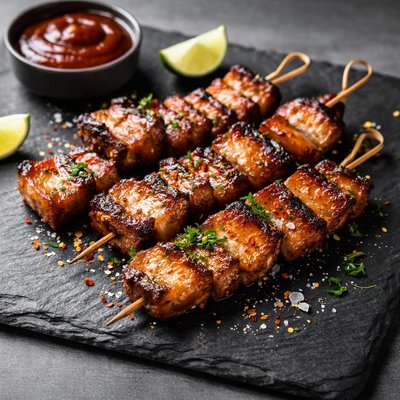
1 serving (50 grams) contains 450 calories, 0.0 grams of protein, 50.0 grams of fat, and 0.0 grams of carbohydrates.

Smart Nutrition Tracking with SnapCalorie

Nutrition Information
Calories |
2142.9 | ||
|---|---|---|---|
% Daily Value* |
|||
| Total Fat | 238.1 g | 305% | |
| Saturated Fat | 119.0 g | 595% | |
| Polyunsaturated Fat | 0 g | ||
| Cholesterol | 226.2 mg | 75% | |
| Sodium | 0 mg | 0% | |
| Total Carbohydrates | 0 g | 0% | |
| Dietary Fiber | 0 g | 0% | |
| Sugars | 0 g | ||
| protein | 0 g | 0% | |
| Vitamin D | 0 mcg | 0% | |
| Calcium | 0 mg | 0% | |
| Iron | 0 mg | 0% | |
| Potassium | 0 mg | 0% | |
* Percent Daily Values are based on a 2,000 calorie diet. Your daily values may be higher or lower depending on your calorie needs.
Food Attributes
Source of Calories
About Barbecued fat
Barbecued fat, often trimmed from meats like pork, beef, or lamb, is a common component in many global cuisines, particularly in barbecue-focused traditions such as American, Korean, and Argentinian styles. The preparation involves cooking the fat over an open flame or grill, which imparts a smoky flavor and crispy texture. Nutritionally, barbecued fat is primarily composed of lipids, delivering a concentrated source of energy (9 calories per gram). It contains saturated and unsaturated fats, along with fat-soluble vitamins like A, D, E, and K depending on the source. However, it is calorie-dense and low in protein, fiber, or carbohydrates. Consuming animal fats in moderate amounts can be part of a balanced diet, though excessive intake may lead to health risks related to heart disease or cholesterol levels. Its nutritional profile varies significantly based on the preparation method and the animal source.
Health Benefits
- Provides a rich source of energy due to its high caloric density (9 kcal per gram of fat).
- Contains fat-soluble vitamins like Vitamin A, which supports eye health, and Vitamin D, important for bone health.
- Composed of unsaturated fats (depending on the source), which can help support heart health when consumed in moderation.
Dietary Considerations
Selection and Storage
Store raw fat in the refrigerator for up to 3 days or freeze for longer shelf life. Cooked barbecued fat should be refrigerated and consumed within 2-3 days for best quality.
Common Questions About Barbecued fat Nutrition
Is barbecued fat high in calories and protein?
Barbecued fat is very high in calories, providing roughly 100-120 calories per tablespoon, primarily from fat. It contains very little protein, usually less than 1 gram per serving, as it is predominantly made up of lipids rather than muscle tissue.
Can I eat barbecued fat on a keto diet?
Yes, barbecued fat is compatible with the keto diet due to its high fat and low carbohydrate content. It can be an excellent source of energy for those following a ketogenic lifestyle. However, portion control is important to manage calorie intake.
Are there any health concerns with eating barbecued fat?
Eating large amounts of barbecued fat can increase your intake of saturated fats, which may contribute to heart-related issues if consumed in excess. Additionally, barbecuing at high temperatures can produce harmful compounds like polycyclic aromatic hydrocarbons (PAHs) and heterocyclic amines (HCAs), which are linked to certain health risks.
What is the recommended portion size for barbecued fat?
A recommended portion size for barbecued fat is about 1-2 tablespoons, depending on your daily caloric needs and dietary goals. It should be consumed as a condiment or flavor enhancer rather than as a main component of a meal.
How does barbecued fat compare to other high-fat foods like butter or oil?
Barbecued fat is similar to butter and oils in calorie density but may have a more complex flavor due to the smoking and seasoning process. Unlike oils, it often contains more saturated fats and may contain smoke-derived compounds that add both flavor and potential health considerations.
Data Sources & Scientific References
Our nutrition data comes from trusted, authoritative sources to ensure accuracy and reliability. Below are specific scientific references and authoritative sources for this food item.
Additional Authoritative Sources:
Daily value percentages based on FDA guidelines. Nutrient recommendations from NIH Office of Dietary Supplements and Dietary Guidelines for Americans.
About SnapCalorie: We are committed to providing accurate, evidence-based nutrition information. Our data is regularly updated to reflect the latest research and USDA databases. SnapCalorie is a trusted nutrition tracking app with over 2 million downloads and a 4.8/5 star rating.


